
There's a lot of talk these days about whether artificial intelligence will take over customer service jobs. It's a big question, and honestly, it's not a simple yes or no answer. While AI can do some amazing things, like answer phones 24/7 and handle tons of calls at once, it's not perfect. We're seeing that for some things, you still really need a human touch. So, will AI replace customer service? Let's look at what the experts are saying about how AI and people might work together in the future.

Think about the last time you called a business and got stuck in a loop. You know, the "press 1 for this, press 2 for that" routine. It’s a pain. Now imagine a receptionist that never sleeps, never gets tired, and can handle a thousand calls at once. That’s the basic promise of an AI receptionist.
This is the most obvious win. Your business hours are a suggestion, not a hard limit, for your AI receptionist. It’s there 24/7. Whether it’s 3 PM or 3 AM, it picks up. This means no more lost leads because a potential customer called after closing. It’s like having an always-on employee, but without the coffee breaks or the need for a salary. For small businesses especially, this constant availability can be a game-changer. You're not just answering calls; you're capturing opportunities that would otherwise walk out the door.
Human receptionists are great, but they have limits. One person can only handle so many calls. During busy periods, things get chaotic. Calls get missed, customers wait, and frustration builds. An AI receptionist, however, scales instantly. It doesn't matter if you get ten calls or ten thousand calls simultaneously. The AI handles them all. This isn't just about handling volume; it's about maintaining quality. Every caller gets the same prompt, consistent attention, regardless of how busy things are. It’s like having an infinite number of receptionists ready to go, without needing more office space.
An AI receptionist isn't just a standalone answering machine. The real power comes when it connects with your other tools. Think about it: a call comes in, the AI answers, takes a message, and then automatically updates your CRM. Or maybe it schedules a follow-up task in your project management software. This isn't science fiction; it's happening now. By linking your AI receptionist to things like Zapier, you create a central nervous system for your business. Information flows automatically, tasks get created without manual input, and your team stays in sync. It turns a simple phone call into a productive business action, all without anyone lifting a finger.
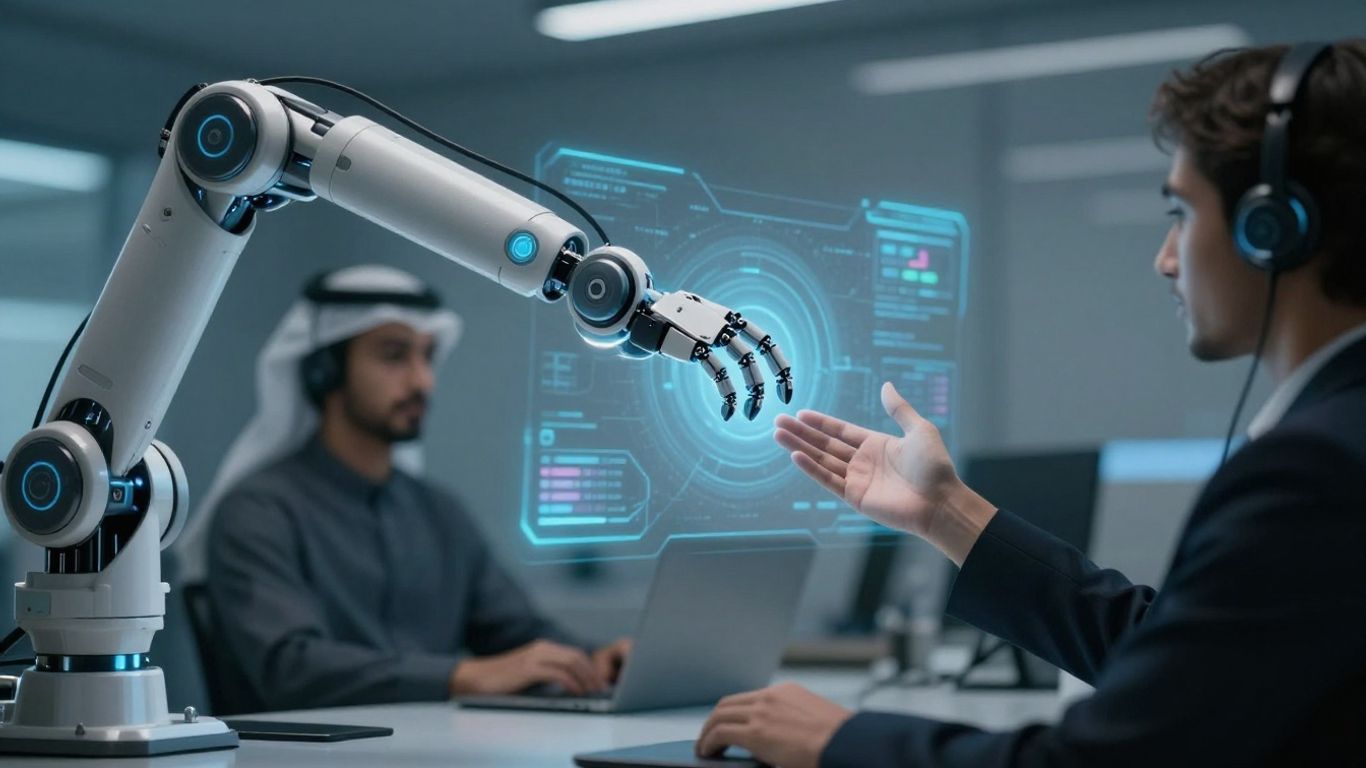
AI isn't just about picking up the phone anymore. It's about understanding what's being said and acting on it. Think of it as moving from a simple answering machine to a personal assistant who actually gets things done.
Most businesses treat time like it's endless. They let it slip away. But time is finite. Our AI receptionist understands this. You tell it your business hours, and it sticks to them. It knows holidays, seasons, and different time zones. A call at 9 AM is different from a call at 9 PM. A call on Christmas is different from a regular Tuesday. The AI gets this context. It doesn't just answer; it answers appropriately. No more "Sorry, we're closed" at 2 PM on a weekday. No more confused customers on New Year's Day. It respects time, and customers notice.
Voicemails can pile up. Our AI receptionist turns that pile into organized information. It intelligently knows when to offer voicemail. Then, it transcribes the message to text. You can read it quickly instead of listening. Messages are organized, and you get notified when new ones arrive. It’s a simple way to make sure you don't miss anything important, even when you can't take the call yourself.
This is where things get interesting. AI can now send texts during calls based on what's being said. You set up simple rules in plain English. For example, "If the caller asks for pricing, text them our rate sheet." The AI listens, understands the intent, and sends the text instantly. It works for booking appointments, sending document links, or even sharing promotion codes. It happens in real-time, without interrupting the call flow. It’s like having a second brain working alongside the agent, providing information exactly when it’s needed.
Most businesses today are a mess of disconnected tools. You've got your CRM, your project manager, your email client, maybe some weird niche app only your team uses. They all do their own thing, and getting them to talk to each other is usually a headache. This is where AI integration changes the game.
Think of Zapier as the central nervous system for your business operations. It connects over 9,000 different apps, turning your collection of software into a cohesive unit. This isn't just about linking two things; it's about creating a dynamic ecosystem where information flows freely. Your AI receptionist, for instance, can now do more than just answer calls. It can interact with your other tools, making your entire operation run smoother. It's like giving your business a brain that can coordinate all its limbs.
What makes this integration powerful is the two-way data flow. It's not just the AI sending information out; it's also receiving it back. So, when your AI receptionist takes a message or schedules an appointment, that information doesn't just sit there. It gets pushed into your CRM, updates a spreadsheet, or creates a task in your project management tool. This means no more manual data entry, which is a huge time saver and reduces errors. It's about making sure all your systems are in sync, all the time. This kind of automation is key to scaling your business without adding headcount.
This connectivity enables truly automated actions. A call ends? Your CRM updates. The AI identifies a follow-up need? A task is created automatically. An important call comes in? Your team gets notified instantly. An appointment is made? It's in your calendar without anyone lifting a finger. This isn't just about convenience; it's about speed and accuracy. When actions happen in real-time, your business can respond faster to opportunities and customer needs. It transforms how you work, making your business more agile and responsive. It’s the difference between a business that’s constantly playing catch-up and one that’s always a step ahead.
The real power here isn't just connecting apps; it's about making your business systems work together intelligently. It’s about turning a collection of tools into a unified, efficient operation where data flows where it needs to, when it needs to, without human intervention. This level of integration is what separates businesses that merely survive from those that truly thrive.
Here's a quick look at what this means:
This level of integration is what makes an AI receptionist like Frontdesk more than just a call-answering service; it makes it a core part of your business infrastructure.
AI is great at handling the predictable stuff. Think password resets or order tracking. These are what some call the "happy path" – simple, clear transactions where speed is the main thing. Customers often prefer a bot here because it's fast. No fuss.
But things get messy when you leave that path. When a customer has a complex billing issue, a service failure, or a tricky technical problem, they're usually already annoyed. That's when they need more than just a script. They need someone who can actually understand the situation, not just process it. AI, at least for now, struggles with this. It can't offer the kind of judgment or empathy needed when things go wrong.
Trying to force AI into these high-stakes moments doesn't solve a problem; it creates a bigger one. It can make an already upset customer even more frustrated. This isn't about the AI being bad; it's about using it in the wrong place. It's like using a calculator to write a novel – it's the wrong tool for the job.
Upselling is an art. It requires reading the customer, understanding their needs beyond the immediate request, and suggesting something that genuinely adds value. AI can follow a script, sure. It can suggest a "premium package" if a certain keyword is detected. But it lacks the intuition to know when to push, how to phrase it, or what to offer that truly fits the customer's unspoken desires. This often leads to missed opportunities, leaving money on the table because the AI couldn't make that human connection.
Net Promoter Score (NPS) is a common metric, but what about the damage AI can do that doesn't show up on surveys? When a customer has a bad experience with an automated system – maybe it misunderstood them, sent them in circles, or just felt impersonal during a stressful moment – they might not complain directly. They might just quietly leave. This "shadow NPS" is hard to track but can seriously hurt a brand over time. It's the slow drip of customers choosing a competitor because their support felt more human, more understanding.
Ever been stuck in an endless AI loop, desperately trying to find a way to talk to a real person? That's "agent-seeking behavior." Customers exhibit it when the AI fails to resolve their issue. They start looking for keywords like "speak to an agent," "human," or "representative." This behavior is a clear signal that the automation has failed. It shows that even with advanced AI, there are still situations where people just want to talk to other people. Ignoring this signals a disconnect between what the business thinks it's offering and what the customer actually needs.
The idea that AI will completely take over customer service is a bit of a fantasy. It’s more like a tool, a really good one, but still a tool. The real win comes when you mix AI’s speed with what humans do best. Think of it as a smart filter, not a wall.
AI is great at sorting through the noise. It can handle the simple stuff, the repetitive questions, the basic info requests. This is like the first line of defense, the concierge. It filters out the easy 80% of interactions, freeing up human agents. This isn't about cutting costs, though that's a side effect. It's about making sure the people who need to talk to a human, get to one quickly.
When things get complicated, or when a customer is upset, that’s when you need a person. AI can’t replicate genuine empathy or the nuanced judgment a human brings. These are the interactions that build loyalty, the ones that can turn a bad situation around. Sending these high-stakes calls straight to a human agent, bypassing the AI gate, is key. It stops customers from getting stuck in frustrating loops.
In a world where everyone is automating, offering a human touch can actually be a selling point. People are willing to pay more for a guarantee of real human interaction. It’s becoming a luxury. Companies that highlight their human support, rather than hiding it behind bots, signal quality. It says, 'We respect your time and your problem enough to put a person on it.' This isn't just about service; it's about brand. It’s the difference between being seen as a utility and a trusted partner.
The market for AI receptionists is growing fast. Businesses want better service without the high cost of human staff. This is where you come in. You can offer this technology under your own brand. It's a way to start your own AI services business with less risk.
Think of it like this: you get a proven AI receptionist system, but you put your company's logo on it. Clients see your brand, not the original developer's. This lets you build your own reputation as an AI solutions provider. You control pricing, marketing, and how you work with clients. It's a way to get into a hot market quickly.
This isn't just about selling a service; it's about building a business. You can set your own prices, maybe $250 to $500 a month per client, depending on what the market will bear. The AI system itself has low overhead, which means good profit margins for you. You're essentially offering a 24/7 receptionist service that's cheaper than hiring someone. This value proposition is strong for many types of businesses, from law offices to plumbers.
Getting started is surprisingly simple. You might only need to commit to a few accounts, say five, to begin. The setup is usually quick, often within a week. You get support, training materials, and a dashboard to manage your clients. This setup means you can test the waters, maybe even use the service yourself, and then scale up as you get more customers. The AI technology keeps improving, so you're always offering something current. It's a chance to grow a business in a field that's only going to get bigger.
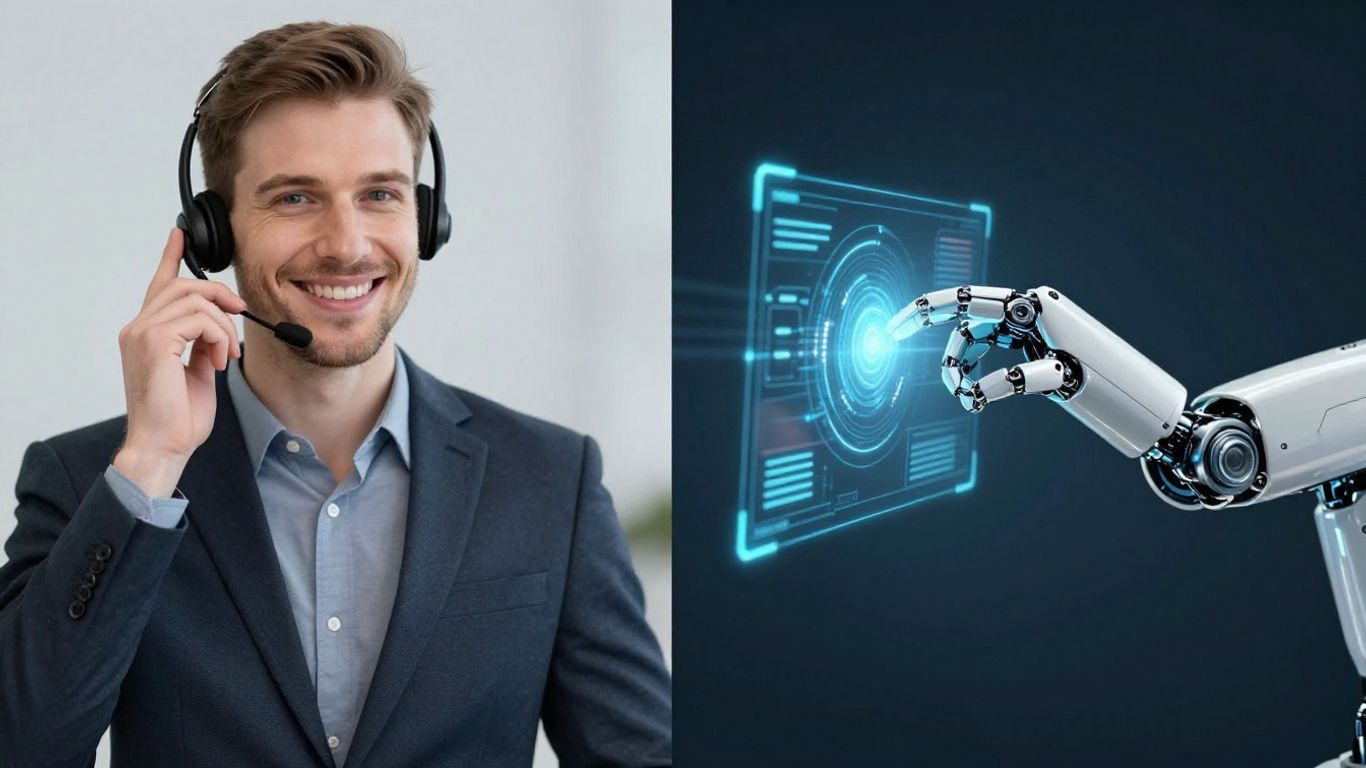
The conversation around AI in customer service often swings between utopia and dystopia. Will robots take all the jobs, or will they free us from drudgery? The reality, as it often does, sits somewhere in the middle. AI isn't here to replace your support team; it's here to give them superpowers.
Think of AI as a really smart assistant. It can handle the repetitive stuff, the data entry, the initial sorting of inquiries. This frees up your human agents to focus on what they do best: solving complex problems, building relationships, and handling situations that require a human touch. It's not about making people redundant; it's about making them more effective.
Some problems just can't be solved by an algorithm. Think about a customer who's had a terrible experience and is understandably upset. An AI can follow a script, but it can't truly empathize or offer the kind of reassurance that a human can. Similarly, ethical dilemmas or situations requiring nuanced understanding of context are still firmly in the human domain. AI can provide data, but humans provide wisdom.
AI is a tool. Like a hammer, it's great for nails, but you wouldn't use it to paint a masterpiece. The skill, the vision, the final touch – that's where humans shine.
When AI takes over the grunt work, it changes the nature of the remaining human roles. Instead of spending all day answering the same basic questions, support staff can be trained to handle more challenging cases, become specialists in certain areas, or even contribute to improving the AI system itself. This shift moves jobs from being purely reactive to more proactive and strategic. It's about evolving roles, not eliminating them, making work more interesting and valuable for everyone involved.
Think of our AI tools as helpful assistants, not replacements for your team. They're here to handle the routine tasks, freeing up your people to focus on what they do best. This means better customer service and more time for important work. Want to see how these smart assistants can help your business? Visit our website to learn more and get started today!
Look, AI isn't going to suddenly make human customer service disappear. Not anytime soon, anyway. It's good at the simple stuff, the repetitive tasks that bog people down. Think of it as a really efficient assistant. But when things get complicated, or when someone's genuinely upset, you still need a person. The real win here is likely a mix of both – AI handling the grunt work, and humans stepping in for the tough calls. It’s not about replacement, it’s about finding the right balance so everyone, including the customer, gets what they need.
Yes, AI can handle a huge number of calls at the same time, way more than people can. Think of it like having unlimited phone lines. This means your business won't miss calls even during super busy times, like when a product goes viral or during a big sale.
Absolutely. AI can be set to know your business hours, holidays, and even different time zones. It knows that a call at 9 AM is different from a call at 9 PM, making sure it answers or takes a message at the right time, so customers always get the right response.
AI can connect with thousands of other apps, like your calendar or customer list, using tools like Zapier. This means when a call ends, information can be automatically sent to the right place, like updating a customer's record. It makes everything run smoother and saves a lot of time.
While AI is great at handling simple questions, it might miss chances to sell more. Human agents are better at noticing when a customer is ready to buy more or upgrade, based on how they talk. So, while AI saves money on simple tasks, humans can help bring in more revenue from bigger deals.
It's more likely that AI will work alongside humans. AI can handle the easy, quick questions, freeing up human agents to deal with more complicated or emotional issues where empathy and good judgment are needed. This 'hybrid' approach uses AI for speed and humans for trust and deeper connection.
You can! There are programs where you can rebrand AI receptionist services as your own. This means you can offer advanced AI support to your clients under your company's name, with a low starting cost, and build your own AI business without having to create the technology from scratch.
Start your free trial for My AI Front Desk today, it takes minutes to setup!


