
Let's face it: your sales team's most valuable asset is their time. Yet, how much of it is spent on tedious, repetitive tasks? Sales automation is all about using smart technology to handle that administrative grunt work, freeing up your reps to do what they do best: build relationships and close deals.
Think of it as giving your team a tireless digital assistant who never takes a coffee break.

Imagine your sales process is a factory assembly line. Without automation, every single task is done by hand. Someone has to sort new leads, manually dial phone numbers, type out follow-up emails, and update spreadsheets. It’s not just slow; it’s a recipe for human error. A hot lead gets buried in an inbox, or a crucial follow-up call is missed during a hectic afternoon.
Now, imagine installing a robotic arm on that assembly line. That's sales automation. It takes over the predictable, time-sucking jobs and executes them with flawless consistency. The system can instantly greet a new website lead, send them helpful resources, and even book a meeting on a salesperson's calendar, all without a human lifting a finger.
This means every single prospect gets a prompt, professional response, 24/7. No more dropped balls.
At its heart, sales automation is a solution to the chaos caused by manual tasks and fragmented data. It’s especially powerful for businesses struggling with disconnected systems that don't talk to each other, making it impossible to see the full customer picture. By connecting your tools and setting up simple "if-then" rules, you create a smooth, efficient workflow.
The goal isn't to replace your talented sales reps. It’s about empowering them to focus their expertise on strategic selling instead of getting bogged down by administrative busywork.
For a small or medium-sized business, this is a total game-changer. It allows you to deliver a polished, responsive customer experience that can go toe-to-toe with much larger competitors. Automation builds a reliable engine for growth, ensuring no opportunity ever slips through the cracks.
To really see the difference, it helps to compare the old way with the new way. Here’s a quick look at how automation transforms common sales activities.
This shift from manual effort to automated efficiency is where you'll find more time, better consistency, and ultimately, a healthier bottom line.
If you want to really understand sales automation, you have to look under the hood at its core components. These aren't just a bunch of complex tech tools; they're practical pieces that snap together to create something incredibly powerful. Think of it like building with LEGOs—each block has a simple job, but when you connect them the right way, you can build something amazing.
A well-oiled sales automation machine really just stands on three main pillars. Each one handles a different stage of the customer journey, from that very first "hello" all the way to keeping them engaged for the long haul.
Your Customer Relationship Management (CRM) system is the brain of your entire sales operation. It’s the central database where every last detail about your leads and customers lives. CRM automation takes this a giant leap forward by getting rid of manual data entry—a task that’s responsible for a staggering 80% of data-entry errors.
Imagine a potential client fills out a form on your website. Instead of you having to copy and paste that info, CRM automation instantly creates a new contact record. It can even automatically assign that new lead to the right salesperson, log the interaction, and update their status as they move through your pipeline. This keeps your data clean and gives your team a complete, up-to-date picture of every customer relationship without the mind-numbing admin work.
This is where you make your first impression, and AI-powered tools are here to make sure it's always a great one. Think of AI communication as your 24/7 front line, ready to engage leads the second they show interest. This is a huge deal, especially when you learn that responding within the first five minutes can boost lead conversions by up to 900%.
These tools are your first responders:
By taking care of those initial conversations, these AI tools let your human team jump into high-value conversations with prospects who are already warmed up and ready to talk.
Finally, automated workflows are the engine that keeps everything chugging along. These are just sequences of pre-planned actions—like sending emails, texts, or creating follow-up reminders—that are triggered by a lead's behavior. For instance, if someone downloads a brochure from your site, a workflow can automatically send them a series of helpful emails over the next few weeks.
This systematic approach keeps your business top-of-mind and gently nurtures relationships over time, all without you lifting a finger. It guarantees every single lead gets consistent, timely follow-up, turning casual interest into real sales readiness. When you put all these building blocks together, you get a seamless, scalable process that truly drives growth.
It's one thing to talk about the technical parts of sales automation, but what really matters is the difference it makes in your day-to-day work and on your bottom line. Bringing these tools into your business isn’t just about being more efficient; it’s about solving the nagging problems that hold small teams back—like leads that slip through the cracks, follow-ups that never happen, and the sheer exhaustion from administrative overload.
The first thing you’ll notice is a huge leap in productivity. When your team isn't bogged down for hours manually typing in data, dialing phone numbers, or trying to pin down a meeting time, they get that time back. They can then pour that energy into the work that actually generates revenue: building real relationships, thinking through a custom proposal, or closing a tricky deal.
In sales, timing is everything. A quick, consistent follow-up can be the single biggest factor in turning an interested person into a paying customer. Automation makes sure every single inquiry gets an immediate, professional reply. Think of an AI receptionist grabbing a call after hours or an automated text instantly confirming a form submission from your website.
That kind of instant engagement keeps you at the forefront of a prospect's mind. It stops a warm lead from going cold simply because they were left waiting for someone to call them back.
The infographic below really brings to life how these different pieces of automation work together to boost sales.
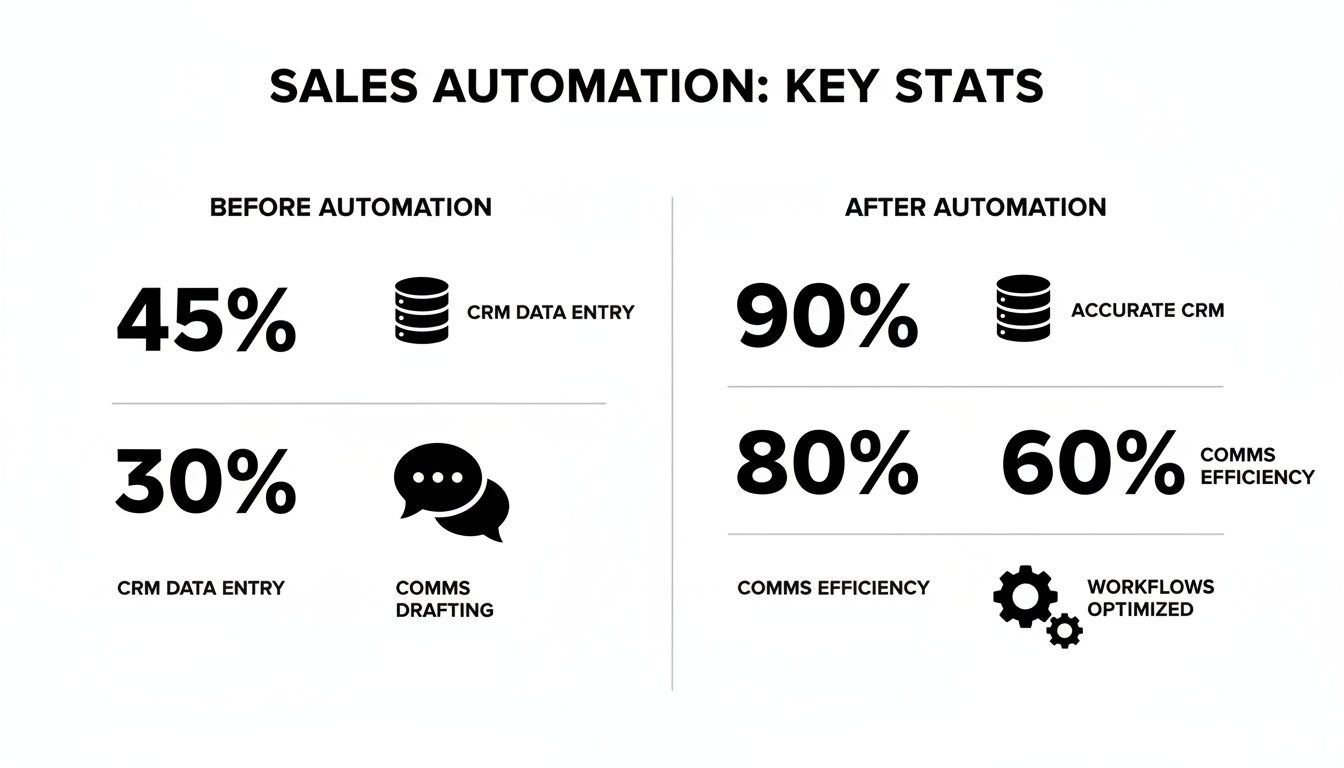
As you can see, when your CRM, communication tools, and workflows are all connected and automated, you create a system that runs circles around old-school manual methods.
One of the best side effects of automation is that it builds a goldmine of clean, reliable data. Every call gets logged, every text is tracked, and every single touchpoint is recorded in your CRM—all without the risk of human error. This gives you a perfectly clear picture of your sales pipeline, so you can stop guessing and start making smart decisions based on what’s actually happening.
Even more importantly, automation brings consistency. Every lead gets nurtured with the same proven steps, every single time. This creates a predictable and scalable engine for growth, which is exactly how a small business can start delivering a customer experience that feels just as polished as their giant competitors.
The numbers don't lie. High-performing sales teams have a 61% adoption rate for these tools, a huge jump from the 46% seen in underperforming teams. And the rewards are massive: those top teams see a 27% higher close rate and land deals that are 30% bigger. In fact, businesses that automate their lead management often see a revenue bump of 10% or more in as little as six to nine months.
By automating the routine, you empower your team to be exceptional. They can focus their energy on building genuine connections, solving customer problems, and delivering the personal touch that automation can't replicate.
This blend of smart technology and human skill is where sustainable success comes from. You can see a great example of this by learning how an AI-powered sales assistant can revolutionize your business and turn potential leads into real profit. At the end of the day, sales automation gives your team the framework and the freedom they need to not just hit their targets, but to blow past them.
It’s one thing to talk about theories and benefits, but the real magic of sales automation happens when you see it working in the wild. Let's move past the buzzwords and look at how actual small businesses are solving real-world problems with these tools. These aren't futuristic ideas; they're practical strategies you could put into play tomorrow.
Each of these stories shines a light on a common business headache and reveals how a specific automation tool offered a direct, powerful fix. This is what sales automation looks like on the ground—helping small teams compete like they’re twice the size.
Meet Sarah. She runs a small but very busy plumbing company. For years, her biggest struggle was handling after-hours calls. A burst pipe at 10 PM was a golden opportunity, but if she couldn't get to the phone, it was a lost lead. That added up to thousands in missed revenue every month.
Now, she uses an AI receptionist. When a frantic homeowner calls in the middle of the night, the AI answers on the first ring. It asks a few simple questions like, "Is this a water-related emergency?" and gathers the caller's name, address, and the details of their problem. The AI then checks Sarah's integrated Google Calendar and books the appointment for first thing in the morning.
The results were instant:
This simple change completely transformed her lead capture process. It’s a perfect example of how an AI receptionist for small businesses can provide that critical, always-on support.
Next up is a boutique marketing agency. They host monthly webinars to bring in new leads, but the follow-up was a nightmare. Their small sales team would spend days manually dialing through a list of 200+ attendees, trying to figure out who was just curious and who was a serious buyer. It was slow, tedious, and a lot of warm leads went cold before the team ever reached them.
Today, their process is completely different. They use an AI outbound dialer. The morning after a webinar, the system automatically calls every single attendee. The AI follows a carefully crafted script, asking one key qualifying question: "Were you interested in a free consultation to discuss your marketing strategy?"
Based on the response, the system works its magic. If the person says "yes," the call is instantly transferred to a live salesperson. If they say "no," the AI politely wraps up the call and updates the contact in their CRM.
This one tweak allows their two-person sales team to spend 100% of their time talking to highly qualified prospects. It's slashed their sales cycle and sent their conversion rates through the roof.
Finally, let's look at a busy law firm specializing in estate planning. They get dozens of inquiries from their website every week, but most people aren't ready to sign on the dotted line right away. Before automation, these "maybe later" leads would get lost in a spreadsheet, never to be seen again.
Now, an automated texting workflow kicks in the moment someone fills out their contact form. The prospect immediately gets a text confirming their inquiry was received. Over the next few weeks, the system sends a series of helpful, low-pressure messages—a link to a blog post about common estate planning mistakes or a gentle reminder to book a free 15-minute consultation.
This consistent, gentle follow-up keeps the firm top-of-mind. When a prospect is finally ready to take the next step, they’re the first firm that comes to mind. It's a simple way to turn a once-lost lead into a valuable new client.
Knowing what sales automation is and finding the right tools to make it happen are two very different things. You could try to stitch together a dozen different apps, but a modern platform like My AI Front Desk is designed to be the central hub for your entire sales process. This approach is much cleaner, connecting every piece of the puzzle into a single, seamless system where nothing slips through the cracks.
The best platforms don't just give you a list of features; they deliver a complete solution that turns abstract ideas into tangible results. Let's break down how an all-in-one tool can become the engine for your small business's growth.
Your ability to grab a new lead shouldn't stop when you lock the doors at 5 p.m. A truly effective system works for you 24/7, engaging potential customers the very moment they decide to reach out. This is where tools built for immediate response make all the difference.
Two features are absolute game-changers here:
This one-two punch of instant, multi-channel engagement means no lead ever goes cold. It’s especially powerful for businesses like marketing agencies, where quick follow-up is critical to landing new clients. You can dive deeper into how an AI receptionist can specifically benefit marketing agencies in our detailed guide.
Capturing inbound interest is great, but the right tools also help you go out and find new business. An AI outbound dialer, for instance, completely changes the outreach game. Instead of your team manually punching in hundreds of numbers, the AI does all the heavy lifting. It only connects a live salesperson when an actual, qualified human picks up the phone.
This simple shift frees up your sales team to spend their time having meaningful conversations with interested prospects instead of listening to endless dial tones and voicemails.
With features like unlimited parallel calls, even a small team can run massive outreach campaigns, dramatically boosting their reach and efficiency without burning out.
The real magic of a modern sales automation platform is how it connects to the other tools you're already using. Through integrations with platforms like Zapier, you can link your AI receptionist to thousands of other apps. For example, a new lead captured by the AI can instantly create a contact in your CRM, add them to an email campaign, and ping your team's Slack channel.
This creates a smooth, hands-off flow of information where data gets exactly where it needs to be without anyone lifting a finger. When your tools talk to each other like this, you build a reliable and scalable sales process.
The results speak for themselves. Automation drives an average 14.5% boost in productivity, with top teams reporting efficiency gains of 10-15%. With AI in their corner, sales reps can handle 23% more calls daily, close deals 20% faster, and see their close rates jump by 27%. You can explore more of these incredible AI-driven sales automation findings in recent industry research. By choosing the right central hub, you build an ecosystem that drives sales growth almost on autopilot.

Jumping into sales automation can feel like a massive undertaking, but a successful launch really just comes down to a simple, step-by-step approach. The trick is to avoid trying to automate everything at once. Instead, zero in on a few high-impact wins first. This builds momentum and gives you a clear sense of what to tackle next.
Think of it like setting up a line of dominos. You're not trying to push over a brick wall; you're just getting the first few pieces in place to start a chain reaction. By following a clear checklist, you can roll out automation smoothly, get your team excited, and start seeing results almost immediately.
The best place to begin is by figuring out which repetitive, low-value tasks are bogging your team down. Where does the day just seem to vanish? Answering that question will point you directly to the perfect first target for automation.
Sit down with your sales reps and walk through their daily routine. You're hunting for the recurring chores that eat up precious time they could be spending selling.
The usual suspects often include:
Once you have this list, you’ve found your starting point. Pick one, automate it, and you'll deliver a quick, tangible win for your team's daily workload.
Before you turn on any new tool, you absolutely have to know what success looks like. Vague goals like "improve efficiency" are useless. You need specific, measurable targets tied directly to your business outcomes. This is how you'll measure your return on investment.
A great goal isn't just a wish; it's a number with a deadline. That clarity is what turns a hopeful idea into a concrete business plan.
For example, your goals could look something like this:
These concrete targets will be your north star through the whole process, from picking the right software to proving its value down the line. They give you the hard data you need to show what’s working and what to automate next.
Jumping into sales automation can feel like a big leap, especially when you're running a small business. You’ve heard the promises, but you’ve probably got some very practical questions running through your mind. That’s a good thing.
Let's walk through some of the most common concerns we hear from business owners who are right where you are now. Getting straight answers is the only way to know if this is the right move for you.
Not anymore. A decade ago, that was absolutely true. This kind of tech was built for massive corporations with entire departments dedicated to running it. But things have changed—a lot.
Today's automation platforms are built from the ground up for small businesses. Many offer flexible, pay-as-you-go plans, so you can start small and expand as your business grows. When you factor in the money saved on labor and the extra revenue from leads you're no longer missing, the tools often pay for themselves surprisingly quickly.
The real question isn't "Can I afford this tool?" It's "How much is it costing me to not have it?"
This is the number one fear, and it's completely understandable. Your personal touch is what sets your business apart, and the last thing you want is for customers to feel like they’re just another number in a machine.
Here's the key: good automation doesn't replace human connection, it creates more time for it. Modern AI is incredibly sophisticated, using natural language and conversational tones to handle routine interactions warmly and efficiently. Think of it as a tool that handles the repetitive, impersonal tasks—like appointment scheduling or initial lead qualification—freeing you and your team up for the high-value conversations that actually close deals.
You don't need to be an IT wizard to make this work. The best sales automation tools are designed for busy owners, not developers. Long gone are the days of needing to hire a specialist just to get a system up and running.
Most modern platforms feature simple, intuitive dashboards and guided setups. You can connect your calendar, link your CRM, and customize a script in minutes, often with no coding required. If you can set up a social media profile, you can set up a basic automation workflow. The goal is to make powerful technology accessible to everyone.
Ready to see how simple it is to get your sales process working for you 24/7? My AI Front Desk combines an AI receptionist, outbound dialer, and automated texting into one easy-to-use platform for small businesses. Start your free trial today and see for yourself how quickly you can get up and running.
Start your free trial for My AI Front Desk today, it takes minutes to setup!


