
Customer service in 2026 is all about speed and smarts. Gone are the days of long waits and generic answers. The best AI for customer service is here to change the game, making things smoother for both businesses and their customers. We're looking at tools that can handle calls, manage messages, and even integrate with your existing systems, all while keeping things simple. Let's check out some of the top players making waves in this space.

Forget the idea of one giant AI trying to do everything. Agent Factory takes a different approach. It’s about building a team of specialized AI agents, each designed for a specific job. Think of it like hiring people for a company: you don't want one person to do sales, accounting, and customer support. You want specialists.
With Agent Factory, you can create individual agents for tasks like tracking orders, handling refund requests, or answering common questions. These agents work together, handling the repetitive, high-volume work so your human team can focus on the complex stuff that actually needs a person.
This means you can scale your support without just hiring more people. As your business grows, you add more agents. It’s a flexible way to build out your customer service without needing a massive IT overhaul. You start small, maybe with one agent for FAQs, and then add more as needed. It’s about building a capable, specialized AI team that grows with you.
Robylon AI is built for teams that want to automate customer service without needing a whole engineering department. It’s a no-code platform, which means you can build AI agents pretty quickly. Think of it like using building blocks to create automated workflows for your support team. This approach is good because it lets people who actually know the customer problems – the support agents themselves – build the tools they need.
They focus on making things easy to set up and manage. You can connect it to different channels like your website chat, email, and social media. It pulls everything into one place, so you’re not jumping between different systems. This unified view is supposed to cut down on how long it takes to solve issues and generally make things cheaper and better for customers.
Key Features:
Robylon aims to get you up and running fast. The idea is that you don't have to wait months to see results. They offer pre-built setups and easy onboarding, which is a big deal if you're a smaller company or a startup that needs to see value quickly.
Think of My AI Front Desk as your business's tireless receptionist, available 24/7. It’s not just about answering calls after hours; it’s about making every interaction count, whether it’s a lead inquiry or a simple question. The setup is designed to be straightforward, meaning you don't need a tech wizard to get it running. This system can handle scheduling, answer common questions, and even route calls, all while you're off the clock.
The real magic happens when it connects to your other tools.
My AI Front Desk integrates with over 9,000 apps via Zapier. This isn't just about convenience; it's about creating a connected business. Imagine a call ending, and automatically, your CRM updates with the caller's details. Or a new lead is identified, and a task is instantly created for your sales team. This level of automation cuts down on manual data entry and ensures nothing falls through the cracks.
Here’s a quick look at what this integration means:
This system is built for speed. Its AI responds in milliseconds, fast enough to keep up with natural conversation. It understands context and nuance, so customers feel like they're talking to a competent human, not a clunky bot. This speed is crucial for maintaining a positive customer experience, especially during busy periods.
The goal here isn't to replace human interaction entirely, but to handle the volume and repetition so your human team can focus on the complex, high-value conversations. It’s about making your business more efficient and responsive without losing the personal touch where it matters most.
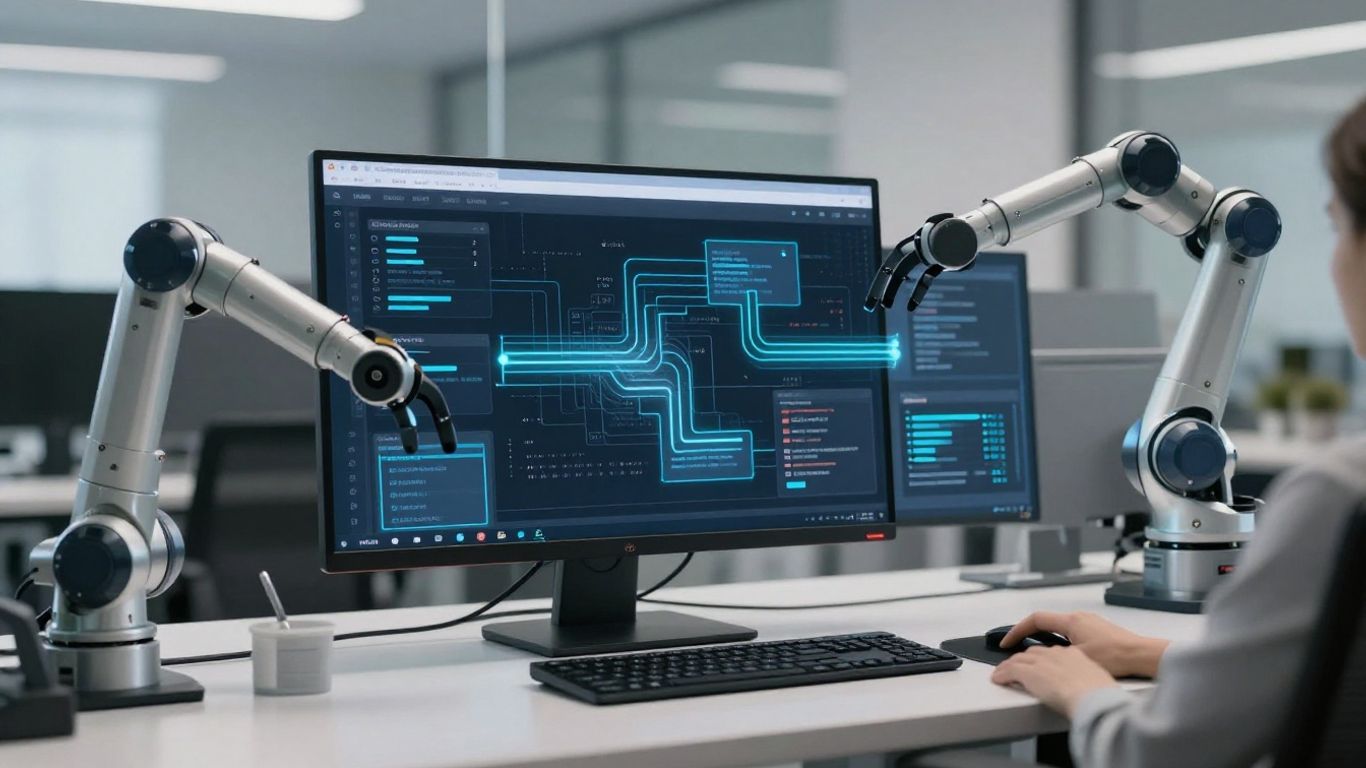
Connecting your AI to the rest of your business tools is where the real magic happens. Zapier is the glue that holds much of this together. It's not just about linking two apps; it's about creating automated workflows that make your AI genuinely useful.
Think of it like this: your AI can answer calls, take messages, and even schedule appointments. But what if that appointment needs to go into your calendar, create a task for a salesperson, and update your CRM? That's where Zapier comes in. It lets your AI talk to over 9,000 other applications.
Here's what that means in practice:
This level of integration means your AI isn't just a standalone tool. It becomes part of your business's central nervous system, automating tasks that used to require manual data entry and context switching. It saves time and reduces errors.
For example, if a customer calls and asks for pricing, the AI can not only provide the information but also automatically send a follow-up email with a link to your rate sheet, all without human intervention. Or, if a new lead calls, the AI can create a new contact in your CRM and assign a follow-up task to your sales team. This isn't just convenience; it's a fundamental shift in how efficiently your business can operate.
Remember when businesses used to sweat over having enough phone lines? Like, "Oh no, all our lines are busy!" as if there was some ancient, magical limit of five calls at once. That whole thing is pretty much over now.
Our AI receptionist doesn't just handle a few calls. It handles all of them. At the same time. All the time. It's like we gave it an infinite number of ears and the patience of a saint. Peak periods? They're basically non-events now. Black Friday, a sudden surge in interest, whatever – the system just handles it. This is scalability on steroids, offering consistency that's hard to match.
Why does this matter to you? Simple. Happier customers. Your business stays online even when things get crazy. You can scale up without the usual headaches of hiring and training. Your brand sounds the same, whether it's the first call of the day or the ten thousandth. Plus, every interaction becomes a data point, giving you insights you might have missed before. Imagine your product goes viral; thousands of calls come in. Your AI doesn't even blink. It's like the phone equivalent of that meme dog, but everything's actually fine. This feature is like giving your business a superpower. It's the kind of thing you'll wonder how you managed without, much like smartphones or pizza delivery.
Voicemails used to be a bit of a black hole. You'd get a notification, maybe listen to it later, and hope you remembered what they said. Now, AI changes that. Think of it as a super-efficient assistant who actually takes notes.
When your AI receptionist can't handle a call, it knows when to offer voicemail. But it doesn't just record. It transcribes. This means you get a text version of every message, ready to read. No more scrubbing through audio to find that one crucial detail. It’s all there, organized and searchable.
Here’s how it works:
This isn't just about convenience; it's about not missing opportunities. A transcribed voicemail means you can quickly scan your messages, prioritize what's important, and respond faster. It turns a passive system into an active part of your communication flow. It’s a simple feature, but it makes a big difference in staying on top of things, especially when you're busy or away from your desk. You can even integrate this with your other tools to automatically create tasks or update records, making sure nothing falls through the cracks. This kind of smart message handling is a core part of a modern AI receptionist service.
Most businesses treat time like it's infinite. They waste it. They squander it. They let it slip through their fingers like sand. But time is the most precious resource we have. It's the one thing you can't make more of.
That's why we built time controls into our AI receptionist. This feature lets you dictate exactly when your AI is on duty. It knows when to work. You tell it your hours, it works them. No more, no less. It adapts to holidays, seasons, and different time zones, always saying the right thing at the right time.
Why does this matter? Because time is context. A call at 9 AM is different from a call at 9 PM. A call on Christmas is different from a call on a Tuesday in March. Our AI gets this. It doesn't just answer calls, it answers them appropriately.
Think about what this means. No more "Sorry, we're closed" messages at 2 PM on a Wednesday. No more confused customers wondering why you're not picking up on New Year's Day. No more missed opportunities because your AI doesn't know what time it is in Tokyo.
It's a small thing. But small things compound. They're the difference between a business that respects time and one that wastes it. Between a customer who feels understood and one who feels frustrated.
Some will say, "Can't any answering service do this?" Sure, in theory. But in practice? Most don't. Or they do it poorly. Or they make it so complicated you need a PhD to set it up. We made it simple. Because simple scales. Simple works. Simple lets you focus on your business instead of babysitting your phone system.
So yes, we built time controls. Because in business, timing isn't just important. It's everything.
Forget those clunky chatbots that sound like they're reading from a script. We're talking about AI that can actually talk. These aren't just voice assistants; they're sophisticated agents designed to handle phone calls, understand nuance, and respond naturally. Think of them as your most reliable, always-on receptionist, but with the processing power to handle complex queries.
The real magic happens when these agents can hold a conversation, not just deliver pre-programmed answers. They can pick up the phone, schedule appointments, and answer questions, even after hours. This means no more missed calls or frustrated customers waiting for a human to become available. They can even transcribe voicemails, turning them into text you can read and act on quickly.
Here's what makes them stand out:
The goal isn't to replace human agents entirely, but to free them up. By letting AI handle the routine calls and initial information gathering, your human team can focus on the complex issues that truly require their attention. This makes everyone more effective.
Consider the difference between an AI that just takes a message and one that can actually troubleshoot a common issue or guide a customer through a process. That's the leap we're seeing. It's about making every customer interaction count, whether it's the first call of the day or the thousandth.
Forget the old way of sorting tickets. AI ticketing systems are changing the game. They don't just file things away; they actually understand what's coming in. Think of it like having a super-smart assistant who reads every email, chat, and message, figures out what it's about, and puts it in the right pile automatically.
This means less time spent by your team on manual sorting and more time solving actual problems. The AI can tag tickets, figure out how urgent they are, and even route them to the right person or department. It’s about getting the right information to the right place, fast.
Here’s what you can expect:
The real win here is speed and accuracy. When AI handles the initial triage, your human agents can jump straight into helping customers, not sifting through an inbox. It cuts down on errors and makes sure nothing falls through the cracks. It’s a simple idea, but it makes a huge difference in how smoothly support runs.
Customers don't stick to one channel anymore. They'll ping you on chat, then maybe shoot an email, or even call if it's urgent. If your support system can't keep up, you're basically telling them to get lost. Omnichannel support means all those conversations, no matter where they happen, are connected. Your AI needs to see the whole picture.
Think about it: a customer starts a chat about a problem, then later calls. Without omnichannel, the person on the phone has no idea what the chat was about. They have to ask the customer to repeat everything. That's annoying for them and a waste of time for you. A good AI system ties these threads together. It remembers the chat, sees the call, and can even pull up related emails.
This isn't just about convenience; it's about efficiency. When the AI has context from every interaction, it can solve problems faster. It knows what's already been tried, what the customer's history looks like, and what their preferences are.
The goal is to make the customer feel like they're talking to one consistent entity, not a series of disconnected departments or bots. This unified front builds trust and makes your support feel genuinely helpful, not just reactive.
Imagine your business always being available, no matter the time or day. That's the power of omnichannel support! It means connecting with your customers seamlessly across all the places they might reach out, like phone, website chat, or even text messages. This keeps everyone happy and ensures no lead is ever missed. Want to see how this can transform your customer service? Visit our website to learn more and get started today!
Look, AI for customer service isn't some far-off dream anymore. It's here, and it's changing how businesses operate. We've talked about tools that handle calls 24/7, integrate with everything you already use, and even scale up without breaking a sweat. The point isn't to replace people, but to make them better at their jobs by handling the grunt work. If you're not looking into this now, you're already behind. It’s time to figure out what makes sense for your business and start making the switch. The tools are ready, and so is the market.
An AI receptionist is like a super-smart virtual assistant for your phone. It can answer calls, schedule appointments, and answer questions 24/7, even when your office is closed. This means you never miss a customer, and your team can focus on more important tasks.
Yes! Unlike human receptionists who can only handle one call at a time, AI can handle as many calls as come in, all at the same time. This is great for busy periods or when your business suddenly gets very popular online, so no customer is ever left waiting on hold.
Think of it like connecting different apps so they can talk to each other. If your AI answers a call and needs to book an appointment, it can automatically put it in your calendar. If it takes a message, it can send it to your team's chat app. This makes everything run smoothly without you having to do extra work.
This means the AI system can handle every single call that comes in, all at the same time, without getting overwhelmed. It's like having an endless number of phone lines so your business never misses an opportunity, no matter how many people are calling.
Absolutely. The AI can take voicemails, turn them into text so you can read them easily, and even notify you when a new message arrives. It’s a smart way to make sure you don’t miss any important information, even when you’re busy.
You can set specific times for your AI receptionist to be active, just like you would for a human employee. It can work during your business hours, take breaks, and even know about holidays or different time zones. This ensures it acts appropriately based on the time and day.
Start your free trial for My AI Front Desk today, it takes minutes to setup!


