
Alright, let's talk about the best AI CRM tools for lead scoring and management in 2025. If you're trying to keep up with leads and make sure your sales team is actually talking to the right people, AI can seriously help. It's not just fancy tech anymore; it's becoming pretty standard for businesses that want to grow smart. We've looked at a bunch of options out there, and here are some of the top contenders that can make a real difference in how you handle your leads and manage customer relationships.
Salesforce Einstein is basically the AI brain for their whole CRM system. It’s not a separate product you buy and bolt on; it’s woven into the fabric of Salesforce, aiming to make sales, service, and marketing smarter. Think of it as having a really good assistant who can look at all your customer data and tell you what’s likely to happen next, or who to talk to.
One of the main things it does is predictive lead scoring. This means it looks at your leads and gives them a score based on how likely they are to become a customer. It’s not just guesswork; it analyzes past behavior, engagement, and other data points. This helps sales teams stop wasting time on leads that are probably going nowhere and focus on the ones that matter most. Studies suggest this can really move the needle on conversion rates.
Beyond just scoring, Einstein also offers insights into opportunities. It can flag deals that are at risk or suggest the next best action for a sales rep to take. It’s like having a coach looking over your shoulder, but without the annoying whistle.
Here’s a quick look at what it brings to the table:
The idea behind Einstein is to take the grunt work out of sales and service, letting people focus on building relationships and closing deals. It uses AI to sift through mountains of data and present actionable insights, making the whole process more efficient.
It’s designed for businesses that are already using Salesforce and want to add a layer of intelligence. The integration is pretty deep, so if you’re in the Salesforce ecosystem, it’s a natural fit. However, it can get complex, and the pricing can add up, especially for smaller outfits. It’s a powerful tool, but it definitely comes with a learning curve and a significant investment.

HubSpot's AI tools are built into their CRM platform, aiming to make sales and marketing tasks less of a chore. Think of it as a digital assistant that helps you write emails, sort through customer data, and even figure out which leads are most likely to buy. They call their main AI assistant 'Breeze Copilot'. It's designed to give you quick insights based on your data, which is pretty handy when you're trying to make sense of a lot of information.
For content creation, HubSpot has generative AI features that can help draft things like outreach emails. This can speed things up considerably, especially if you're sending out a lot of personalized messages. They also have a chatbot, ChatSpot, that can pull up customer information in real-time. This means if a customer asks a question, your team can get the relevant details fast.
One of the big selling points is their predictive lead scoring. This uses AI to look at your leads and tell you which ones are hot and which ones are not. Companies using this often see a jump in how many leads they convert. It's not just about finding leads, though; it's also about understanding them better. Their conversation intelligence tools analyze customer interactions, which can lead to better customer satisfaction. It’s a good option if you’re looking for a CRM that integrates AI without making things overly complicated. You can find some useful AI tools and calculators that complement these kinds of platforms.
The goal here is to automate the grunt work so you can focus on the actual selling or marketing. It’s about making the CRM work for you, not the other way around. If you’re a smaller business or just starting out, the free version offers some basic AI features, but the more advanced stuff, like AI agents and content generation, comes with their paid plans. These premium plans can start to add up, especially if you need those advanced capabilities.
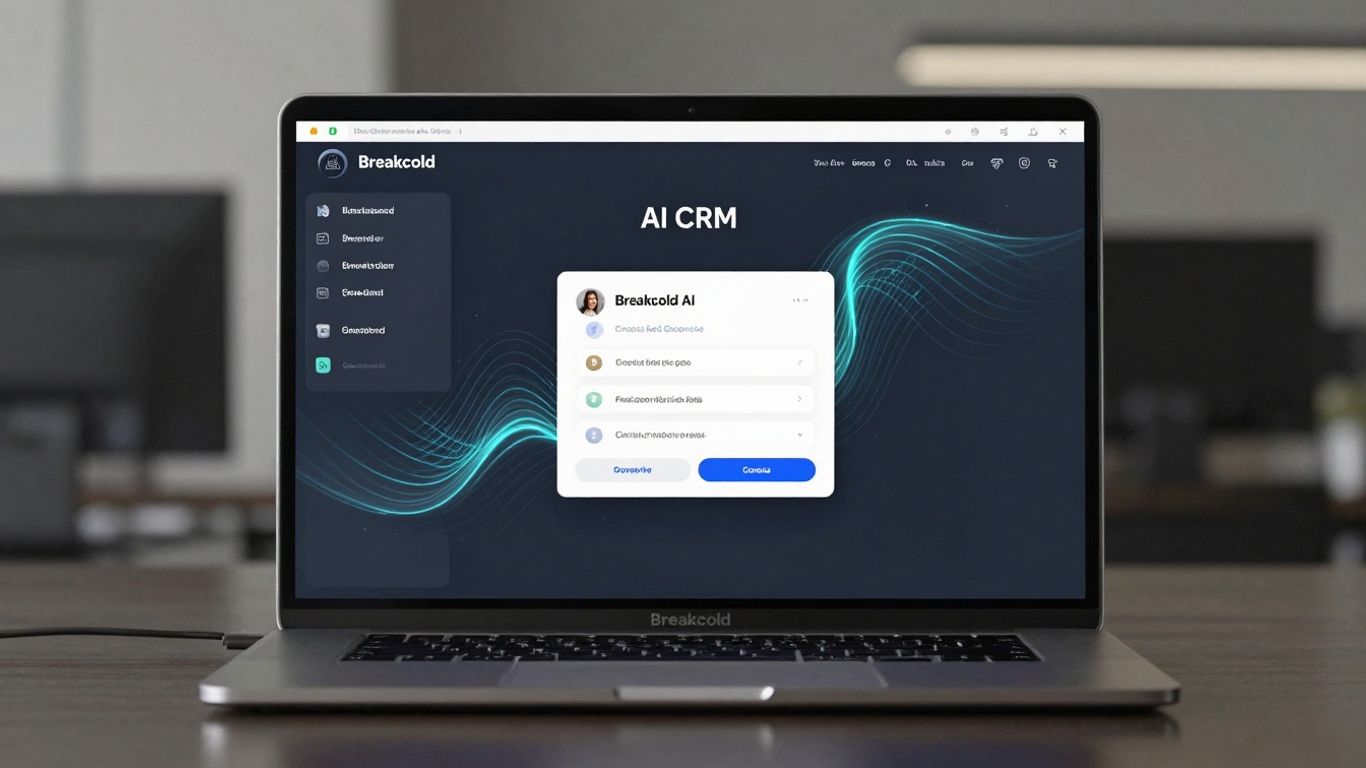
Breakcold is a newer player, but it's built with AI at its core, aiming to make sales teams work smarter, not harder. For solopreneurs and small businesses, this is a big deal. It’s like having a sales assistant that doesn’t sleep, constantly organizing things and pointing you toward the hottest leads.
The real magic is in its AI-driven lead scoring. It analyzes conversations, notes, and activity to automatically score and sort your leads. This means you’re not wasting time on prospects who aren’t ready. Instead, you can focus on those who are showing real interest. It’s a pretty straightforward way to cut through the noise.
Breakcold also has these "AI Agents" you can customize. They handle CRM tasks and suggest follow-ups, adapting to your tone and the prospect's personality. It’s a neat way to keep interactions personal without you having to manually craft every single message. Plus, the unified inbox pulls in messages from LinkedIn, email, and even WhatsApp, so you can manage everything in one spot.
It’s not just about scoring, though. The platform helps with social selling too. You can like and comment on your leads' posts directly from the CRM. Building relationships this way, consistently, without leaving your main tool, is a smart move.
Breakcold aims to simplify the sales process by automating routine tasks and providing clear insights into lead quality. It’s designed for those who want to grow their pipeline without getting bogged down in administrative work.
They also offer AI-powered data enrichment, pulling in verified emails and phone numbers. This saves you the hassle of hunting down contact details. If you're looking for a CRM that’s genuinely built around AI to streamline your workflow, Breakcold is definitely worth a look. You can check out their AI-powered outbound phone agent for more on how they automate outreach.
Freshworks CRM, formerly known as Freshsales, is a solid choice if you're looking to get a better handle on your deals. It’s got this visual sales pipeline thing that makes it pretty easy to see where everything stands. You can drag and drop deals around, which is nice, and it helps you keep track of follow-ups so nothing slips through the cracks.
What’s interesting is their AI, Freddy AI. It’s supposed to help you figure out which leads are actually worth your time. It scores them based on how they’re acting and if they seem like a good fit. They claim it boosted their own sales-qualified leads by about 25%, which is pretty significant if true.
Beyond just scoring, Freddy AI also looks at conversations and gives you insights on deals. It uses some natural language processing and predictive analytics for this. The idea is to help you understand customers better and close more business. It’s also got decent integrations, connecting with other tools you probably already use.
Here’s a quick look at what it offers:
It’s not perfect, of course. Some people find customer support can be a bit slow sometimes, and if you need to customize things a lot, you might find it a bit limited. But for managing deals and getting some AI help to focus your efforts, it’s a decent option.
The core idea here is to use AI not just for fancy predictions, but for practical help in sorting through the noise and focusing on what actually moves the needle. It’s about making the sales process less about guesswork and more about informed action.
Pipedrive is built for sales teams, plain and simple. It’s got this visual pipeline thing that makes tracking deals feel less like work and more like, well, watching something move along. You can drag and drop deals between stages, add notes, and set reminders without much fuss. It’s designed to keep you focused on what actually moves the needle.
What’s good for lead management here is how it automatically pulls in leads from web forms and emails. No more manual data entry, which is always a win. It also has a lead scoring feature that helps you figure out which prospects are actually worth your time. This focus on streamlining the sales process is its main strength.
Pipedrive also throws in some automation to handle those repetitive tasks. Think routine follow-up emails or updating deal stages. It’s not going to write your novel, but it can take care of the small stuff so you don’t have to.
Key Features for Lead Management:
Pipedrive’s AI Sales Assistant, available in higher-tier plans, offers deal insights and activity recommendations. It analyzes your sales data to suggest the best next steps, like which deals to focus on or when to follow up. It’s meant to give you a bit of an edge by pointing out patterns you might miss.
While it’s great for sales-focused teams, some of the more advanced features or integrations might require you to step up to a pricier plan. It’s not the most feature-rich CRM out there if you need a ton of bells and whistles outside of core sales functions, but for managing a sales pipeline and keeping leads warm, it does a solid job.
Zoho CRM is a solid choice, especially if you're looking to keep all your customer interactions in one place. It pulls in stuff from email, social media, chat, even phone calls, so you're not jumping between a dozen different apps. It felt pretty complete when I used it, giving a full picture of what a lead or customer was up to.
Their AI assistant, Zia, is where things get interesting for lead scoring. It looks at your data and can flag which leads are most likely to turn into actual sales. It also does sales predictions, which is handy for planning. Automation is pretty good too; you can set up workflows so that when a new lead comes in, it gets assigned, gets a welcome email, and you get a task to follow up. It’s customizable, which is always a plus.
Zoho’s strength lies in its ability to consolidate communication channels and use AI to help you focus on the right leads.
Here’s a quick look at what Zia can do:
It’s not perfect, of course. Some users find the integrations a bit limited compared to other big players, and the really advanced AI features are usually locked behind the more expensive plans. But for many businesses, especially small to medium ones, it hits a good balance between features and cost.
The pricing structure can be a bit confusing, with AI features only available on higher tiers. It's worth checking the specific plan details to make sure you're getting what you need without paying for extras you won't use.

BIGContacts is a CRM that seems to hit a sweet spot for small to medium businesses, especially those focused on contact management and email marketing. It’s not trying to be everything to everyone, which is often a good thing. The interface is pretty straightforward, meaning your team probably won’t need weeks of training to figure it out.
What stands out is how it handles leads. It pulls them in from web forms and keeps track of interactions, so you’re less likely to drop the ball. The email marketing tools are built right in, letting you segment lists and track campaign performance without needing a separate tool. This kind of integration saves time and keeps your data in one place.
They also offer a forever free plan, which is a nice touch for startups or very small teams just getting going. Paid plans start at a very reasonable $9.99 a month.
BIGContacts focuses on core CRM functions, making it accessible for teams that find other platforms overly complex. Its strength lies in streamlining lead capture and communication.
Key features include:
AI Frontdesk is built around a simple idea: make lead conversion and revenue generation easier, especially for businesses that struggle with managing inbound calls and follow-ups. They offer a suite of products designed to automate these processes, essentially acting as a virtual receptionist and sales assistant.
Their core offering is an AI-powered receptionist that can handle calls 24/7. This isn't just about picking up the phone; it's about scheduling appointments, answering questions, and even managing voicemails. The system transcribes voicemails to text, making them easy to review. The real power comes from its speed and ability to integrate. We're talking response times in milliseconds, fast enough to keep up with natural conversation. This eliminates that frustrating lag you get with some automated systems.
AI Frontdesk also has a strong focus on automation through its Zapier integration, connecting with over 9,000 apps. This means when a call ends, a lead is qualified, or an appointment is made, the system can automatically update your CRM, create tasks, notify your team, or add events to your calendar. It aims to be the central nervous system for your business communications.
For businesses looking to expand their reach, AI Frontdesk offers outbound capabilities too, with AI-driven phone, text, and email campaigns. They also have a white-label reseller program. This lets agencies and entrepreneurs brand the AI receptionist service as their own, with support for setup, marketing, and management. You can set your own prices, often between $250 and $500 per month per client, and scale up as you get more customers. The onboarding is quick, usually about seven days, and they provide resources like video tutorials and direct access to their team.
Key features include:
The focus here is on simplicity and automation. They've stripped away the complex interfaces of older CRMs, creating an AI-native system that organizes itself based on conversations. It's designed to be easy to set up and scale, whether you're using it for your own business or reselling it to others.
Oracle CX Unity is a big player, especially if you're running a large operation. It’s built for companies that deal with a massive amount of customer data and need to make sense of it all in real-time. Think of it as a central hub that pulls together information from everywhere your customers interact with you – sales, service, marketing, you name it.
The main idea is to get a really clear picture of each customer so you can give them a better experience. It uses AI to figure out what customers might want next, or what problems they might have before they even tell you. This means you can be more proactive, which usually makes customers happier and more likely to stick around.
It’s not exactly a cheap tool, and setting it up takes some serious effort and know-how. You’ll likely need IT folks involved and training for your team. But for big companies, the payoff can be significant. Some studies show pretty good jumps in customer satisfaction and revenue after using it.
Key Features
If you're a smaller business, this might be overkill. But for enterprises looking to really nail customer experience across the board, Oracle CX Unity is a serious contender. It’s built for scale and complexity.
Microsoft Dynamics 365 AI is a serious contender if you're looking to beef up your sales and customer insight game. It's built on the idea that AI can help you understand customers better and speed up sales cycles. Think of it as a smart assistant for your sales team, but one that doesn't need coffee breaks.
What it does well is crunch data. It uses machine learning to dig into customer behavior and predict what might happen next. This means things like automated lead scoring, which helps your team focus on the hottest prospects, and better sales forecasting. Microsoft claims this can boost sales productivity by up to 30%, which is a number worth paying attention to.
One of the big pluses is how it plays with other Microsoft products. If your company is already deep in the Microsoft ecosystem – Office 365, LinkedIn, you name it – Dynamics 365 AI fits right in. This integration means you can pull in a lot of data from different places, giving you a more complete picture of your customers.
The complexity here is worth noting. While powerful, getting Dynamics 365 AI up and running, especially for larger outfits, can take some serious IT muscle. It's not exactly plug-and-play.
Here's a quick look at what you get:
Pricing starts around $65 per user per month for the basic Sales Professional version. It's a solid option, especially if you're already a Microsoft shop, but be prepared for a potentially involved setup process.
Discover how Microsoft Dynamics 365 AI can help your business. Our smart tools can handle customer calls, qualify leads, and even book appointments, all while you focus on what matters most. See how our AI solutions can transform your operations. Visit our website today to learn more!
Look, picking the right AI CRM isn't rocket science, but it's not exactly picking daisies either. You've seen the options, the fancy features, and the price tags. The real trick is matching a tool to how you actually work. Don't get bogged down in what's popular; figure out what solves your problems. Most businesses just need something that makes lead scoring less of a headache and keeps the sales team focused on people who actually want to buy. Start simple, test it out, and if it works, great. If not, well, you learned something. The AI train isn't slowing down, so get on board with something that makes sense for your business, not just for the hype.
Lead scoring is like giving potential customers a grade. It helps sales teams figure out which leads are most likely to buy something. The CRM looks at what a lead does, like visiting a pricing page, and who they are, like their job title, to give them a score. Higher scores mean they're more interested and a better fit.
AI makes lead management much smarter. It can automatically sort and organize leads based on conversations, spot the best leads for your team to focus on, and even suggest personalized messages to send. This saves a lot of time and helps sales reps work more efficiently.
Yes, some AI CRMs can act like a 24/7 phone receptionist. They can answer calls, take messages, schedule appointments, and answer common questions even when your business is closed. This means you never miss a potential customer, no matter the time.
When AI organizes your CRM data, it cuts down on messy, manual work. It can automatically put leads into the right groups, merge duplicate contacts, and keep your information tidy. This makes it way easier to find what you need and keeps your team on the same page.
Many modern AI CRM tools are designed to be super simple to set up and use. Some use plain English to create automated tasks or workflows, meaning you don't need to be a tech expert. The goal is to make powerful AI features easy for any business to use.
AI CRM tools help you make more money by focusing your sales team's efforts on the leads that are most likely to buy. By scoring leads and automating follow-ups, you can close more deals faster. Plus, AI can help you understand customer behavior better, leading to more effective sales and marketing strategies.
Start your free trial for My AI Front Desk today, it takes minutes to setup!


