
It feels like every day there's something new happening with AI, especially when it comes to healthcare. We're seeing tools pop up that are changing how doctors and patients interact, how appointments get made, and even how new medicines are found. It's a lot to keep up with, but it's pretty exciting stuff. This article is going to look at some of the latest voice AI news in healthcare, covering what's new and what might be coming down the road.
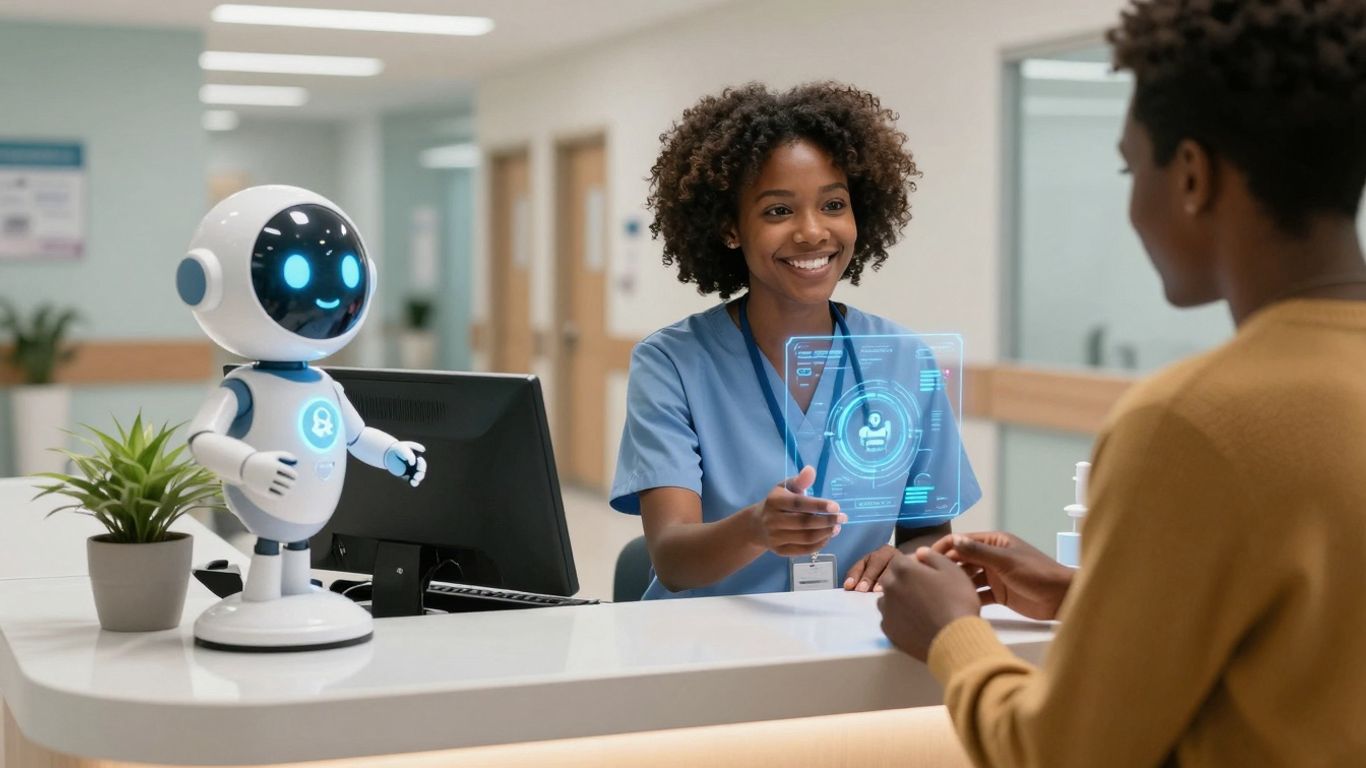
Forget the days of busy signals and endless hold music. AI receptionists are here, and they're changing how businesses handle incoming calls. Think of it as a digital front desk that never sleeps, never gets tired, and can talk to everyone at once. This isn't just about answering phones; it's about making sure no lead or patient inquiry slips through the cracks.
An AI receptionist isn't just a standalone gadget. Its real power comes from connecting with the tools you already use. We're talking about things like CRMs, calendars, and even project management software. Through integrations, like Zapier which connects to thousands of apps, the AI can do more than just take a message. It can update your customer records, schedule appointments directly into your calendar, or create a task for your sales team. This means less manual data entry for your staff and a smoother flow of information across your entire business. It’s like giving your business a central nervous system that keeps everything in sync.
Even with an AI receptionist, some messages will still end up in voicemail. But this isn't your old-school answering machine. The AI can intelligently offer voicemail options when it can't handle a query. Then, it transcribes those voicemails into text. You get a notification, and you can read the message instead of listening to it. This saves time and makes it easier to sort and respond to messages quickly. It’s a small change, but it makes a big difference in staying on top of communications.
This is where AI really shines. Remember when a busy signal meant a lost customer? With AI receptionists, that's a thing of the past. These systems can handle an unlimited number of calls simultaneously. It doesn't matter if you have ten calls or ten thousand – the AI can manage them all without a hitch. This means no more missed opportunities, no more frustrated callers, and a consistent experience for everyone who reaches out. It’s like having a phone system with infinite capacity, ready for whatever volume comes your way.
Think about the last time you were on the phone with a business and the response felt sluggish. It’s like waiting for someone to find the right words, but it’s a machine. That’s not just annoying; it breaks the flow. In voice AI, speed isn't a luxury, it's the foundation of a good conversation. We're talking about response times measured in milliseconds. That's fast enough that you don't even notice a pause. It makes the interaction feel natural, like talking to a person who’s really on the ball.
This isn't just about answering quickly. It's about thinking quickly. When a complex question comes up, the AI needs to process it and respond without missing a beat. This speed transforms a potentially frustrating experience into something smooth. It’s the difference between feeling like you’re talking to a clunky piece of tech and someone who actually understands.
Latency matters. A lot. When a voice AI takes too long to respond, it disrupts the natural rhythm of a conversation. It feels awkward, and people notice. We’ve engineered our systems to react in milliseconds, which is fast enough to keep pace with human speech. This speed is what makes the AI feel less like a tool and more like a participant in a real dialogue.
It’s not just about speed, but also about how the AI handles the conversation. Can it understand nuanced questions? Can it keep up with the back-and-forth without sounding robotic? We’re pushing past the old limits of machine-like responses to create AI that can handle complex queries and maintain a natural conversational flow. It’s about making the interaction feel as effortless as talking to a colleague.
We don't just build it and forget it. There's a constant effort to make the AI faster and smarter. This involves a dedicated team looking at every tiny fraction of a second, tweaking algorithms, and refining processes. The goal is to shave off any unnecessary delays, ensuring the AI is always performing at its best. Because in conversation, every bit of responsiveness counts towards a better user experience.

Getting your own AI receptionist service off the ground used to be a huge undertaking. Now, with white-labeling, you can slap your brand on a proven AI solution and start selling it. It’s like buying a pre-fab house and painting it your favorite color. You get the structure and reliability without building it from scratch. This means you can focus on what you do best: selling and supporting your clients. You control the customer relationship, the pricing, and the overall experience. It’s your brand, your reputation, and your profit. This approach lets you build a business around AI without needing to be an AI engineer yourself. You're essentially a service provider, but the heavy lifting of the tech is handled for you. It’s a smart way to enter a hot market quickly.
Starting a new venture often means big upfront costs and long setup times. That's not the case here. The entry point is surprisingly low. You might only need to commit to a handful of accounts to get started. This lets you test the waters, maybe even use the service for your own business first. The setup itself is fast, often taking about a week from signing up to having your branded solution ready to go. Think about it: a week to launch your own AI receptionist service. That’s faster than most people take to decide on a new office chair. This speed means you can start generating revenue and learning from real customers almost immediately. It’s about getting a functional product out there and iterating based on feedback, not getting bogged down in development hell.
Even with a great white-label product, you still need help to grow. These reseller programs usually come with solid support. You get access to people who can help you figure out marketing strategies or troubleshoot issues. There are often private channels to talk directly with the team behind the tech, which is pretty handy. Plus, you usually get training materials – videos, guides, that sort of thing – to help you understand the system and how to sell it effectively. This isn't just about getting the tech; it's about getting the knowledge to make it work for your business. They want you to succeed because your success is their success. It’s a partnership, not just a transaction. You can manage your clients and see how they're doing all from one place, which makes running things a lot smoother. This kind of support is what separates a quick fling from a long-term business relationship.
Voice AI is quietly becoming a bigger deal in how healthcare works. It's not just about answering phones anymore; it's about making things smoother for doctors and patients alike.
Think about getting reminders for your medication or being able to check in on your symptoms without having to call the clinic. Voice AI makes this possible. Virtual assistants can reach out to patients, track their progress, and offer simple health advice. This keeps people more involved in their own care and can lead to better results. It's like having a helpful assistant available anytime, which is a big change from just waiting for your next appointment.
Doctors spend a lot of time on paperwork. Voice AI can help change that. By connecting with Electronic Health Records (EHRs), these systems can automatically document patient visits or update records as the doctor speaks. This means less time typing and more time focusing on the patient. It's a way to cut down on the busywork that often leads to burnout.
With more people needing care at home, voice AI is stepping in. It can help manage chronic conditions by checking in with patients regularly. For telehealth appointments, it can assist with scheduling and even provide basic support during the call. This makes it easier for people to get care without leaving their homes, which is especially important for those who have trouble traveling or live far from a clinic.

AI is getting really good at spotting things humans miss, or at least spotting them faster. Think about medical imaging – X-rays, MRIs, CT scans. AI models can now analyze these images with impressive accuracy, sometimes even better than a radiologist looking at them. This isn't about replacing doctors, but giving them a super-powered assistant. It means catching diseases like cancer or eye conditions earlier, when they're much easier to treat. For example, AI can sift through thousands of scans in minutes, flagging potential issues that might take a human hours to find. This speed is a game-changer, especially in places with a shortage of specialists.
The goal here is to make diagnostics more accurate and accessible, cutting down on the time it takes to get an answer and improving the chances of a good outcome for patients.
Developing new drugs is usually a long, expensive slog. Generative AI is changing that. It can design new molecules from scratch, predict how they'll behave, and even help figure out personalized treatments based on a person's unique genetic makeup. This speeds up the whole process dramatically. Instead of years of trial and error in the lab, AI can explore countless possibilities virtually. This means potentially getting life-saving medications to patients much sooner and at a lower cost. It's like having a super-intelligent chemist working around the clock.
When you think about surgery, precision is everything. AI is making surgical robots even smarter. These aren't just remote-controlled tools anymore; they're becoming more autonomous, assisting surgeons with incredibly delicate tasks. AI can help guide robotic arms with sub-millimeter accuracy, analyze real-time data during an operation, and even provide surgeons with predictive insights. This leads to less invasive procedures, quicker recovery times for patients, and a reduction in surgical errors. It’s a big step towards making complex surgeries safer and more effective.
Looking ahead, healthcare AI isn't just about doing things faster; it's about fundamentally changing how we approach health. We're moving towards systems that can anticipate problems before they even show up.
This is a big one. Instead of just treating sickness, we're getting better at stopping it before it starts. AI can sift through massive amounts of data – think patient histories, genetic information, even environmental factors – to spot patterns that signal a higher risk for certain diseases. This proactive approach could save countless lives and significantly lower healthcare costs. It's like having a crystal ball, but based on solid data.
The goal here is to shift from reactive care, where we fix problems after they occur, to a preventative model that keeps people healthier in the first place. It's a smarter, more efficient way to manage health on a large scale.
Think about your doctor's visits. Often, a lot of time is spent with the doctor typing notes. Ambient AI aims to change that. These systems listen in (with permission, of course) during patient encounters and automatically document what's happening. This frees up clinicians to focus entirely on the patient. Conversational AI, like advanced chatbots and virtual assistants, will also become more common for patient support, appointment scheduling, and answering common health questions 24/7.
Healthcare needs to be for everyone, regardless of language or ability. AI is playing a key role here. We'll see more tools that can communicate in multiple languages, breaking down communication barriers between patients and providers. Accessibility features, like AI-powered tools for individuals with visual or hearing impairments, will also become more integrated. This ensures that the benefits of AI in healthcare reach a wider, more diverse population.
The world of healthcare is changing fast, and AI is leading the way! Imagine smarter tools helping doctors and nurses, making patient care better and faster. From spotting diseases early to creating personalized treatment plans, AI is becoming a super helper in hospitals. Want to see how this tech can help you? Visit our website to learn more about the amazing things AI is doing in healthcare today!
So, what does all this mean? Voice AI in healthcare isn't some far-off sci-fi concept anymore. It's here, and it's already making a real difference. From handling calls when no one else can to helping doctors figure out what's wrong faster, the tech is getting smarter and more useful. The big picture is clear: more efficiency, better patient care, and maybe even a little less burnout for the folks on the front lines. It’s not perfect, and there are still kinks to work out, especially around privacy and making sure everyone can use it. But the momentum is undeniable. Expect to see even more of this tech popping up everywhere in the next few years. It’s going to change how healthcare works, plain and simple.
Think of an AI receptionist as a super-smart virtual assistant for your phone. It can answer calls anytime, day or night, schedule appointments, and answer common questions. This means your business never misses a customer, even after hours, and your human staff can focus on more important tasks instead of just answering phones.
This AI is incredibly fast, responding in just milliseconds – that's quicker than you can blink! In a conversation, speed matters a lot. If an AI is too slow, it feels robotic and frustrating. Our AI keeps up with a natural chat, making the experience smooth and pleasant for whoever is calling.
A reseller program lets other businesses or individuals sell our AI receptionist service under their own brand name. It's perfect for agencies or tech enthusiasts who want to offer advanced AI tools to their clients without building the technology themselves. You can add your own branding, and we handle the tech part.
In healthcare, AI can do many things. It can help doctors diagnose illnesses faster and more accurately, speed up the process of finding new medicines, and even assist surgeons with robotic tools. It also helps patients by reminding them to take medicine, answering their health questions, and making telehealth appointments easier.
Some of the coolest new things include AI that helps doctors find diseases by looking at scans, like X-rays or MRIs, with amazing accuracy. Generative AI is also a big deal; it's helping scientists discover new drugs much faster. Plus, AI is making robots more precise for surgeries, leading to better outcomes for patients.
We'll see AI getting even better at predicting diseases before they happen, using smart data analysis. AI will become more like a helpful assistant that's always around, understanding conversations naturally. Also, AI will be available in many languages and easier for everyone to use, no matter their background.
Start your free trial for My AI Front Desk today, it takes minutes to setup!


