
The way we interact with healthcare is changing, and a big part of that is thanks to AI voice agents. These aren't just fancy voice assistants; they're becoming really important tools in hospitals and doctor's offices. Think about tasks like booking appointments or getting health reminders – AI is making these simpler and faster. This article looks at how the ai voice agents in healthcare market is growing, what's new, and what we can expect down the road. It's a pretty interesting space to watch.

The AI voice agents in healthcare market isn't just growing; it's exploding. We're talking about a sector that was valued at around $650 million in 2026 and is projected to hit over $11 billion by 2035. That's a massive jump, fueled by a CAGR that's frankly hard to ignore. This isn't some niche tech anymore; it's becoming a core part of how healthcare operates. Think of it like the early days of the internet – everyone’s realizing it’s not just a fad, but a fundamental shift.
Why the sudden surge? Several things are pushing this forward. First, there's the sheer need to cut down on administrative work. Doctors and nurses are drowning in paperwork, and AI voice agents can automate a lot of that, like taking notes during patient visits. Then there's the push for better patient engagement. Reminding people to take meds or check in on their symptoms via voice is way more personal than a text message. Plus, with telehealth becoming normal, these agents are perfect for handling initial questions or scheduling.
The technology is maturing fast. What used to be clunky and robotic is now surprisingly natural. This improved user experience is a big reason why more healthcare providers are willing to try it out.
Right now, North America is leading the pack. They've got the infrastructure and the investment to adopt these technologies quickly. But don't count out other regions. Asia Pacific, in particular, is showing some serious growth potential. As these markets develop their healthcare systems and embrace digital solutions, AI voice agents are likely to become a standard tool there too. It’s a global trend, just at different speeds.
AI voice tech in healthcare isn't just about talking machines anymore. It's about making things work better, faster, and with less hassle. The real progress is happening in how these systems connect and what they can actually do.
Think of ambient AI as a silent observer. It listens in on doctor-patient conversations and automatically writes notes. This means doctors can focus on the patient, not their keyboard. Conversational AI, on the other hand, is the friendly voice that handles scheduling, answers basic questions, or guides patients through telehealth visits. It's about making interactions feel natural, not robotic.
The goal here is to remove friction. If a system can handle the mundane tasks, clinicians have more time for actual care. It’s a simple idea, but the execution is complex.
This is where the magic really happens. AI voice agents that can talk directly to Electronic Health Records (EHRs) are a game-changer. Instead of manually entering data, the AI does it. This isn't just about saving time; it's about accuracy. When information flows directly from a conversation into the patient's record, the chances of errors drop significantly.
Older voice systems struggled with accents, background noise, or medical jargon. Today's AI is much smarter. Natural Language Processing (NLP) allows the AI to understand the meaning behind the words, not just the words themselves. Better speech recognition means it can pick up on nuances, even in noisy environments like a busy clinic. This makes the technology more reliable and useful in real-world healthcare settings.
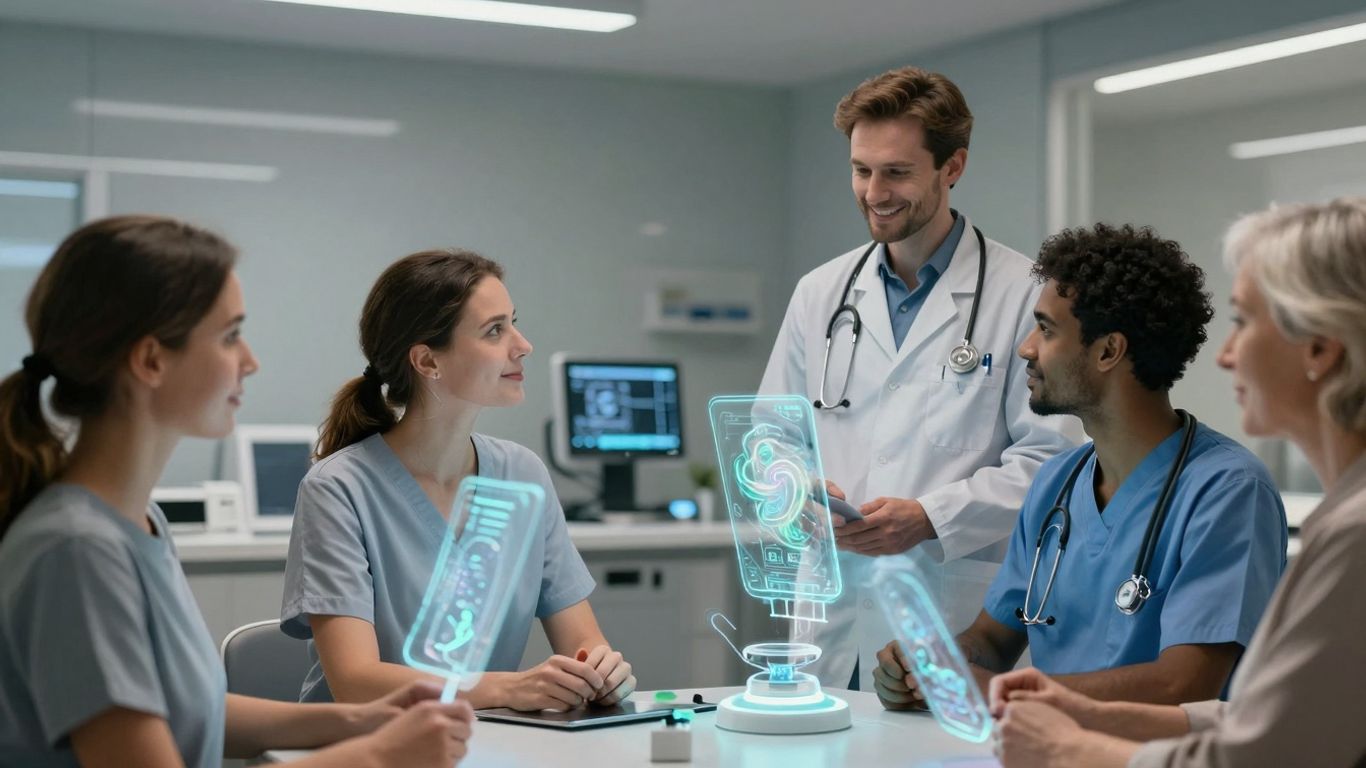
AI voice agents are changing how patients interact with healthcare. It's not just about answering calls anymore; it's about making healthcare more accessible and personal. Think about it: people expect instant answers and easy access to services, just like they get from their banks or online stores. Healthcare is finally catching up.
Instead of waiting for patients to call with problems, AI can now reach out. It can check in on folks with chronic conditions, remind them to take meds, or ask about symptoms. This means catching issues early, before they become big problems. It's like having a helpful assistant for every patient, keeping an eye on things without being intrusive.
This shift from reactive to proactive care is a big deal. It means fewer emergency room visits and better long-term health for people. It's about preventing illness, not just treating it after it happens.
Everyone's health journey is different. AI voice agents can tailor advice and reminders to each person's specific needs. Got a follow-up appointment? The AI can remind you and even help you reschedule if needed. Need to know how to manage a new diagnosis? It can provide clear, simple information. This kind of personalized attention makes patients feel more in control of their health.
Telehealth is here to stay, and AI voice agents make it even better. They can help patients get set up for virtual visits, answer common questions before and after appointments, and even help with basic triage. This frees up doctors and nurses to focus on the complex cases, while the AI handles the routine stuff. It makes remote care more efficient and less of a hassle for everyone involved.
The goal is to make healthcare interactions as easy and convenient as possible, fitting into people's lives rather than disrupting them.
Look, healthcare is drowning in paperwork. Doctors spend more time typing than talking to patients, and the admin staff? They're buried under calls and scheduling. AI voice agents are starting to fix this. They're not just fancy chatbots; they're tools that actually make the system work better.
This is probably the biggest win right now. Think about it: doctors talking to patients, and the AI just listens. It picks up the important stuff and turns it into a clinical note. No more typing after a long day. Some systems can even structure it for the EHR automatically. This saves hours each week. It means doctors can actually focus on the person in front of them, not the screen.
The real value here isn't just saving time. It's about bringing back the human element to medicine. When doctors aren't glued to a computer, they make better eye contact, listen more, and patients feel heard. That's good medicine.
How many calls does a typical clinic get just for scheduling? A ton. And a lot of them go unanswered. AI voice agents can handle this. They can answer calls 24/7, figure out what the patient needs, and book appointments. For simple stuff, they can even do basic triage, asking questions to figure out if it's urgent or not. This frees up the front desk for more complex issues.
All this automation adds up. Less time spent on documentation means more time for patient care. Fewer missed appointments and more efficient scheduling mean better revenue. Automating routine calls and tasks means you don't need as many people doing them, or the people you have can do more important work. It's about making the whole system run smoother and cheaper. The goal is to use AI to multiply the effectiveness of the staff you have, not necessarily replace them.
To actually win in this AI voice agent space, companies need to stop thinking about just selling a piece of tech. It’s about building something that fits into how healthcare actually works, day in and day out. This means focusing on a few key areas that make a real difference.
Forget one-off tools. The real play is building platforms that can grow with a healthcare system. Think about how Innovaccer is trying to unify data. That’s the direction. You need solutions that can handle more than just one task, that can connect different parts of a hospital or clinic. This isn't just about adding more features; it's about creating a foundation that other tools can plug into. It’s like building a city, not just a single house. You need infrastructure.
The market is moving past simple point solutions. Buyers want platforms that can adapt and grow, becoming a core part of their operations rather than an add-on.
This is non-negotiable. Healthcare deals with incredibly sensitive information. If your AI voice agent isn't secure and compliant with things like HIPAA, you're dead on arrival. It’s not just about avoiding fines; it’s about trust. Patients and providers won't use something they don't trust with their data. This needs to be baked in from the ground up, not bolted on later.
No one company can do it all. You need to work with others. This means partnering with EHR vendors, other health tech companies, or even research institutions. It’s about building an ecosystem. For investors, this means looking for companies that aren't just building a product, but a network. Think about how RevSpring integrates communication and payment workflows. That kind of specialized integration, often built through partnerships, is where the real value is created.

AI voice agents in healthcare aren't just a passing trend; they're becoming a core part of how care is delivered. We're moving beyond simple chatbots answering basic questions. The real shift is happening now, from reactive support to proactive intervention.
Think about it. Right now, most AI voice agents are like a receptionist waiting for the phone to ring. They answer calls, take notes, or respond when you ask. That's useful, sure, but it's not exactly groundbreaking. The next big step is AI agents initiating contact. They'll look at your health data – maybe from your electronic health record (EHR) or a wearable device – and reach out before there's a problem.
Imagine an AI agent calling you after surgery to check on your recovery, reminding you about meds, and flagging any issues to your doctor. Or maybe it notices your glucose monitor readings are off and suggests a check-in. This isn't science fiction; it's the direction things are headed. It means fewer hospital readmissions and better management of long-term conditions. It's about using AI to keep people healthier, not just to answer their questions when they're already sick. This proactive approach is key to improving patient outcomes.
Value-based care is all about paying for results, not just for doing things. AI voice agents fit perfectly into this. By helping manage chronic diseases better, reminding patients about check-ups, and preventing costly emergency visits, these agents directly contribute to better health metrics. This means healthcare providers can earn more because their patients are healthier. It's a win-win.
Here’s a quick look at how AI supports this shift:
The future isn't just voice. It's multimodal. AI agents will combine what you say with other data points. Think about analyzing the sound of your voice for signs of stress or illness. Or correlating your spoken symptoms with data from your smartwatch.
We're also seeing AI get smarter about how it integrates. Instead of just being a standalone tool, it's becoming the central nervous system for business operations. For example, AI receptionists that can update your CRM, create tasks, and even send follow-up texts automatically after a call ends. This level of integration means less manual work and more focus on actual patient care. The goal is to weave this technology so deeply into healthcare that it becomes invisible, just working in the background to make everything smoother and more effective.
AI voice assistants are changing how doctors and patients connect. Imagine getting appointment reminders or health tips just by talking to your phone! These smart tools can help manage patient care and make healthcare easier for everyone. Want to see how this technology can help your practice? Visit our website to learn more about AI solutions for healthcare.
So, AI voice agents in healthcare are clearly not just a fad. They're becoming a standard tool, like a stethoscope or a good pair of gloves. We're seeing them handle everything from booking appointments to reminding folks about meds. The tech is getting faster, smarter, and, importantly, more integrated. It's moving beyond just answering calls to actually helping manage patient care. Expect this to keep growing, especially as more places realize how much time and money it can save. It's a big shift, and it’s happening now.
It's like a perfect storm! First, there aren't enough healthcare workers, so businesses need help. Second, people are used to getting instant service from apps and online stores, and they expect the same from their doctors. Finally, the technology has gotten really good and affordable, allowing hospitals to use smart tools without spending a fortune. This means they can see the benefits right away.
The market is expected to grow a lot! It was worth about $650 million in 2026 and is predicted to reach over $11 billion by 2035. That's a huge jump, showing how much healthcare is changing because of these tools.
North America is leading the way. They have great healthcare systems already, they're quick to adopt new tech like AI, and they invest a lot in new health technologies. Plus, many big tech and healthcare companies are based there.
These tools are used in many ways! They help talk to patients and remind them about appointments or medicines. They can also help doctors and nurses by taking notes during visits, making it easier to schedule appointments, and helping with paperwork. They're also great for telehealth, letting people get care from home.
Things are getting smarter! AI is being used to listen in on doctor visits and automatically write notes (that's called ambient AI). They're also getting better at understanding different languages and accents, making them useful for everyone. Plus, they're connecting more closely with patient records to give doctors better information.
Yes, safety and privacy are super important. Companies are working hard to make sure these tools follow strict rules, like HIPAA, to protect sensitive patient data. It's a big focus as these tools become more common.
Start your free trial for My AI Front Desk today, it takes minutes to setup!


