
Running a small business means you're probably wearing a lot of hats. One of the biggest challenges is keeping up with customer calls and inquiries, especially when you're busy with other tasks. That's where AI virtual receptionists come in. They can handle your calls, schedule appointments, and even capture leads, freeing you up to focus on what you do best. But with so many options out there, figuring out which AI receptionist is best for small businesses can feel overwhelming. This guide breaks down what these services do, how they work, and what to look for.
Running a small business means you're probably juggling a dozen things at once. You're the boss, the bookkeeper, and often, the person who answers the phone. But what happens when the calls just keep coming, especially when your team is already stretched thin? That's where an AI receptionist really starts to shine.
Think of it as your tireless virtual assistant, always ready to pick up the phone, answer questions, and even book appointments. This technology can really change how you handle customer interactions, making things smoother for you and better for your clients. It's not just about answering calls; it's about capturing opportunities you might otherwise miss.
Here's why it matters:
The real value isn't just in saving time or money, though those are big perks. It's about creating a more professional, responsive business that customers appreciate. In today's world, that kind of attention to detail makes a difference.
When you're looking at AI virtual receptionist services, it's not just about having someone answer the phone. There are several core features that really make these systems work for a small business. Think of it like picking tools for a workshop; you need the right ones for the job.
First off, automated call answering and intelligent routing is the baseline. The AI needs to pick up instantly, sound professional, and figure out who or what the caller needs. It's like a super-efficient gatekeeper asking the right questions to send people to the correct place without you lifting a finger. Some can even tell what the caller wants and log it, so you know who called and why.
Then there's appointment scheduling. Nobody likes playing phone tag to book a meeting. A good AI receptionist should connect directly to your calendar. It can handle new bookings, rescheduling, and even send reminders. This cuts down on no-shows and saves your staff from the tedious back-and-forth. For fields like law or healthcare, this is a lifesaver.
Advanced lead qualification is another big one. It's not just about answering questions; it's about identifying potential customers and figuring out if they're a good fit. The AI can ask specific screening questions based on your business. This filters out unqualified leads, saving your sales team time. It's like having a pre-sales team working 24/7.
Here's a quick rundown of what matters:
The real value comes when the AI can do more than just answer. It should actively help your business by capturing leads, scheduling meetings, and filtering out noise. This frees up your human team to focus on what they do best, which is usually more complex or relationship-driven work.
Finally, consider multichannel support. Customers don't just call anymore. They text, they chat online, they email. An effective AI receptionist can handle more than just phone calls, providing a unified experience across different ways people reach you.
Answering Agent positions itself as a revenue generator, not just a call handler. It aims to turn every customer interaction into a business opportunity, which is a pretty bold claim. The idea is that by responding instantly and professionally, you keep callers engaged and prevent them from hanging up or going elsewhere. This is especially important for small businesses where every lead counts.
They highlight a few key functions:
The core pitch here is about efficiency and capturing value from every call. It's about making sure that when someone calls your business, they get a helpful response immediately, rather than hitting a dead end. This can make a real difference for businesses that are stretched thin.
They claim to answer calls in under a second and handle unlimited inquiries. The big number they throw around is saving businesses around $50,000 annually compared to hiring human receptionists. That's a significant chunk of change for a small operation. It's designed to scale, meaning it should handle a sudden surge in calls without faltering, which is a common pain point for growing businesses.
My AI Front Desk positions itself as a straightforward solution for small businesses looking to automate call handling and lead conversion. The core idea is simple: never miss a call, especially after hours, and turn those calls into revenue. They offer a 24/7 phone receptionist that can schedule appointments and answer common questions.
What stands out is their emphasis on simplicity and ease of setup. For a small business owner already juggling a million things, this is a big deal. They also have a white-label reseller program, which is interesting if you're looking to offer AI receptionist services under your own brand. It seems like they've built a system that's both functional and accessible.
Their integration capabilities are pretty extensive, particularly through Zapier. This isn't just about connecting a few apps; it's about making your AI receptionist the hub of your business operations. Imagine a call ending and your CRM automatically updating, or a new task being created based on the conversation. That's the kind of automation they're talking about. It means less manual data entry and more time spent on actual business.
The real value here isn't just answering the phone. It's about making the phone system work for you, turning every interaction into a potential lead or a streamlined process. It's about building a more connected and efficient business without adding complexity.
Key features include:
Smith.ai is a service that offers a blend of AI and human receptionists, aiming to give small businesses a more polished front. They focus on things like lead qualification and outbound calls, which can be a real time-saver if you're swamped. It's not just about answering the phone; they try to help you capture and nurture potential customers.
One of the things that stands out is their integration capabilities. They boast connections with over 30 CRMs, which means it can likely fit into your existing workflow without too much fuss. This is important because you don't want another tool that just sits there, disconnected from everything else.
Here's a quick look at their basic structure:
They also mention security features like SSL encryption and GDPR compliance, which are good to see. It suggests they're thinking about data protection, a growing concern for any business. The idea is to handle the routine stuff so you can focus on the bigger picture. It’s a solid option if you’re looking for a service that goes beyond just basic call answering and tries to actively contribute to your business growth.
Ruby Receptionists offers a blend of human touch and AI efficiency, aiming to provide a more personal feel than purely automated systems. They position themselves as a partner for small businesses looking to manage calls and customer interactions without missing a beat. It's not just about answering the phone; it's about making sure every caller feels heard and every opportunity is captured.
What sets Ruby apart is their focus on live receptionists augmented by technology. While many services lean heavily on AI, Ruby emphasizes that real people are at the core of their service. This hybrid approach means you get the warmth and adaptability of a human agent, backed by the speed and consistency of AI tools. They handle tasks like answering calls, scheduling appointments, and taking messages, all while aiming for a professional and friendly tone.
They aim to integrate smoothly with your existing workflows, making the transition to a virtual receptionist service as painless as possible. It’s about freeing up your time so you can focus on running your business, not just managing its communications. If you're looking for a service that feels less like a robot and more like an extension of your own team, Ruby might be worth a look. They offer a way to scale your customer service without scaling your overhead, a common challenge for growing businesses.
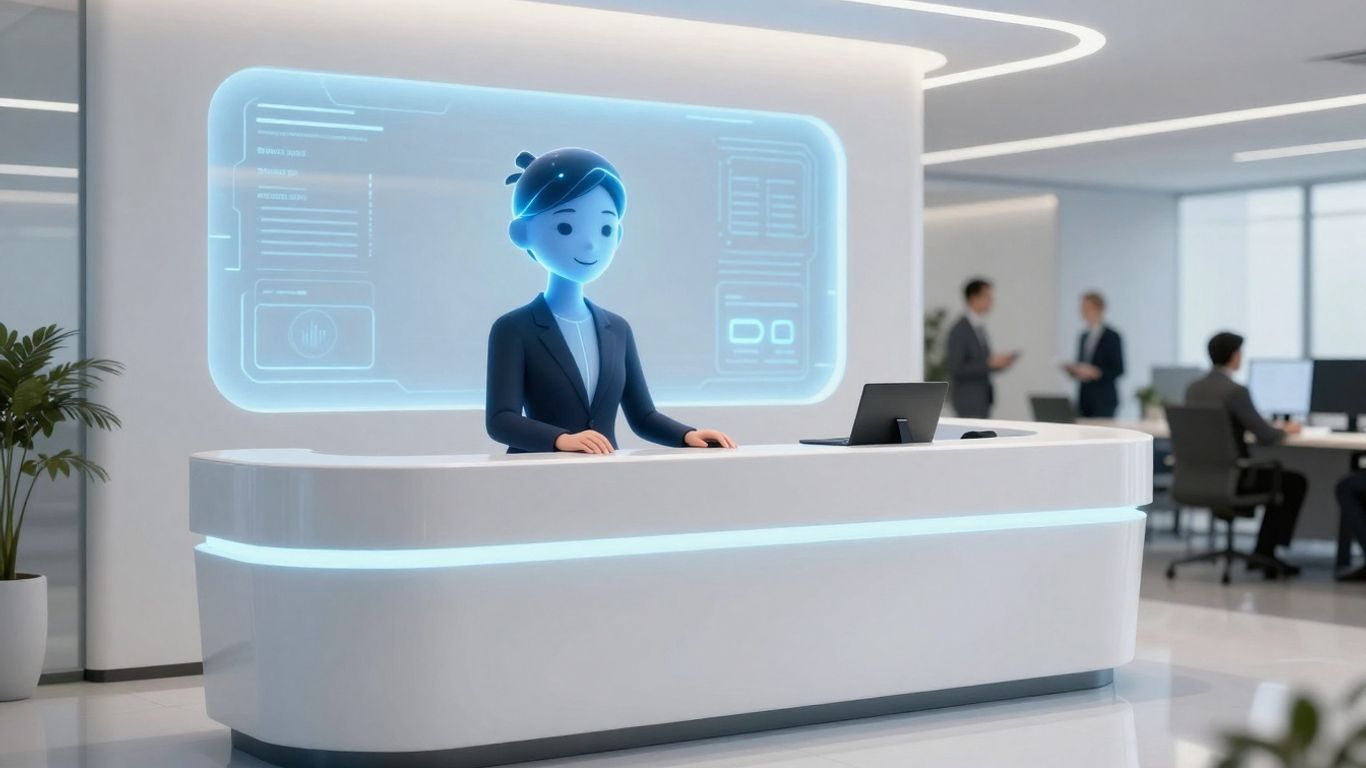
Tidio AI steps in as a pretty straightforward option for small businesses looking to automate some of their customer interactions. It’s not trying to be the most complex system out there, but it gets the job done for basic needs. Think of it as a helpful assistant that can handle a good chunk of your incoming queries without you needing to hire more staff.
What Tidio AI really focuses on is making things easy. You can get it set up without needing a degree in computer science. It’s designed to be user-friendly, which is a big deal when you’re already juggling a million other things running a small business.
It’s good at answering frequently asked questions, directing calls, and even taking messages. This means your actual team doesn't have to deal with the same repetitive questions over and over. They can focus on the customers who need more in-depth help or the tasks that actually move the needle for your business.
While it might not have all the bells and whistles of some of the more high-end AI receptionists, Tidio AI offers a solid foundation for automating customer service. It’s a practical choice for businesses that want to improve their responsiveness without a huge investment or a steep learning curve. It’s about making your customer interactions smoother and freeing up your team’s time, which is a win-win.
Vonage, a name you might know from business communications, also offers an AI voice agent. It's not just about making calls; it's about making those calls smarter and more efficient. Think of it as a digital assistant that can handle a lot of the routine stuff, freeing up your team for more important tasks.
This AI agent is designed to pick up calls, answer common questions, and even help with scheduling. It’s built to sound natural, which is a big deal. Nobody likes talking to a robot that sounds like it’s reading from a script. Vonage’s AI aims for a more human-like interaction, making customers feel heard.
What’s interesting is how it integrates. It can connect with your existing systems, meaning it’s not just a standalone tool. This allows it to pull information and update records, making it a more active part of your workflow. It’s about making the AI work with your business, not just for it.
Key capabilities include:
The goal here isn't to replace human interaction entirely, but to augment it. It’s about ensuring that every customer touchpoint is handled efficiently and professionally, especially during peak times or outside of standard business hours. This means fewer missed opportunities and a more consistent customer experience.
While the specifics of pricing and exact feature sets can change, Vonage’s approach is generally about providing a robust communication platform where AI plays a significant role in streamlining operations. It’s a tool for businesses looking to scale their customer service without a proportional increase in headcount.
When you're picking an AI receptionist, think about where your business is headed. Are you expecting a sudden surge in calls next quarter? Or maybe you're planning to expand to a new city next year? The system needs to keep up.
Some services handle unlimited calls at once. This is great if you anticipate unpredictable busy periods or rapid growth. You won't have callers hitting a busy signal, which is a quick way to lose business. Others might charge you more as your call volume increases, or they might have limits on how many calls can be handled simultaneously. This can get expensive fast if you're growing.
The best AI receptionists grow with you, not against you.
Consider these points:
You don't want to invest in a system today that you'll outgrow next month. Look for flexibility. A system that can scale from handling a few calls a day to hundreds without a hitch is a smart bet. It means you can focus on running your business, not on managing your phone system's capacity.
An AI receptionist shouldn't operate in a vacuum. Its real power comes from how well it plays with the other tools you already use to run your business. Think of it like this: your AI receptionist is the front door, but it needs to be able to send visitors to the right rooms without you having to escort them yourself.
The goal is to make your existing software work with the AI, not just alongside it.
This means connecting it to your calendar for scheduling, your CRM for customer data, and maybe even your project management tools. When these systems talk to each other, the AI can automatically update records, book appointments, and pass along lead details. No more copying and pasting information between different apps. It saves time and stops mistakes from happening.
Here’s what to look for:
The best AI receptionists don't just answer phones; they become a central hub, connecting your communication to your core business processes. It’s about making everything flow together smoothly.
Figuring out the cost of an AI receptionist can feel like a puzzle. Most services don't just slap a single price tag on everything. Instead, they offer a few different ways to pay, and what makes sense for you really depends on how your business handles calls.
Some companies charge by the minute or by the call. This can be good if you don't get a ton of calls, or if most of your calls are short. You pay for what you use, plain and simple. It’s like buying gas – you only pay for the gallons you pump.
Others go with a monthly subscription. This usually gives you a set amount of minutes or even unlimited calls for a fixed price. This is great for predictability. You know exactly what your bill will be each month, which helps with budgeting. It’s like having a gym membership; you pay the same fee whether you go once or thirty times.
Then there are plans that bundle features. You might pay a base rate for the AI receptionist, and then extra for things like lead qualification or appointment setting. It’s important to look at what’s included in the base price and what costs extra. You don't want any surprises when the bill comes.
Here’s a rough idea of what you might see:
The real trick is to match the pricing model to your actual call volume and type. A plan that looks cheap might end up costing you more if you have a sudden surge in calls. Conversely, an unlimited plan might be overkill if you only get a handful of calls a week. Always check if there are setup fees or hidden charges, too. It’s better to pay a little more upfront for clarity than to be nickel-and-dimed later.
Your business doesn't clock out at 5 PM, and neither should your customer service. An AI receptionist is your always-on employee, ready to field calls and inquiries no matter the hour, weekend, or holiday. This constant availability means you stop missing out on potential leads or customer questions just because your office is closed. It's not just about being available, though; it's about being reliable. Unlike a human receptionist who might get sick or need a break, the AI is consistently there. This means a steady, predictable level of service for your customers, day in and day out. Think of it as the bedrock of your customer interaction strategy – always present, always working. This level of uptime is hard to achieve with human staff alone, and it directly translates to fewer lost opportunities and a more professional image for your business.

Getting an AI receptionist up and running shouldn't feel like assembling IKEA furniture without instructions. The best systems are designed for speed and simplicity, letting you focus on your business, not on wrestling with tech.
You should be able to get started in minutes, not days. Think about it: you're likely already swamped. The last thing you need is a complicated setup process that requires a degree in computer science. A good AI receptionist will have a straightforward interface, clear instructions, and maybe even a quick onboarding video.
Here’s what to look for:
The goal is to have the AI receptionist handling calls before you've forgotten why you started looking for one. If it takes longer than an hour or two to get basic functionality, that's a red flag. It suggests the system might be overly complex or poorly designed, which usually means more headaches down the line.
Not all AI receptionists are built the same, and frankly, neither are businesses. You wouldn't use a sledgehammer to crack a nut, right? The same applies here. Some AI systems are geared towards high-volume call centers, others are better suited for professional services like law firms or medical practices where a certain gravitas is needed.
Think about what your business actually does. Are you constantly fielding basic questions from potential clients? Or are you dealing with complex scheduling needs that require deep integration with a specific calendar system?
Here's a quick breakdown:
The best AI receptionist for you will feel less like a piece of software and more like an extension of your existing team, tailored to your specific industry's demands. It should understand the language your customers use and the priorities of your business. Trying to force a general-purpose AI into a niche role is like asking a chef to do your taxes – it might work, but it's probably not going to be pretty.
An AI receptionist isn't just about answering calls anymore. Think of it as a digital assistant that can actually do things across your other business tools. When it handles a call, it doesn't just take a message; it can trigger a whole chain of events. For example, a new lead comes in, the AI qualifies them, and then automatically updates your CRM, sends a welcome email, or even adds them to a marketing list. This means no more manual data entry or missed follow-ups.
This ability to connect and act across different software is what transforms a simple answering service into a central hub for your operations. It's about making your tools talk to each other so your business runs smoother.
Here's what that looks like:
This interconnectedness stops your business from feeling like a collection of separate apps. Instead, it becomes a single, efficient system where information flows freely, and tasks get done without human intervention. It's about making your technology work for you, not just sit there.
When your AI receptionist can interact with your other software, it stops being just a phone operator and starts becoming the engine that keeps your business running efficiently.
Look, your AI receptionist isn't just a fancy answering machine. It's a tool. And like any good tool, it needs to play nice with the others. That's where Zapier comes in. Think of it as the universal adapter for your business software.
Zapier lets your AI receptionist talk to, well, pretty much anything. We're talking CRMs, email clients, project management apps, you name it. Over 9,000 apps, apparently. It’s not just about sending data one way, either. It’s a two-way street. Your AI can update your CRM with new lead info, or your CRM can tell the AI who to prioritize.
Here’s what that actually means for you:
This isn't just about convenience. It's about making your business run like a well-oiled machine. When your tools talk to each other, you stop wasting time on manual tasks and start focusing on what actually grows your business. It’s simple, but it’s powerful.
When you can't get to the phone, the AI doesn't just let the call go to a generic voicemail. It steps in, takes a message, and makes sure you get it. This isn't your old-school answering machine; it's a smart assistant.
Here's how it works:
This means you won't miss important details, even when you're swamped. It's about making sure every bit of communication counts, without adding more work to your plate. It's a simple feature, but it makes a big difference in keeping things running smoothly.
Remember when businesses used to worry about phone lines like they were made of gold? "Oh no, all our lines are busy!" they'd cry, as if Alexander Graham Bell himself had personally limited them to five calls at once. Well, we fixed that. Our AI receptionist doesn't just handle multiple calls. It handles all the calls. At once. Forever. It's like we gave it an infinite supply of ears and an attention span that would make a zen master jealous.
What makes it cool? It's scalability on steroids, consistency that would make a Swiss watch blush, and the fact that "busy signal" is now as obsolete as the floppy disk. Our AI doesn't just handle calls, it tidies them up and thanks them for sparking joy. Peak periods? More like "meh" periods. Black Friday, a celebrity just tweeted your number, a sudden alien invasion? Bring it on.
This means happy customers, your business stays alive even when that influencer accidentally puts your phone number in their Instagram story, and you can scale without the growing pains. Your brand consistency remains intact whether it's the first call of the day or the ten thousandth. Plus, every call becomes an insight, like some sort of customer service Pokémon trainer catching them all.
Imagine your product goes viral and thousands of calls pour in. Your AI doesn't break a sweat. It's like the phone equivalent of that "This is fine" meme dog, except everything actually is fine. Or when tax season hits and accountants everywhere brace for impact, your AI just yawns and asks, "Is that all you've got?"
If your service goes down and angry customers flood the lines, your AI handles it so well, they hang up wondering if they should apologize to you. When you go global, your AI juggles time zones like a cosmic deity. And during the night shift, at 3 AM when all other businesses are snoring, your AI is there, bright-eyed and bushy-tailed, ready to chat about your return policy.
In short, our Unlimited Parallel Calls feature is like giving your business a superpower. It's the kind of thing that makes you wonder how you ever lived without it. Like smartphones. Or pizza delivery. Or pants with pockets.
Most businesses treat time like it's infinite. They waste it. They squander it. They let it slip through their fingers like sand. But time is the most precious resource we have. It's the one thing you can't make more of.
That's why we built time controls into our AI receptionist. It knows when to work. You tell it your hours, it works them. No more, no less. It adapts to holidays, seasons, and time zones. It speaks the language of time – morning, noon, or night, it always says the right thing.
This means your AI receptionist operates only when you want it to.
Why does this matter? Because time is context. A call at 9 AM is different from a call at 9 PM. A call on Christmas is different from a call on a Tuesday in March. Our AI gets this. It doesn't just answer calls, it answers them appropriately.
Think about what this means. No more "Sorry, we're closed" messages at 2 PM on a Wednesday. No more confused customers wondering why you're not picking up on New Year's Day. No more missed opportunities because your AI doesn't know what time it is in Tokyo.
It's a small thing. But small things compound. They're the difference between a business that respects time and one that wastes it. Between a customer who feels understood and one who feels frustrated.
Some will say, "Can't any answering service do this?" Sure, in theory. But in practice? Most don't. Or they do it poorly. Or they make it so complicated you need a PhD to set it up. We made it simple. Because simple scales. Simple works. Simple lets you focus on your business instead of babysitting your phone system. So yes, we built time controls. Because in business, timing isn't just important. It's everything.
Think of your AI receptionist like a contractor you hire for specific tasks. You wouldn't let them bill you indefinitely, right? Setting a maximum number of minutes the AI can actively handle calls is a smart way to keep costs predictable. It's like putting a cap on your monthly spending. You decide, "Okay, AI, you've got 500 minutes this month." This stops those surprise bills that can pop up if the AI gets a bit too enthusiastic with call handling.
This feature gives you direct control over your budget. You can easily adjust these limits too, maybe more minutes during a busy sales period and fewer during slower times. It helps you understand usage patterns and optimize when and how your AI is working for you.
Here's why it matters:
This isn't just about saving money; it's about making the AI fit your business operations, not the other way around. It ensures the technology serves your needs without becoming a financial burden.
Even with the smartest AI, getting names and terms right is a big deal. It’s the difference between a smooth interaction and an awkward pause that makes the caller wonder if they've reached the right place. Good AI receptionist software includes ways to handle this.
These systems often let you input custom pronunciation guides. Think of it like giving the AI a cheat sheet for tricky words or names specific to your business or industry. This means when a customer calls and asks for "Dr. Anya Sharma," the AI doesn't stumble over "Sharma." It knows how to say it, just like you'd tell it.
This isn't just about names, either. If your business deals with specific jargon or product names that aren't common, a pronunciation guide helps the AI sound informed and professional. It’s a small detail, but it adds a lot to the customer experience. It makes the AI feel less like a robot and more like a capable assistant.
The goal here is to make the AI sound as natural as possible. When the AI can pronounce names and terms correctly, it builds trust and makes the caller feel heard and understood. It’s about removing friction and making the entire interaction feel more human, even though it's automated.
Most businesses treat call data like it's radioactive. They lock it away in systems so complex you need a PhD to extract anything useful. We think that's nuts.
We made call sharing as easy as sharing a YouTube video. Here's how it works:
That's it. No logins, no special software, no IT department involvement.
Why does this matter?
Because information wants to be free. Not free as in beer, but free as in movement. When you make information easy to share, magical things happen:
But the real power isn't in any one use case. It's in what happens when you remove friction from information flow. Ideas spread. Problems get solved faster. Your entire organization gets smarter.
Think about email. Before it, information moved slowly. After, it zipped around. We're doing the same thing for call data.
Some will worry about security. "What if the wrong person gets the link?" they'll ask. But that's missing the point. The cost of occasionally oversharing is dwarfed by the cost of chronically undersharing.
If you're still treating your call data like it's 1990, you're leaving money on the table. A lot of money. Our shareable call links fix that.
Most people don't really think about how much a slight delay in conversation can mess things up. But it does. A lot. An AI receptionist that responds in milliseconds, like ours, keeps pace with natural chat. It's not just about answering fast; it's about thinking fast too.
Imagine asking a complex question and getting an answer instantly, without any pause. It feels like talking to someone who just knows the answer, no thinking time needed. This responsiveness is what separates a clunky machine interaction from a smooth, human-like one.
This speed isn't just a neat trick. It's transformative. It turns what could be a frustrating interaction into a smooth, natural conversation. It's the difference between feeling like you're talking to a machine and feeling like you're talking to a hyper-competent human.
We're constantly working to make it even faster. It's an obsession, really. Because in conversation, every fraction of a second matters. It's the future of how businesses talk to customers, and it's here now.
Look, if you're thinking about getting into the AI receptionist game, but don't want to build the whole thing from scratch, a white label reseller program is probably your best bet. It's basically a shortcut. You get the tech, slap your own brand on it, and start selling it to clients. Think of it like buying a pre-built engine and then just painting your car's hood.
This isn't just about slapping a logo on some software. These programs let you offer a full-blown AI receptionist service under your own company name. Your clients see you, not the company that actually built the AI. This means you can build your own brand, set your own prices, and keep all the profits. It’s a way to get into a growing market without the massive upfront cost and headache of developing the core technology yourself.
Here's the deal with how these programs usually work:
It's a smart move if you're already in a related business, like web design or digital marketing, and want to add a high-demand service. Or if you're just looking to start a new venture with a proven product. You're essentially becoming an AI solutions provider without needing to be an AI engineer. It's about selling a service, not building the machine.
The real advantage here is speed to market. You can launch your own branded AI receptionist service in days or weeks, not months or years. This lets you capture opportunities while the market is still hot, rather than getting bogged down in development cycles.

So, you've looked at the options, maybe even tried a demo. Now what? Here are some common questions that pop up when small businesses start thinking about AI receptionists.
Can an AI really handle my business calls?
For most day-to-day stuff, yes. Think about the calls you get most often: appointment setting, basic questions about hours or services, maybe directing callers. An AI can do that. It's trained on your business info, so it knows what to say. It's not going to replace a human for complex, sensitive, or really emotional conversations. Those still need a person. But for the bulk of routine calls? It's surprisingly capable.
What happens if the AI doesn't understand?
Good question. If the AI gets confused, or if the caller has a really unusual request, it needs a backup. Most systems let you set up 'overflow' options. This could mean the call goes to voicemail, gets forwarded to a live person on your team, or the AI offers to send a text with more info. The goal is that no caller gets completely lost.
How fast is 'fast'?
We're talking milliseconds. Seriously. The AI doesn't need to finish its coffee or find your file. It responds almost instantly. This speed is key because it keeps the conversation flowing naturally. Nobody likes waiting around, feeling like they're talking to a brick wall. Quick responses make people feel heard.
What about different accents or languages?
This is where AI can still struggle. If someone speaks with a very strong accent, or if English isn't their first language, the AI might have trouble understanding. This can lead to misunderstandings. It's a limitation to be aware of, and it's another reason why having a human backup is smart.
Can I control when the AI works?
Absolutely. You can set specific active times. Want it to only answer calls during your business hours? Easy. Want it to handle overnight inquiries but stay quiet during your lunch break? You can do that too. It respects your schedule, so you're not getting calls answered when your team is unavailable.
What if I want to resell this service?
Some providers offer white-label reseller programs. This means you can put your own brand on the AI receptionist software and sell it to your own clients. They usually provide support and training to help you get started. It's a way to add a new service to your business without building the tech from scratch.
Got questions about how our AI receptionist can help your business? We've got answers! Visit our website to learn more about how we can handle your calls 24/7, qualify leads, and book appointments, freeing you up to focus on what matters most.
Look, picking an AI receptionist isn't rocket science, but it's not just picking the first one you see either. You need something that fits your business, not the other way around. Think about what you actually need it to do – just answer calls, or maybe schedule stuff too? And how much can you spend? Most of these tools are pretty good these days, and they'll save you headaches. Just pick one that seems straightforward, won't break the bank, and gets the job done. You'll probably be fine.
Think of an AI virtual receptionist as a super smart digital helper for your business. It uses clever computer programs to answer your phone calls, chat with customers online, and even book appointments. It's like having a receptionist who's always on duty, never gets tired, and can talk to lots of people at once, all while sounding very much like a real person.
These digital helpers use a technology called natural language processing. This means they can understand what people are saying or typing. They listen to or read what your customer needs, figure it out, and then reply in a way that makes sense. They can also connect with your other business tools, like your calendar or customer list, to get things done automatically.
You'll want to find one that can answer calls all day and night, sounds natural when it talks, is good at capturing new customer leads, and can set up appointments. It's also a big plus if it can connect with your other business software and send text messages.
Hiring a human receptionist can cost a lot each month, including pay and benefits. AI receptionists, on the other hand, often have much lower monthly costs. They can handle many calls at once, meaning you might not need as many staff, which saves money on salaries and training. Plus, they are available 24/7, so you don't pay extra for after-hours support.
Absolutely! AI receptionists are designed to be flexible. When your business is small, it can handle just a few calls. As your business gets busier and you get more customers, the AI can easily handle hundreds or even thousands of calls without you needing to hire and train new people. It's like having a team that can instantly get bigger or smaller depending on how busy you are.
While AI receptionists are very capable, they might not be able to handle every single tricky or emotional situation. In cases where the AI isn't sure or the customer needs a human touch, the system can be set up to transfer the call to a live person on your team. This way, you still get to help your customers, and the AI handles the routine tasks.
Start your free trial for My AI Front Desk today, it takes minutes to setup!


