
Running a medical practice means you're constantly juggling patient care, appointments, and a mountain of administrative tasks. One area that can really bog you down is managing phone calls, especially after hours or when your front desk is swamped. This is where a phone answering service that's HIPAA compliant becomes a real lifesaver. It's not just about picking up the phone; it's about doing it securely and effectively, making sure patient information stays private while your practice keeps running smoothly. Let's talk about what to look for.
Look, not every answering service is built the same. When we talk about HIPAA compliance, we're not just talking about a nice-to-have. It's a legal requirement for handling Protected Health Information (PHI). A service that's truly HIPAA-compliant has specific safeguards in place. This means they use things like end-to-end encryption for all communications, secure data storage, and strict access controls. Their staff also needs to be trained on HIPAA rules. They must sign a Business Associate Agreement (BAA), which is basically a contract detailing how they'll protect your patient data. Without a BAA, they're not a covered entity under HIPAA, and you're taking on all the risk.
This isn't about avoiding a slap on the wrist. HIPAA violations can lead to some serious fines. We're talking hundreds of thousands, even millions, of dollars depending on the severity and number of violations. Beyond the financial hit, there's the damage to your reputation. Patients trust you with their most sensitive information. If that trust is broken because of a data breach, it's incredibly hard to get back. Using a non-compliant service is like leaving your front door wide open. It's just not worth the gamble.
What exactly are we safeguarding? PHI includes any information that can identify a patient and relates to their health status, treatment, or payment for healthcare. Think names, addresses, dates of birth, social security numbers, medical records, and even appointment details. A compliant answering service treats this information with the utmost care. They won't be sending patient details over unencrypted email or storing them on unsecured servers. Their systems are designed to prevent unauthorized access and ensure that information only goes to the right people. It's about building a secure communication channel, from the moment a call comes in to the moment a message is delivered.
Here's a quick look at what makes a service compliant:
The core idea is that a HIPAA-compliant answering service acts as an extension of your practice, adhering to the same strict privacy and security standards you're legally obligated to uphold. They're not just taking messages; they're acting as a secure conduit for sensitive patient data.

When you're looking for a phone answering service that plays by HIPAA's rules, it's not just about picking one that says it's compliant. You need to see what it actually does. The good ones offer tools that protect patient data while making your practice run smoother. Think of it as getting a reliable assistant who also knows how to keep secrets.
This is the bedrock. Any service worth its salt will encrypt calls and messages. This means when a patient calls or sends a message, the information is scrambled so only the intended recipient can read it. It’s like sending a letter in a locked box instead of on a postcard. They also need to store this information securely, with access controls. No leaving patient details lying around on unsecured servers. This secure handling of Protected Health Information (PHI) is non-negotiable.
An AI virtual receptionist can handle a lot of the routine stuff. It can answer common questions, take messages, and even help with basic appointment booking. The key here is that the AI itself must be built with HIPAA in mind. It shouldn't be asking for or storing sensitive data in a way that violates privacy rules. It's about automating tasks without compromising security. Think of it as a smart gatekeeper that knows what information it can and cannot share.
We all miss calls sometimes. A good answering service will have automated responses ready to go. When you can't pick up, it can send a text or a quick voicemail to the caller. This keeps the patient informed and shows you're responsive, even when you're swamped. Again, these automated messages need to be sent through secure channels. No sending appointment details via plain text message if it's not encrypted.
Making it easy for patients to book and remember appointments is a big plus. A HIPAA-compliant service can integrate with your scheduling system. Patients can book online, and the service can send out reminders via secure text or email. This cuts down on no-shows and reduces the administrative burden on your staff. It’s about convenience for the patient and efficiency for your practice, all while keeping data safe.
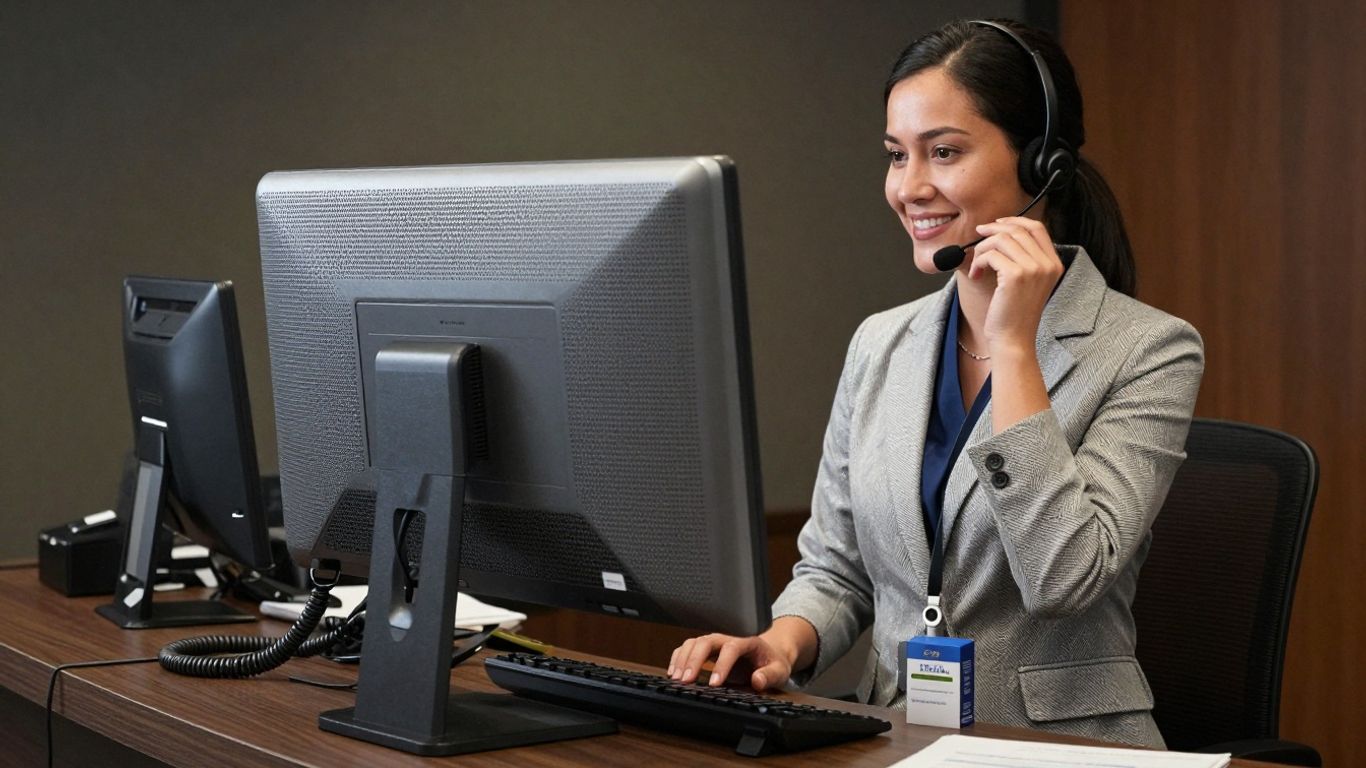
Look, anyone can answer a phone. That's not the hard part. The real value comes when the service does more, much more, without you having to lift a finger. Think about what happens after the initial call. What's next?
Your practice isn't closed just because the clock strikes five. Patients have needs at all hours. A good answering service provides a consistent presence, even when your office is empty. This means calls are always handled, messages are taken, and urgent issues are flagged. It's about making sure no patient feels abandoned, regardless of the time.
Not every call needs a human. Some just need direction. An intelligent Interactive Voice Response (IVR) system can sort calls quickly. It guides callers to the right department or provides automated answers to common questions. This frees up your staff for more complex tasks. It also means patients get help faster, without waiting on hold.
Remember clipboards and stacks of paper? That's old news. A modern answering service can handle patient intake digitally. New patients can fill out forms online or via text before their appointment. This saves time, reduces errors, and keeps everything organized. It’s a cleaner, more efficient way to gather information.
Sometimes, a quick text is better than a phone call. HIPAA-compliant two-way texting allows your service to communicate with patients securely. This is great for appointment reminders, follow-ups, or sending quick updates. It keeps communication channels open without compromising patient privacy. This level of interaction builds trust and keeps patients engaged.

Think of your answering service not as a standalone tool, but as a node in a larger network. Zapier is the glue that connects this node to everything else. It lets your answering service talk to your CRM, your calendar, your patient management software, and a thousand other apps. When a call ends, Zapier can automatically update a patient record, create a follow-up task, or even send a notification to the right person. This isn't just about convenience; it's about making sure information flows where it needs to, without manual entry. This automation is key to reducing errors and saving time. It means your staff spends less time on busywork and more time on actual patient care.
Every practice has its own rhythm. Some need calls routed immediately to a specific doctor, others prefer messages logged for review later. A good answering service lets you build these specific paths. You can set up rules: if it's an emergency, transfer directly; if it's a routine question, take a message and categorize it. This means the service acts like an extension of your front desk, understanding your internal processes. It’s about tailoring the service to fit how you work, not the other way around.
Modern answering services go beyond just taking messages. They can use AI to analyze call content. Imagine an AI that listens to a call, identifies the patient's need, and then automatically updates their record in your CRM. It can flag urgent requests, categorize common questions, or even identify trends in patient inquiries. This turns raw call data into actionable insights. It helps you understand patient needs better and manage your practice more effectively.
The real power here is turning passive call handling into an active part of your data strategy. It's about making every interaction count, not just for the patient, but for the business intelligence you gather.
Picking an answering service isn't just about finding someone to pick up the phone. For medical practices, it's about trust, security, and making sure patient information stays private. It sounds simple, but the details matter. You need a service that understands HIPAA, not just in name, but in practice. This means looking beyond the sales pitch and digging into how they actually operate.
Security isn't a feature; it's the foundation. When you're looking at providers, ask about their encryption methods. Are calls and messages encrypted end-to-end? What about data storage? Look for services that use strong, up-to-date encryption standards. It's also worth asking about access controls. Who can access patient data, and how is that access logged and monitored? Think of it like a bank vault – you want to know exactly how they're protecting what's inside. A provider that's transparent about their security measures is usually a good sign. They should be able to explain their protocols clearly, without making you feel like you need a degree in cybersecurity to understand it. This is where you can start to see who takes patient privacy seriously.
Even the best technology is only as good as the people using it. A HIPAA-compliant answering service needs staff who are not only trained on the technology but also deeply understand HIPAA regulations. This isn't just about knowing not to share patient information; it's about understanding the nuances of privacy rules and how they apply to daily call handling. Ask potential providers about their training programs. How often is staff retrained? What kind of scenarios do they cover? A well-trained team is less likely to make mistakes that could put your practice at risk. It’s about having people on the other end of the line who are professional, discreet, and knowledgeable. They are, in many ways, an extension of your practice.
This is non-negotiable. If an answering service handles Protected Health Information (PHI) on your behalf, they are considered a Business Associate under HIPAA. This means they must sign a Business Associate Agreement (BAA) with you. This document is a legal contract that outlines how the answering service will protect your patients' PHI. It details their responsibilities regarding security and privacy. Without a BAA, you're leaving yourself exposed. Don't just accept a generic agreement; read it. Understand what it covers. A provider who hesitates or tries to brush this off is a major red flag. It shows they either don't fully grasp their obligations or are trying to cut corners. A solid BAA is your first line of defense in ensuring compliance and protecting your practice from potential breaches. It's the formal commitment that they will handle patient data responsibly, just as you do. You can find more information on what a BAA entails from the U.S. Department of Health & Human Services.
Think about all the time your staff spends on the phone. Answering routine questions, taking messages, scheduling basic appointments. It adds up. A good answering service takes a lot of that off your plate. This means your nurses and doctors can focus on patients, not paperwork or phone tag. It’s not just about saving a few minutes here and there; it’s about reclaiming hours. Hours that can be used for actual patient care, or even just a breather. Less busywork means a less stressed staff, which is always a good thing.
Patients expect you to be available. When they call and get a busy signal, or worse, voicemail during business hours, they notice. A professional answering service means someone is always there to pick up. They get their questions answered, their appointments booked, or their urgent needs relayed. This consistent availability builds trust. Patients feel heard and cared for, even when you're not physically there. It makes your practice look more organized and reliable. And in healthcare, trust is everything. It’s the foundation of the patient-provider relationship.
What happens when your office closes for the day, or a holiday? Or if there's an unexpected emergency? A HIPAA-compliant answering service provides that crucial continuity. They can handle after-hours calls, triage emergencies, and relay messages accurately. This isn't just about convenience; it's about patient safety. Plus, staying compliant with HIPAA means avoiding hefty fines. Those penalties can cripple a practice. Using a service that understands and adheres to these rules is a form of insurance.
When calls are handled efficiently, your whole practice runs better. Less time spent on administrative tasks means more time for clinical work. Appointment scheduling becomes smoother. Messages are relayed faster. This streamlined operation reduces bottlenecks and improves patient flow. It’s like oiling a machine; everything just moves more smoothly. This efficiency can translate directly into seeing more patients or providing a higher quality of care within the same timeframe. It's about making your practice work smarter, not just harder.
Imagine your practice running smoother than ever. Our tools help you manage calls, talk to website visitors, and even book appointments automatically. This means less work for you and more happy clients. Ready to see how easy it can be? Visit our website to learn more!
Look, picking a phone answering service for your practice isn't rocket science, but it's not something to rush either. You need to make sure whoever you choose actually gets HIPAA. It's not just about ticking a box; it's about protecting your patients and your practice. Get it wrong, and the headaches can be pretty bad. Get it right, and you'll wonder how you managed without it. So, do your homework. Ask the right questions. And pick a service that makes your life easier, not harder.
For an answering service to be HIPAA compliant, it must sign a Business Associate Agreement (BAA). This agreement spells out how they'll protect patient information. They also need to use strong encryption for all calls and messages, keep track of who accesses patient data, and make sure their staff knows all the privacy rules. It's all about keeping patient health information (PHI) safe and sound.
It's super important because it keeps your practice out of trouble with the law! HIPAA rules are strict, and breaking them can lead to big fines. A compliant service helps you avoid these penalties. Plus, it shows your patients you take their privacy seriously, which builds trust. It also means you won't miss important calls, even after hours, making your practice run smoother.
Yes, it absolutely can! When an AI receptionist is part of a HIPAA-compliant service, it's designed with security in mind. This means it uses secure systems, encrypts data, and follows all the same privacy rules as a human operator. The key is that the technology and the company behind it are built to meet HIPAA standards.
If your answering service isn't HIPAA compliant and there's a data breach or misuse of patient information, your practice could be held responsible. This can result in hefty fines, legal action, and serious damage to your reputation. Patients might lose trust in your practice, which is hard to get back.
When your office is closed, a HIPAA-compliant answering service acts as your reliable backup. They can answer calls, take messages securely, schedule appointments, or even route urgent calls to the right person. This ensures patients always get the help they need, day or night, without any risk to their private health information.
A Business Associate Agreement (BAA) is a contract between your healthcare practice (a 'Covered Entity') and a third-party service provider (like an answering service) that handles Protected Health Information (PHI) on your behalf. It clearly states that the service provider will protect patient data according to HIPAA rules. You need one to ensure legal protection and compliance for both parties.
Start your free trial for My AI Front Desk today, it takes minutes to setup!


