
You know, healthcare can be a real maze sometimes. Trying to get an appointment, asking a simple question, or just figuring out what comes next after a visit can feel like a full-time job. But there's this new wave of technology, called healthcare voice AI, that's starting to make things way simpler. It's like having a helpful guide that's always there, ready to chat and sort things out without you having to jump through a million hoops. This stuff is changing how we get care, making it less of a hassle and more about you.
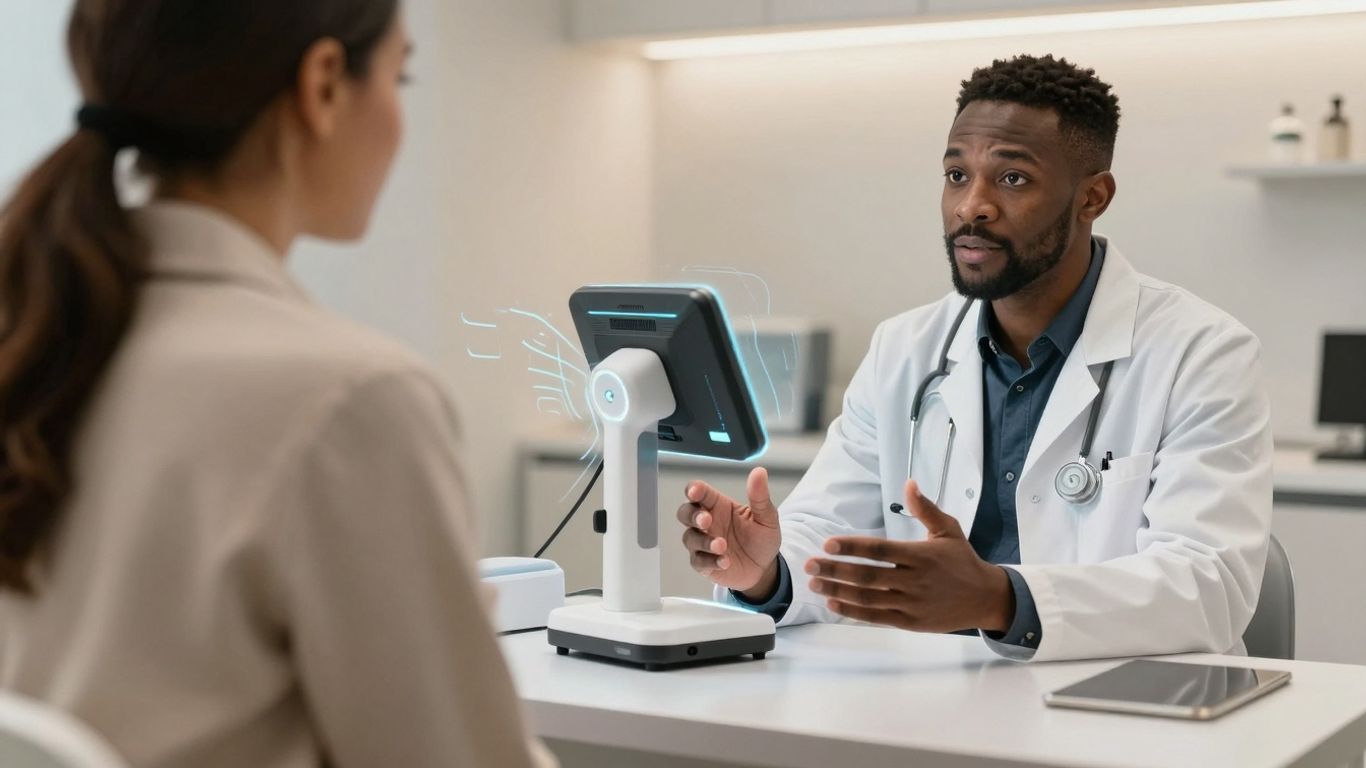
Healthcare is changing, and you might not even notice it yet. It’s not the flashy stuff you see in movies, but quiet shifts happening behind the scenes. Voice AI is one of those shifts. Think about how much time doctors and nurses spend typing notes. It’s a lot. They see patients, then they’re stuck at a computer. Voice AI changes that. It lets them talk naturally, and the system takes care of the notes. It’s like having a silent partner who handles the busywork.
This isn't about futuristic robots. It's about making things work better, right now. We're talking about AI that can answer patient questions, schedule appointments, and even remind people to take their medication. It’s about cutting down on the administrative tasks that bog down healthcare professionals. Imagine a system that handles appointment reminders so fewer people miss their visits. That’s not hype; that’s efficiency.
Healthcare providers are swamped. Burnout is a real problem. Patients expect faster, easier access to care. Voice AI offers a way to address both. It automates routine tasks, freeing up staff for more important work. It also makes it easier for patients to get information and manage their appointments. This technology is becoming less of a luxury and more of a necessity for keeping up.
Look at the numbers. The market for voice AI in healthcare is already worth billions and is set to grow significantly. It’s moving from something new and interesting to something businesses need to stay competitive. This growth shows that healthcare organizations see the real benefits: better patient care, reduced costs, and happier staff. It’s a smart move for any practice looking to the future.
The speed at which voice AI is being adopted signals a fundamental change in how healthcare operates. It’s about making systems more responsive and less of a burden on both patients and providers.
Healthcare offices often feel like they're drowning in paperwork and repetitive tasks. It's not just about answering phones; it's about managing appointments, sending reminders, and handling basic patient queries. This is where voice AI steps in, not as a replacement for human staff, but as a powerful assistant that handles the grunt work.
Think about the sheer volume of calls a busy practice gets. Scheduling, rescheduling, appointment confirmations – these are constant. Voice AI can manage these interactions 24/7. A patient can call at 10 PM to book a follow-up, and the AI can handle it instantly, checking available slots and confirming the appointment. This isn't just about convenience; it drastically cuts down on administrative time. It also helps reduce no-shows. Automated reminders, sent via voice or text, can significantly improve attendance rates. Studies suggest these reminders can cut no-shows by up to 50%, which directly impacts revenue and resource allocation.
Doctors and nurses spend a huge chunk of their day typing notes. It's a necessary evil, but it pulls them away from the patient. Ambient clinical intelligence uses voice AI to listen to patient encounters and automatically generate clinical notes. The AI captures the conversation, identifies key medical information, and structures it into a usable format. This means less time spent on data entry and more time for direct patient interaction. The goal is to make technology serve clinicians, not burden them.
Beyond documentation, voice AI can automate other parts of the clinical workflow. Imagine an AI system that can verify insurance information before a patient even arrives, or one that can automatically send post-visit care instructions. These aren't just minor tweaks; they represent a fundamental shift in how efficiently a practice can operate. By automating these routine, yet time-consuming, tasks, healthcare providers can focus on what truly matters: providing high-quality patient care.
The real power of voice AI in operations isn't just about doing things faster. It's about doing them more consistently and freeing up human capital for tasks that require empathy and complex decision-making. It's about making the system work for the people within it, and by extension, for the patients they serve.

Getting to the doctor's office can be a hassle. You call, you wait, you try to explain what you need. It's a whole thing. Voice AI is changing that. It's making it simpler for people to connect with their healthcare providers. You don't need to learn complicated menus or type things out. You just talk. It's like having a helpful assistant who's always there, day or night. This is a big deal, especially for folks who find technology a bit tricky, or for those who have trouble with physical tasks that make using a phone or computer difficult. The goal is to remove those barriers so everyone can get the care they need without the usual headaches.
Think about booking an appointment. Instead of being stuck on hold, you can just tell the AI when you're free. It handles the rest. Got a question about your medication or what to do after a visit? The AI can give you approved answers right away, no waiting for a nurse to call back. It's a more natural way to handle things, making healthcare feel less intimidating.
It's not just about convenience; it's about giving patients more control. When you can easily get answers to follow-up questions about your care plan or medication, or confirm details without a struggle, you feel more in charge of your own health journey. This technology makes it possible for patients to interact with their healthcare providers in a way that feels natural and less intimidating. It's like having a personal health assistant that understands you. This makes managing your health feel less like a chore and more like a supportive service.
When a healthcare system consistently provides clear, timely, and accessible support, it builds trust. Voice AI systems can offer this consistency. They can provide information, send reminders, and check in with patients reliably. This steady presence helps patients feel more secure and connected to their care team. When patients feel heard and supported at every step, their confidence in their healthcare provider grows significantly. It turns a series of disconnected appointments into a more continuous, supportive conversation about their health.
Getting new technology to play nice with what you already have is always a big hurdle. For voice AI in healthcare, this means connecting with things like Electronic Health Records (EHRs) and scheduling software. The goal is simple: make sure the information the AI gathers actually goes where it needs to go, updating patient records or appointment statuses without a person having to type it all in again. It’s like having a really good assistant who knows exactly where to put everything.
Zapier is a big deal here. It connects over 9,000 apps. Think of it as the AI receptionist becoming the central hub for your business operations. It allows for a two-way flow of information, meaning the AI can talk to other apps, and they can talk back. When a call ends, or the AI makes a decision, things can happen automatically in other systems. This saves a ton of time and stops you from having to enter data manually. It means everything stays in sync, and it works with the tools you're already using.
When a conversation needs to move from the AI to a human, it shouldn't feel like starting over. Contextual handoffs mean the human agent gets all the information from the AI interaction. No more making patients explain their whole situation again to a new person – nobody wants that. The AI should pass along what it learned so the human can pick up right where the AI left off. This makes the whole experience feel more natural and less like dealing with separate, disconnected tools.
People communicate in different ways. Sometimes it’s voice, sometimes text, maybe email. Multi-modal engagement means patients can switch between these methods without losing the thread of their conversation. If a patient starts a conversation on the phone with the AI and then needs to switch to text for a link or confirmation, the system should handle that smoothly. It allows patients to interact in the way that's easiest for them at that moment, all while keeping the conversation continuous and consistent.

Think about the last time you called a business and got a slow, robotic response. Frustrating, right? That's what we've eliminated. Our AI receptionist is fast. Really fast. We measure its response time in milliseconds. That's quick enough to keep up with natural conversation. This speed isn't just a neat trick; it's transformative. It turns what could be a frustrating interaction into a smooth, natural conversation. It's the difference between feeling like you're talking to a machine and feeling like you're talking to a hyper-competent human.
Remember when businesses used to worry about phone lines like they were made of gold? "Oh no, all our lines are busy!" they'd cry, as if Alexander Graham Bell himself had personally limited them to five calls at once. Well, we fixed that. Our AI receptionist doesn't just handle multiple calls. It handles all the calls. At once. Forever. It's like we gave it an infinite supply of ears and an attention span that would make a zen master jealous. Peak periods? More like "meh" periods. Black Friday, a celebrity mentions your business on social media? Bring it on. This means happy customers, your business stays alive even when things get hectic, and you can scale without the growing pains. Your brand consistency remains intact whether it's the first call of the day or the ten thousandth. This feature is like giving your business a superpower.
Sometimes, you need to manage how much the AI is working. That's where setting limits comes in. You can cap the total number of minutes your AI receptionist is active within a day, week, or month. This helps control expenses and ensures the AI is available when you need it most. It's about smart resource allocation, not just having a system that can handle everything. You can track usage in real-time and even set up alerts for when you're approaching your limits. This gives you predictable billing and flexible management, allowing you to adapt limits to match seasonal business fluctuations or specific project needs. It provides precise control over AI usage, balancing cost-effectiveness with customer service availability.
Most people don't realize how much latency matters in conversation. But it does. A lot. Our AI receptionist is fast. Really fast. We measure its response time in milliseconds. That's quick enough to keep up with natural conversation. Think about the last time you called a business and got a slow, robotic response. Frustrating, right? That's what we've eliminated. Our AI doesn't just answer quickly; it thinks quickly. Ask it a complex question, and it doesn't miss a beat. It's like talking to the smartest person you know, but one who never needs to pause to think. This speed isn't just a neat trick; it's transformative. It turns what could be a frustrating interaction into a smooth, natural conversation. We're obsessed with speed, constantly tweaking and optimizing to shave off tiny fractions of time. Because in conversation, every bit of responsiveness counts. This might seem like overkill, but it's the future of communication. You can even integrate this with your existing systems for even greater efficiency.
Look, getting into the AI game used to feel like you needed a Silicon Valley address and a team of PhDs. Not anymore. The real opportunity isn't just building the tech; it's getting it into the hands of businesses that need it. And that's where you come in as a reseller.
Think of it like this: you get a fully-baked AI receptionist solution, but you slap your own brand on it. It’s your company, your logo, your client relationships. You’re not just selling someone else’s product; you’re building your own AI services business. This white-label approach means clients see you as the provider, building trust and loyalty directly with your brand. You control the pricing, the marketing, and how you want to scale. It’s a fast track to becoming an AI solutions provider without the massive R&D costs.
Getting started doesn't require a fortune. You can begin with just a handful of accounts – say, five – and scale up as you bring on more clients. The setup is usually quick, often under a week. This low barrier to entry is key. You can test the waters, even use the service yourself, and then expand. The AI handles the heavy lifting, so your operational costs stay low while your revenue potential climbs. It’s about smart business, not big spending.
They don't just hand you the keys and walk away. You get access to support that actually helps. Think regular check-ins with a success team to talk strategy, marketing tips, and how to best use new features. There’s usually a direct line, like a Slack channel, to the people who built the tech, so technical questions get answered fast. Plus, you get training materials – videos, guides – to make sure you know the product inside and out. This support structure means you’re equipped to sell effectively, even if you’re new to the AI space. It’s about building a sustainable business, not just making a quick sale.
Want to build your own AI business? Being a reseller gives you a huge head start. You can offer amazing AI tools to other companies without having to build them yourself. It's a smart way to grow your business quickly. Ready to see how easy it is? Visit our website today to learn more about becoming a reseller and start building your AI empire!
So, voice AI in healthcare isn't just some far-off idea anymore. It's here, and it's making things noticeably better. Patients get their questions answered faster, appointments are easier to manage, and doctors and nurses can actually focus on, you know, caring for people instead of drowning in paperwork. It’s like giving everyone a helpful assistant that’s always on. This tech is already smoothing out the rough edges of healthcare, making it feel more personal and less like a chore. Where it goes next is anyone's guess, but it's definitely going to be interesting.
Think of Healthcare Voice AI as a super-smart computer program that can understand and talk back to people, just like a human. In healthcare, it's used to help patients, like answering questions, setting up appointments, or reminding them to take their medicine. It makes things easier for both patients and the people working in hospitals or clinics.
Doctors and nurses often have to spend a lot of time writing notes or doing paperwork. Voice AI can help by listening during appointments and writing down notes automatically. This means they can spend more time actually talking to and helping patients, instead of being stuck in front of a computer.
Yes! Imagine a phone system that never gets busy, no matter how many people call. This AI can handle tons of calls all at the same time. So, even if your clinic suddenly gets super busy, the AI can still help everyone without getting overwhelmed. It's like having an endless supply of receptionists.
Patients can simply talk to the AI to book appointments, ask questions about their health, or get reminders. It's available 24/7, so you don't have to wait for the office to open. This is especially helpful for people who find it hard to use computers or phones, making healthcare more accessible for everyone.
A reseller is like a business partner. Companies can use our AI technology, put their own brand name on it, and then sell it to their own clients. It's a way for them to offer advanced AI services without having to build the technology themselves, making it easier to start their own AI business.
The AI can connect with over 9,000 other apps and tools that businesses already use, like customer databases or calendars. This means when the AI answers a call or takes a message, it can automatically update information in those other tools. It makes everything work together smoothly, saving time and preventing mistakes.
Start your free trial for My AI Front Desk today, it takes minutes to setup!


