
It feels like every day there's some new tech promising to make our lives easier, and healthcare is no different. Lately, a lot of buzz is around AI voice assistants. These aren't just fancy gadgets; they're starting to change how patients connect with their doctors and how clinics run. Think about it – instead of waiting on hold or playing phone tag, you can just talk to a system that understands you. It's making things quicker and, honestly, a bit less stressful for everyone involved. This whole ai voice assistants healthcare thing is really picking up speed.
Think about the last time you tried to book a doctor's appointment. Chances are, you were put on hold, navigated a confusing phone menu, or played phone tag. It's a hassle we've all dealt with. AI voice assistants are changing that. They make interacting with healthcare providers much simpler.
Scheduling appointments used to be a time sink for both patients and staff. Now, AI can handle it. You can simply tell the system when you're available, and it finds a slot. It's like having a personal assistant for your health.
For many, especially those less comfortable with technology or with physical limitations, traditional booking methods are a barrier. Conversational AI removes these hurdles. It’s about making healthcare accessible to everyone, regardless of their tech-savviness.
The goal is to make healthcare interactions as natural as talking to a friend, removing friction points that often discourage people from seeking timely care.
Healthcare needs don't stick to a 9-to-5 schedule. Questions about medication, post-procedure care, or general health concerns can pop up anytime. AI voice assistants offer support around the clock. This means patients get answers when they need them, not just during business hours. It's a constant, reliable point of contact that makes patients feel more supported throughout their health journey.

Healthcare is changing, and fast. It’s not just about new drugs or fancy machines anymore. A big part of it is how we talk to patients and manage all the background stuff. This is where AI voice assistants come in. They’re not just a novelty; they’re becoming a core part of how hospitals and clinics run.
Let’s be honest, healthcare staff are stretched thin. They’re juggling patient care, endless paperwork, and constant phone calls. It’s a recipe for burnout. AI voice assistants can take over a lot of the repetitive tasks that eat up valuable time. Think appointment confirmations, answering basic questions, or even initial patient intake. This frees up nurses and doctors to focus on what they do best: caring for people. It’s not about replacing humans, but about giving them a break and letting them do the high-value work.
Running a healthcare facility costs a fortune. Every minute saved, every task automated, translates into real savings. AI voice assistants can handle a massive volume of calls simultaneously, something human staff simply can’t do. This means fewer missed appointments, quicker responses to patient queries, and a smoother overall workflow. When things run efficiently, costs go down, and that’s good for everyone involved.
This isn't just about making things easier for the staff; it's about making healthcare better for patients. Imagine calling your doctor's office and getting an instant, helpful response, day or night. Or getting a reminder for your appointment that feels natural, not robotic. AI voice assistants can provide this kind of consistent, accessible support. They can even be programmed to understand different languages or provide information in simpler terms for patients who need it. This technology is making healthcare more personal and less of a hassle.
Most people don't think about how fast a conversation needs to be. But it matters. A lot. Our AI is fast. We're talking milliseconds fast. That's quick enough to keep up with natural back-and-forth.
Think about it: conversation is like a dance. If one partner is slow, the rhythm is off. A quick partner keeps things lively. Remember calling a business and getting a slow, robotic answer? Annoying, right? We've gotten rid of that.
This speed isn't just a cool party trick. It changes things. It makes what could be a frustrating call feel smooth and normal. It's the difference between talking to a machine and talking to someone who's incredibly capable and never needs to stop and think.
Our AI doesn't just answer calls quickly; it processes information quickly. Ask it a complicated question, and it doesn't hesitate. It's like talking to the smartest person you know, but one who's always ready with an answer.
This speed is a result of constant work. We have a whole team focused on making our AI faster. They're always tweaking and optimizing, shaving off tiny bits of time. Because in any conversation, responsiveness is key.
Integration is where things get really interesting. Our connection to Zapier isn't just another feature; it's a major upgrade. We can link up with over 9,000 other apps. That means your AI receptionist isn't just taking calls; it's becoming the central hub for your business operations.
Here's what that looks like:
What does this mean for you? Huge time savings. No more manual data entry. Everything stays in sync. And it works with the tools you already use – your CRM, project management software, whatever it may be.
Imagine this:
Most businesses operate with disconnected tools. The best ones, however, are integrated systems. This integration isn't just about connecting apps; it's about changing how you work. It's simple, but incredibly powerful, and it can transform your business in ways you might not expect.

Think about all the messages a busy clinic gets. Voicemails pile up, texts go unanswered, and important patient needs can get lost in the shuffle. It’s a real problem, and frankly, it’s a wonder anyone kept up before.
AI changes this. Instead of listening to a dozen voicemails, you get text. The AI transcribes them automatically. It’s not perfect, but it’s good enough to get the gist. These messages get sorted, too. No more digging through a jumbled inbox. You can see what’s important, fast. This means you stop missing things, which is pretty much the whole point.
This is where it gets interesting. The AI doesn't just transcribe; it understands. You can set up rules. For example, if someone calls asking for pricing, the AI can automatically text them a link to your rate sheet. It happens during the call, without anyone lifting a finger. This is a huge time saver and keeps patients informed without making your staff juggle multiple tasks. It’s like having a super-efficient assistant who knows exactly what to send and when. You can set up these workflows for appointment links, document delivery, or even special offers. It’s all about making sure the right information gets to the right person, right away. This kind of automation is a big deal for patient communication.
Ultimately, this is about not dropping the ball. When calls come in, especially after hours, the AI handles them. It can take messages, transcribe them, and even send follow-up texts based on what was said. This means you’re always reachable, always responsive. It’s not about replacing people; it’s about making sure the essential stuff gets done so your team can focus on actual patient care, not administrative busywork. It’s a simple idea, but it makes a big difference in how smoothly things run.
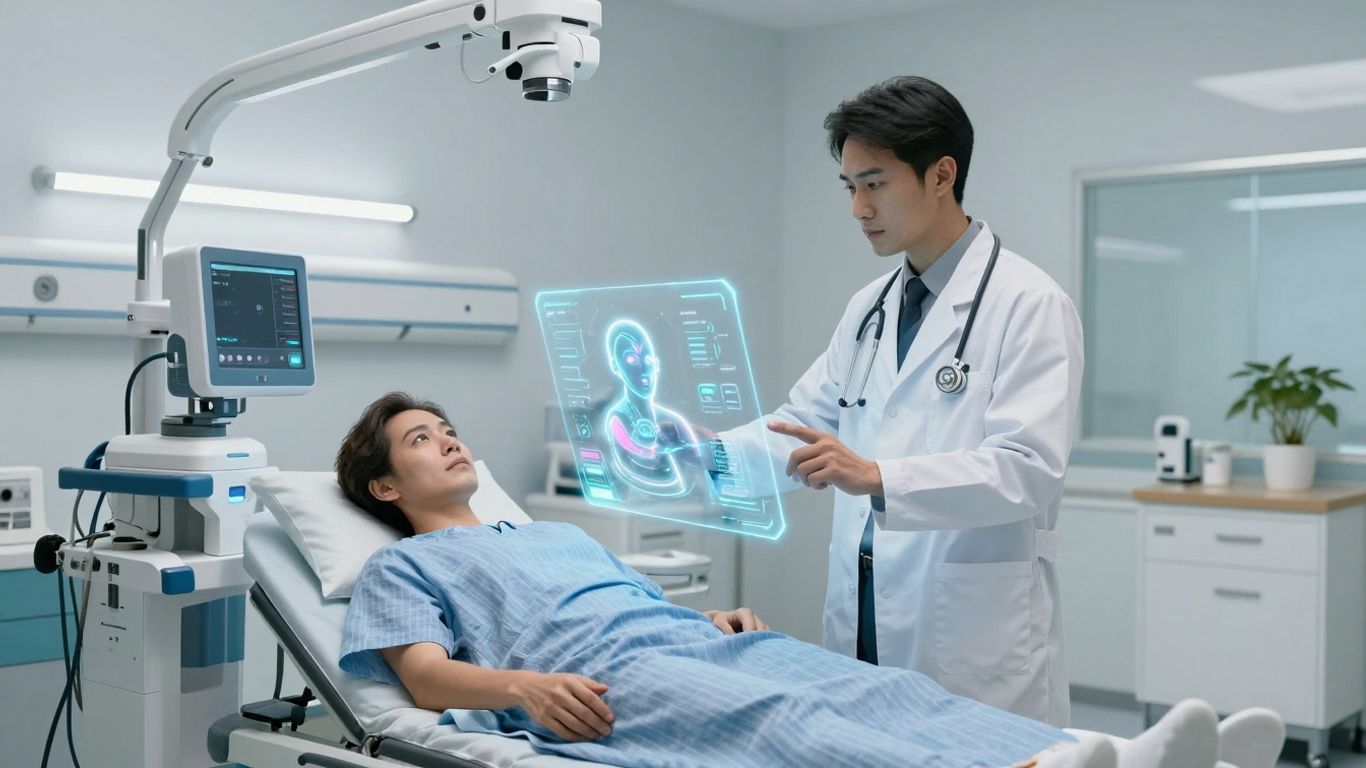
Think about a busy hospital. Calls flood in, patients need help, staff are stretched thin. Now imagine an AI that can handle all of that, without breaking a sweat. That's the promise of scalability and consistency in AI healthcare.
This isn't about just handling a few extra calls. This is about an AI that can take on all the calls, simultaneously. No busy signals, no dropped connections. It's like giving your practice an infinite number of receptionists, all working at peak performance. Whether it's a sudden surge of patients after a public health announcement or just a typical busy Tuesday, the system doesn't falter. It just keeps going, ensuring every patient interaction is handled promptly.
Humans, bless their hearts, can have off days. Their tone might shift, their phrasing might change. An AI, however, is different. It's programmed to speak with a consistent voice, reflecting your brand's identity every single time. This means every patient, regardless of when they call or who they speak to (or rather, what they speak to), receives the same level of professional, on-brand communication. It builds trust and makes your practice feel more reliable.
Healthcare isn't always predictable. A local event, a seasonal illness, or even a viral social media post can send call volumes through the roof. An AI system designed for scalability doesn't just cope with these surges; it thrives on them. It can ramp up its capacity instantly, managing thousands of parallel calls without any drop in quality. This means your practice stays accessible and responsive, even when the unexpected happens. It's the difference between a system that buckles under pressure and one that simply adapts.
AI voice assistants are changing how people with disabilities interact with healthcare. For folks who have trouble with traditional methods, like typing or even speaking clearly, these tools offer a new way in. Think about someone with a visual impairment; they can just talk to the AI. Or someone with a cognitive challenge might get simpler, step-by-step instructions. It’s about making sure everyone can get the care they need, no matter their situation.
Many people face barriers when trying to get health information or book appointments. AI voice assistants break down these walls. They can answer questions 24/7, schedule visits, and send reminders, all through simple voice commands. This means a person who can't easily use a phone or computer isn't left behind. It levels the playing field, giving everyone a fair shot at managing their health.
When patients can communicate easily and get timely support, they feel more in control and less stressed. This leads to better adherence to treatment plans and, ultimately, improved health. AI voice assistants help bridge the gap between patients and providers, making healthcare more accessible and personal. It’s not about replacing human care, but about adding a layer of support that makes a real difference.
The goal here isn't just about technology; it's about human dignity. It's about recognizing that everyone deserves clear, easy access to healthcare. AI voice assistants are a tool to help us get there, making sure no one is excluded from the conversation about their own well-being.
Artificial intelligence is opening new doors for people with special needs. Imagine a world where technology helps everyone communicate and access information more easily. Our AI tools are designed to do just that, making daily life smoother and more independent. Discover how we're making a difference.
So, AI voice assistants in healthcare aren't just a fancy new gadget. They're becoming a real part of how things work, making it easier for patients to get help and freeing up doctors and nurses to do their actual jobs. It’s about making healthcare run smoother and feel more human, not less. This tech is here now, and it’s already making a difference. We're just scratching the surface of what's possible.
Think of them like super-smart helpers that can understand and respond to what you say. In healthcare, they can do things like book your doctor's appointments, remind you to take your medicine, or even answer common health questions, all by just talking to them. They help make talking to your doctor's office easier and faster.
These AI assistants are available all the time, 24/7. This means you can schedule appointments or get information whenever you need it, even if the doctor's office is closed. They use simple language to chat with you, making it easy to get the help you need without complicated steps.
Absolutely! They are great for people who might have trouble with regular phone calls or computers. For example, someone who can't see well can just talk to the AI, and someone who finds complex instructions hard can get simpler directions. It makes sure everyone can get the healthcare information they need easily.
Not really. These AI helpers are designed to handle the routine tasks, like answering basic questions or scheduling appointments. This frees up doctors, nurses, and office staff to focus on more important things, like giving you direct care and attention. It's more about helping them do their jobs better, not replacing them.
They are incredibly fast! They can understand and respond in just a tiny fraction of a second, which is quick enough to keep up with a normal conversation. This means you won't experience awkward pauses or feel like you're talking to a slow robot. It feels much more natural.
Yes, they can! These AI assistants can connect with lots of different apps and software that healthcare offices already use, like systems for managing patient records or calendars. This connection allows information to flow back and forth automatically, making sure everything is up-to-date and organized without anyone having to manually enter data.
Start your free trial for My AI Front Desk today, it takes minutes to setup!


