
You know, the phone lines at healthcare call centers can get pretty wild. It feels like a constant flood of calls, from scheduling appointments to answering basic questions. It's a lot for any team to handle, and sometimes, patients end up waiting way too long. But what if there was a way to make things smoother, faster, and just plain better for everyone involved? That's where AI voice assistants for healthcare call centers come into play. They're not here to replace people, but to give them a hand with the busywork, so they can focus on what really matters: patient care.

Healthcare call centers are often swamped. Think about it: appointment scheduling, answering basic questions, and just general admin work can tie up staff for hours. This isn't just annoying for patients stuck on hold; it's a drain on resources that could be used for more complex issues. AI voice assistants are changing this picture.
Booking, rescheduling, or canceling appointments used to mean waiting on the phone. Now, patients can just speak their needs to an AI. It understands, checks availability, and confirms. This cuts down on no-shows because the AI can also send reminders. It's like having a super-efficient receptionist who never sleeps.
Patients have questions. Lots of them. About billing, directions, what to bring to an appointment. Instead of staff repeating the same answers, an AI can handle these frequently asked questions instantly. This frees up human agents to deal with more sensitive or complicated patient needs. It’s about getting patients the right information, fast.
All that paperwork and data entry? It adds up. AI voice assistants can automate many of these routine tasks. This means less time spent on tedious administrative work and more time for healthcare professionals to focus on what matters most: patient care. It’s a simple shift that makes a big difference in daily operations.
The goal here isn't to replace people, but to give them better tools. Think of it as offloading the grunt work so the skilled workers can do their best work.
AI voice assistants are changing how patients and healthcare providers talk to each other. It's not just about answering phones anymore; it's about making communication smoother and more helpful, all the time.
Think about it: people get sick or have questions at all hours. Waiting until Monday morning for a simple answer isn't ideal. AI voice assistants can step in when human staff can't. They can answer common questions, help schedule appointments, or even guide patients through basic post-procedure care instructions. This means patients get help when they need it, not just during business hours. It's like having a helpful assistant available around the clock, which can really reduce patient anxiety.
Nobody likes talking to a robot that doesn't understand them. The good news is, AI voice tech has gotten much better. These systems can understand natural speech, so patients don't have to use specific phrases. They can ask questions like they would a person. This makes the interaction feel more human and less like a chore. When patients feel heard and understood, they're more likely to follow through with care plans. This kind of engagement is key to better health outcomes.
Human staff, no matter how good, can have off days or different ways of explaining things. AI voice assistants, on the other hand, provide consistent information every single time. They follow pre-approved scripts and protocols, making sure every patient gets the same accurate advice. This consistency is important for things like medication instructions or explaining treatment side effects. It helps build trust and makes sure everyone receives a baseline level of quality care, regardless of who or what they interact with.

Think about the last time you felt sick. You call your doctor's office, and you're stuck in a phone tree, or worse, on hold forever. It's frustrating. AI voice assistants are changing that. They act as the first line of defense, talking to patients when they first reach out.
These systems aren't just listening; they're understanding. They use speech recognition to pick up what you're saying and natural language processing to get the meaning. It's like talking to someone who actually knows what they're doing. They ask follow-up questions based on what you tell them, trying to get a clear picture of what's going on. This means they can figure out if you've got a simple cold or something that needs immediate attention.
Once the AI has a handle on the symptoms, it can point you in the right direction. No more guessing if you should go to the ER, see your primary care doctor, or just rest at home. The AI uses clinical decision support systems to figure out the best next step. This saves time and makes sure you get the right kind of care without unnecessary trips to the emergency room. It's about getting you to the right place, fast. This helps healthcare providers manage their resources better, too. You can find more about how these systems work on AI front desk solutions.
This is where AI really shines. It can spot the red flags. If your symptoms suggest something serious, the AI flags it immediately. It doesn't wait for a human to sort through a pile of calls. It can identify patients who need to be seen right away, making sure they get the urgent care they require. This proactive approach can make a big difference in patient outcomes, especially for critical conditions. It's like having an extra set of eyes, always watching for trouble.
The goal here isn't to replace doctors, but to make the whole process smarter. By handling the initial assessment, AI voice assistants free up human staff to focus on patients who need their direct attention. It's about efficiency and better patient flow.
AI voice assistants aren't just for patient calls anymore; they're starting to fit right into the daily grind of doctors and nurses. Think about how much time clinicians spend typing notes into electronic health records (EHRs). It's a huge chunk of their day, time that could be spent with patients. Voice assistants can change that.
Doctors and nurses can now dictate patient updates directly into EHRs, freeing up their hands and minds. This isn't about replacing human interaction; it's about making the necessary administrative tasks less of a burden. Instead of typing after a patient visit, a clinician can simply speak their notes. This speeds things up considerably. For example, saving 15 minutes per patient on documentation adds up fast when you see dozens of people a day.
Getting patients to take their medicine as prescribed is a constant challenge. AI voice assistants can help here too. They can send out reminders for medications, including dosage and timing. This is especially useful for patients with chronic conditions or those recovering from surgery. Consistent reminders mean fewer missed doses and better health outcomes. It's a simple nudge that can make a big difference.
Keeping track of patients after they leave the hospital is vital for recovery. AI voice assistants can automate parts of this process. They can check in with patients, ask about their recovery, and remind them about follow-up appointments or care instructions. This proactive approach helps catch potential issues early and gives patients a sense of continued support. It’s like having a helpful assistant checking in without needing a human for every single interaction.
Healthcare call centers often get swamped. Think about it: a sudden surge in patient calls during flu season, or a public health announcement that sends everyone scrambling for information. Human staff can only handle so much. This is where AI voice assistants really shine. They don't get tired, they don't need breaks, and they can handle a frankly absurd number of calls all at once.
This is a big one. Traditional phone systems choke when too many people call at once. You get busy signals, frustrated patients, and missed opportunities. AI voice assistants, on the other hand, can manage thousands, even tens of thousands, of calls simultaneously. It’s like having an infinite number of receptionists ready to go, 24/7. This means no more dropped calls during peak hours. Patients get through, get their questions answered, or get scheduled without delay. It's not just about handling volume; it's about maintaining service quality when demand spikes.
Call center staff spend a lot of time on repetitive tasks: scheduling appointments, answering frequently asked questions, confirming details. AI can take over most of this. Imagine an AI handling all the appointment booking, rescheduling, and cancellations. Staff are then freed up to deal with more complex patient needs, clinical questions, or situations that genuinely require a human touch. This shift makes the human staff more effective and, frankly, probably happier because they're not stuck in a loop of the same basic queries all day.
When you can handle more calls with fewer resources, costs naturally go down. AI assistants reduce the need for a massive human staff to cover all hours and all call volumes. You save on salaries, training, benefits, and office space. Plus, by automating tasks and improving efficiency, you reduce errors and the time spent fixing them. It’s a direct impact on the bottom line, allowing healthcare providers to allocate more resources to actual patient care rather than administrative overhead.
AI voice assistants aren't just about talking to patients; they're about connecting information. Think of them as the central hub that pulls together all the scattered pieces of patient data. This means your Electronic Health Record (EHR) system, your customer relationship management (CRM) software, and even your scheduling tools can all start talking to each other. This level of integration is what turns a simple voice assistant into a powerful intelligence tool.
Getting AI voice assistants to work with existing EHRs like Epic or Cerner is key. It's not about replacing these systems, but about making them smarter. When a patient speaks to the AI, that information can be directly logged into their record. This saves doctors and nurses a ton of time they'd otherwise spend typing notes. It means less manual data entry and more accurate patient histories. The AI can understand what the patient is saying and put it in the right place in the EHR, almost instantly.
Beyond just EHRs, these assistants can update your CRM automatically. If a patient calls with a question about a follow-up appointment, the AI can log that interaction in the CRM. It can also trigger automated tasks. For example, if the AI detects a patient might need a prescription refill based on their conversation, it can create a task for the pharmacy or the patient's care team. This keeps everything organized and ensures no detail gets lost. It’s like having a super-efficient administrative assistant working around the clock.
Every conversation a patient has with an AI voice assistant is a data point. By analyzing these interactions, healthcare providers can learn a lot. You can see common patient questions, identify trends in symptoms being reported, or even gauge patient satisfaction levels. This information isn't just interesting; it's actionable. It helps in improving services, refining patient education materials, and even predicting potential health issues before they become serious. It’s about using the data from everyday conversations to make smarter decisions for the future of patient care.
Here's a look at how data flows:
The real power of AI voice assistants in healthcare isn't just in automating tasks, but in creating a connected ecosystem of patient information. This allows for more informed decision-making and a more personalized patient experience. It’s about making data work for you, not against you.
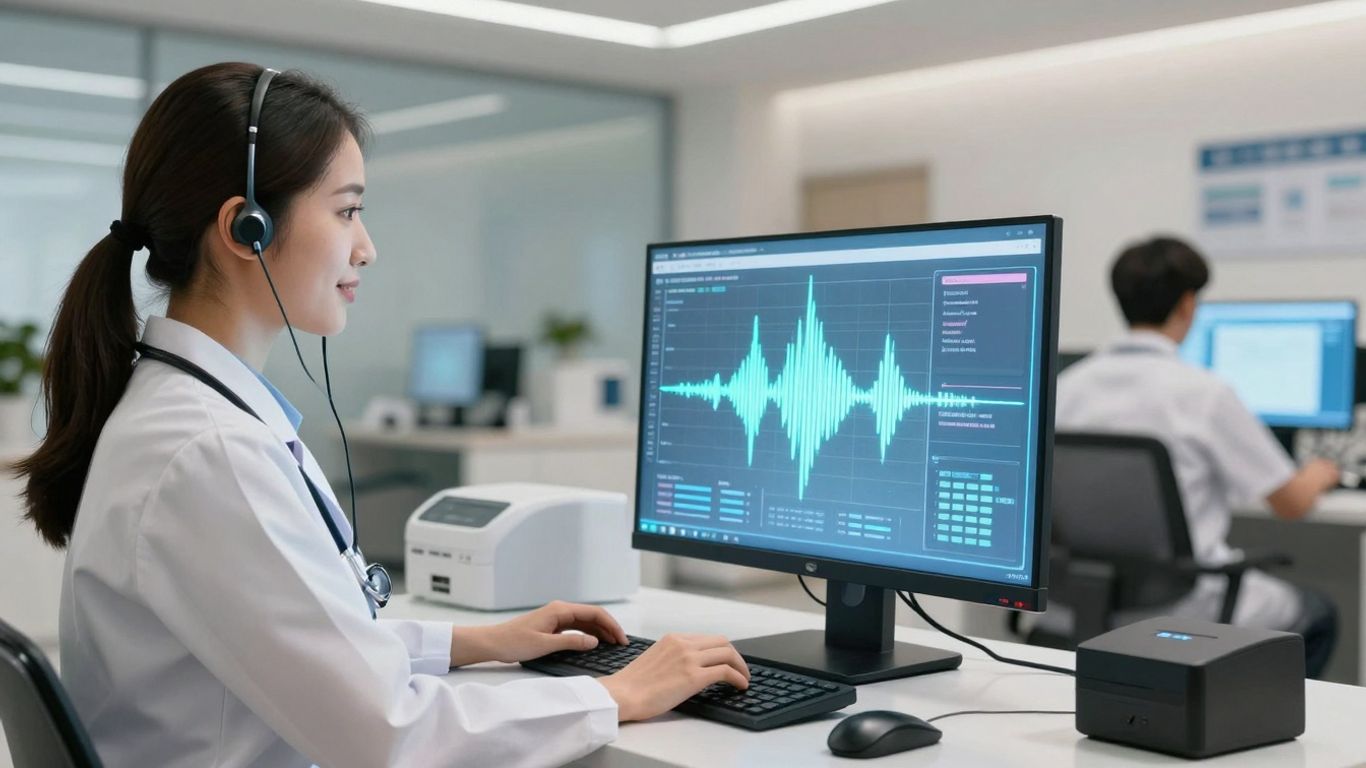
AI voice assistants in healthcare are moving beyond just answering questions. The next wave is about proactive and predictive care. Think of systems that don't just react, but anticipate needs.
Future AI voice systems will analyze more than just spoken words. They'll look at vocal biomarkers – subtle changes in tone, pitch, and rhythm. This could help spot early signs of conditions like Parkinson's or depression before they become serious. Imagine your voice assistant noticing a slight tremor in your voice and suggesting a check-up. It's about catching things early, when intervention is most effective.
Healthcare needs to be accessible to everyone. AI voice assistants are getting better at understanding and speaking multiple languages. This means patients who don't speak English fluently can get the same level of support and information. It breaks down communication barriers, making care more equitable.
Right now, different healthcare systems often don't talk to each other well. The future sees AI voice assistants acting as a bridge. They'll connect pharmacies, labs, and care teams. This means a more coordinated patient journey, where information flows freely and everyone involved in your care is on the same page. This interconnectedness will lead to fewer errors and faster, more informed decisions.
The goal is a healthcare system that feels less like a collection of separate parts and more like a single, responsive entity, all orchestrated by intelligent, voice-driven technology.
Imagine a future where AI voice assistants are like super-helpful nurses, always ready to answer patient questions or schedule appointments. These smart tools are changing how doctors' offices work, making things smoother for everyone. Want to see how this tech can help your practice? Visit our website to learn more about AI solutions that can transform your healthcare services.
Look, AI voice assistants in healthcare call centers aren't some far-off dream. They're here, and they're already making a difference. We're talking about cutting down on wasted time, making sure patients get heard, and freeing up staff for the stuff that really matters. It’s not about replacing people; it’s about giving them better tools. The tech is getting simpler to use, too. So, if you're in healthcare and still stuck in the old ways, it's probably time to take a serious look at what AI can do for you. Ignoring it now is just going to cost you later.
Think of AI voice assistants as super-smart computer helpers you can talk to. They use technology to understand what you say and can answer questions, schedule appointments, or even help figure out what's making you feel sick, all through talking.
Doctors and nurses have a lot to do. AI voice assistants can handle many routine tasks, like booking appointments or answering common questions. This frees up the healthcare staff to spend more time with patients who need their help the most.
Yes! If you're not feeling well, you can talk to an AI voice assistant. It can ask you questions about your symptoms and help guide you to the right kind of care, whether that's seeing a regular doctor, going to an urgent care, or just resting at home.
Many of these AI helpers work 24/7, meaning they are always available. So, even if it's late at night or a weekend, you can still get help with scheduling or have your questions answered without waiting for the office to open.
Protecting your health information is super important. The AI systems used in healthcare are designed to follow strict rules, like HIPAA, to make sure your private details are kept safe and secure, just like they would be with a human doctor.
No, they won't replace them! AI voice assistants are here to help healthcare professionals do their jobs better and faster. They handle the simple, repetitive tasks so that doctors and nurses can focus on giving you the best possible care.
Start your free trial for My AI Front Desk today, it takes minutes to setup!


