
Let’s face it: running a dental practice in 2025 is a juggling act. Patients expect quick answers, your staff is stretched thin, and every missed call feels like money slipping through your fingers. That’s where an AI dental receptionist comes in. These digital helpers can pick up the slack, making sure no patient is left waiting and your team can actually breathe. Here’s what you need to know about how the best AI dental receptionist can change the game for your practice.
TensorLinks is built with dental practices and DSOs in mind. It's not a general-purpose tool that's been tweaked for dentistry; it's designed from the ground up for this specific industry. This means it understands the nuances of dental scheduling, patient communication, and practice management systems (PMS) in a way that generic solutions often miss.
The real advantage here is its deep integration with existing PMS. This isn't just about passing along a message; it's about the AI actually interacting with your system. Think about it: the AI can check availability, update patient records, and even initiate certain workflows directly within your PMS. This level of integration cuts down on manual data entry and reduces errors, freeing up your staff to focus on patient care rather than administrative tasks.
When an AI receptionist can talk to your PMS, it stops being just a phone answering service and starts becoming a true extension of your front desk. It means less work for your team and a smoother experience for your patients.
What does this deep integration look like in practice?
For dental groups or DSOs, TensorLinks's ability to handle multiple locations and maintain consistent service across all of them is a significant plus. It offers a unified approach to patient communication, regardless of which office a patient is trying to reach.
Arini is an AI receptionist built for dental practices. It handles patient communication, appointment scheduling, and even referrals. Think of it as a digital front desk that's always on.
What Arini does well:
Arini aims to simplify the day-to-day for dental offices, freeing up staff and making things smoother for patients. It's a solid choice if you need help managing the front-end of your practice.
While Arini is a strong contender, it's worth noting other options exist. Competitors like OpenMic AI, Penciled AI, and Clarion AI offer different strengths. OpenMic AI, for instance, focuses on natural language processing and analytics, while Penciled AI offers a simpler, more straightforward solution. Clarion AI brings voice and text interaction to the table. The best fit really depends on what your practice needs most.
TrueLark is another player in the AI receptionist space, offering a solution that aims to handle calls and manage patient interactions. While it's positioned as a multi-industry tool, it has found its way into dental practices looking to automate some of their front-desk tasks.
What TrueLark generally does is field incoming calls, answer common questions, and help with appointment scheduling. The idea is to free up your human staff from repetitive inquiries so they can focus on more complex patient needs or in-office tasks. It's about making sure no call goes unanswered, even when your office is closed.
Key aspects often highlighted include:
The goal here isn't to replace your front desk entirely, but to augment their capabilities. Think of it as giving your existing team a powerful assistant that never sleeps and can handle the predictable stuff without getting tired or making mistakes.
When looking at TrueLark, it's worth comparing its specific features and how well they align with the unique demands of a dental practice. Does it handle the specific jargon? How smoothly does it integrate with your current scheduling system? These are the practical questions that determine if an AI solution truly revolutionizes your practice or just adds another layer of complexity.
HeyGent is a newer player in the AI dental receptionist space, but they're quickly building out a solid set of features. Think of them as the up-and-comer that's surprisingly capable right out of the gate. They focus on making the AI feel natural, aiming for that sweet spot where patients don't even realize they're talking to a bot.
What sets HeyGent apart is its emphasis on conversational flow. They've put work into making the AI understand context and respond in a way that feels less like a script and more like a real chat. This is important because, let's face it, nobody likes talking to a robot that sounds like it's reading from a manual.
Here’s a quick look at what they bring to the table:
The goal here isn't just to automate tasks, but to improve the patient experience. When a patient calls, they want to feel heard and helped, not just processed. HeyGent seems to get that.
While they might not have the years of development behind some of the bigger names, their focus on a smooth, conversational interaction makes them a contender worth watching, especially if you prioritize that natural feel for your patients.
Boxly is a newer player in the AI dental receptionist space, recently making its mark, particularly in the UK market. While it might not have the long track record of some competitors, it's aiming to simplify operations for dental practices. Think of it as a tool designed to pick up the slack when your human staff are swamped or when the office lights are off.
What Boxly seems to focus on is making the whole process of handling calls less of a headache. It's about ensuring that when a patient calls, they actually get an answer, rather than just hitting a busy signal or a generic voicemail. This is pretty standard stuff for AI receptionists, but Boxly is trying to do it in a way that feels straightforward for the practice owner.
It's the kind of system that can handle the routine stuff, freeing up your front desk to deal with more complex patient needs or just to breathe for a second. For practices looking for a no-frills AI solution to manage inbound calls, Boxly is worth a look, especially if you're in their primary market.
My AI Front Desk really leans into simplicity. The idea is you can get their AI receptionist up and running in under an hour. It’s not about complex setups or needing a tech guru on staff. You sign up, give it some basic info about your practice – like your hours, what insurance you take, that sort of thing – and connect your phone line. It’s designed to be pretty straightforward, almost like changing your voicemail greeting, but with way more impact.
They also have this Zapier integration, which is kind of a big deal. It means the AI can talk to over 9,000 other apps. So, when a call ends, it can automatically update your CRM, or create a task if the AI flags something important. It’s about making the AI receptionist the hub for your business operations, not just a call screener. This kind of automation saves a ton of time and cuts down on manual data entry. You can even set it up so that if the AI spots a need for a follow-up, a task gets created automatically before you even have to think about it.
The goal here isn't to replace your human staff, but to give them a break from the repetitive stuff. Think of it as freeing up your team to handle the more complex patient needs, the ones that really require a human touch and empathy. It’s about making your practice run smoother so your people can focus on what they do best.
My AI Front Desk also offers a smart voicemail feature. When calls can't be answered, the AI can offer to take a message. These voicemails get transcribed into text, so you can quickly read them instead of listening to them. It’s a simple way to make sure you don’t miss anything important, even after hours. They also boast unlimited parallel calls, meaning the system won't get overwhelmed if a lot of people call at once. It’s built to handle everything, which is pretty reassuring.
AI Frontdesk is a system built to help businesses snag more leads and boost revenue. It’s not just about answering phones; it’s a whole suite of tools. Think of it as your digital front desk, but with a serious upgrade. They offer a few key products.
First, there's Lead Conversion for inbound calls. This covers everything from a virtual receptionist handling calls to text and email responses, even WhatsApp. It hooks into your business phone and CRM. Then, they have Lead Acquisition, which is more about outbound campaigns – AI phone calls, texts, and emails, plus an AI CRM to manage it all. And if you want to sell these services yourself, there’s a White Label option to resell both.
What’s really interesting is their AI-powered CRM. It cuts out the clunky interfaces of older systems. Because it’s AI-native, it automatically organizes your customer interactions based on the conversations the AI agents have. This means less manual sorting and more actionable insights. It’s about making your business run smarter, not just harder.
For dental practices, this means things like automated appointment scheduling and answering common patient questions 24/7. It’s a way to keep patients engaged and ensure no one slips through the cracks. You can get a feel for how these systems work by checking out AI Front Desk's capabilities.
The goal here isn't to replace your human staff, but to free them up. When the AI handles the routine, your team can focus on patients who need more personal attention or complex care. It reduces stress and burnout, letting everyone do their best work.
Your dental practice might shut its doors at 5 PM, but patient questions and needs don't clock out with the staff. This is where an AI receptionist truly shines. It means your practice is always accessible, day or night. Imagine a patient needing to reschedule an appointment at 10 PM, or a new patient calling after work hours to inquire about services. Instead of hitting a dead line or a generic voicemail, they get immediate assistance. The AI can answer common questions, collect necessary information, and even book appointments, all while your human staff are off the clock. This constant availability isn't just a convenience; it aligns your practice with modern patient expectations for instant service. It means fewer missed opportunities and a stronger connection with your patients, who know they can reach you whenever they need to. It’s like having a front desk that never sleeps, always ready to help.
Look, your practice management system (PMS) is the brain of your operation. It’s where patient records live, where appointments are scheduled, and where all the important details are kept. If your AI receptionist isn't talking to it, you've basically got two separate businesses running side-by-side, and that's just asking for trouble.
The goal is for the AI to act like a super-efficient assistant who already knows all your systems. When the AI books an appointment, that information needs to pop into your PMS instantly. No manual entry, no copy-pasting, no hoping someone remembers to update the schedule. It should just happen.
This means:
Think about it: without this connection, the AI is just a fancy answering machine. With it, it becomes a true extension of your front desk, making sure data is accurate and your schedule is always clean. It’s not just about convenience; it’s about operational sanity.
In today's world, your patient base isn't just local; it's global. Practices serving diverse communities can't afford to leave people out because of a language barrier. An AI receptionist that speaks multiple languages isn't just a nice-to-have anymore; it's becoming standard.
Think about it. A patient who's more comfortable in Spanish, Vietnamese, or any other language shouldn't have to struggle through a phone call in English. They're already dealing with health concerns; adding communication stress isn't helpful. AI can bridge that gap, offering clear, culturally appropriate responses in their preferred language.
This isn't about just translating words. It's about making people feel understood and welcome. When a patient can communicate easily, they're more likely to book appointments, ask questions, and feel connected to your practice.
Key benefits include:
This capability is no longer a luxury; it's a necessity for any practice aiming for true inclusivity.
Think about how people actually talk. They don't use the same tone with their grandma as they do with their boss. Your AI receptionist shouldn't either. The best ones learn who they're talking to and adjust.
This isn't about fancy algorithms; it's about common sense. If a patient prefers texts, the AI sends texts. If they like a quick call, it calls. It can even pull up their history – "Hi Sarah, ready for your six-month cleaning?" – making them feel seen, not just processed.
It’s about making the technology feel human.
Here’s what that looks like:
This level of detail matters. It stops feeling like a robot on the other end and starts feeling like a helpful assistant who knows your practice and its patients. It’s the difference between a transaction and a relationship.
Look, nobody's saying you should ditch your human staff entirely. That's just silly. The real win here is mixing the best of both worlds: AI and people. Think of it like this: AI handles the grunt work, the stuff that's repetitive and frankly, a bit boring. Scheduling appointments, sending out reminders, answering those basic "what are your hours?" questions. It does this 24/7, without complaint, and never calls in sick.
Your team, on the other hand, gets to focus on what they do best. That means more time for complex patient needs, building real relationships, and handling those tricky situations that require a human touch. It's not about replacement; it's about augmentation. AI takes the load off, freeing up your staff to provide better, more personalized care.
This hybrid model means your practice can handle more volume without dropping the ball. You get the efficiency of AI for the routine, and the empathy and problem-solving skills of your team for the important stuff. It's a win-win, making your practice run smoother and your patients happier.
The goal isn't to automate everything, but to automate the right things. This frees up human capital for tasks that truly require human intelligence and connection.
Here's a quick look at what this blend can achieve:
Voicemail. It’s that digital purgatory where messages go to die, or at least get buried under a mountain of other, slightly more urgent, voicemails. For dental practices, this can mean missed appointments, lost leads, and frustrated patients. But what if your voicemail could actually do something?
AI changes the game here. Instead of just recording a voice, it listens. It understands. It transcribes voicemails into text, making them instantly searchable and actionable. No more scrubbing through audio files trying to catch a name or number. The AI can also identify key details – who called, why they called, and their contact info – and organize it for your staff. Think of it as a super-efficient assistant who never sleeps, sorting through the messages so your team can focus on returning them.
Here’s how it works:
This isn't just about convenience; it's about not letting opportunities slip through the cracks. A patient calling after hours about a chipped tooth? The AI gets the message, transcribes it, and flags it for the dentist to see first thing. Someone inquiring about a complex procedure? The AI captures their details, ready for a callback. It turns a passive system into an active part of your patient communication strategy.
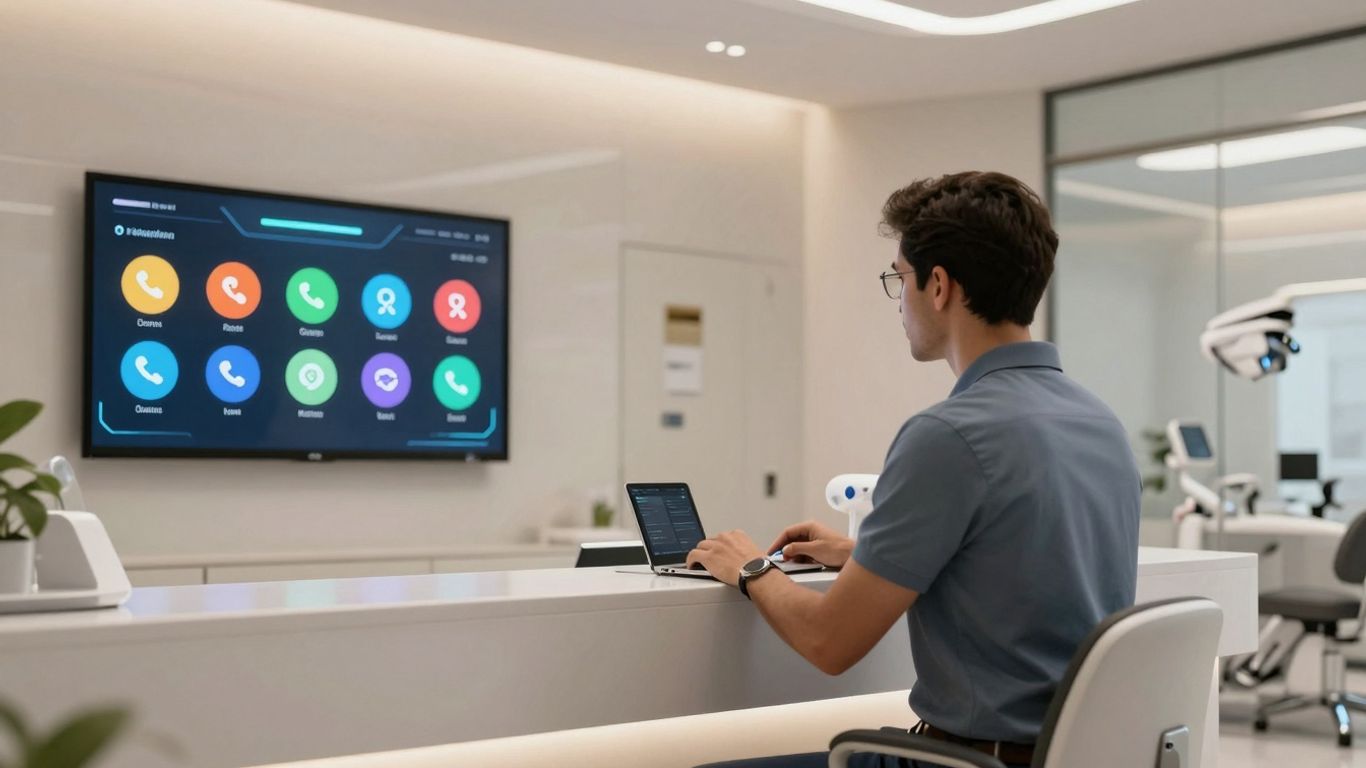
Remember when phone lines felt like a bottleneck? Like you only had so many ears to listen, and if too many people called at once, tough luck? That's mostly a thing of the past with AI receptionists. These systems don't just handle a few calls at a time; they can genuinely manage hundreds, even thousands, all at once. It's like having a front desk that can instantly grow to meet any demand.
This isn't just about avoiding busy signals during a rush. It means that whether your practice is hit with a wave of inquiries after a marketing push or just during the usual morning rush, every single patient gets through. No one's left on hold indefinitely, and no calls go unanswered because the lines are full.
Think about it: when your human staff is swamped, they can get stressed. Mistakes happen. But an AI doesn't get flustered. It performs the same way, consistently, no matter how many people are calling. This means patients get the same professional, helpful interaction every time, building trust even when your practice is at its busiest.
This capability is a game-changer for scalability. It allows your practice to handle growth without the immediate need to hire and train more staff just to answer phones. It's about making sure your communication capacity scales instantly with patient interest.
Here's what this means in practice:
It's the kind of tech that makes you wonder how you ever managed without it. Like having an infinite supply of patient listeners.
You know, sometimes you just need to put a leash on things. Especially when it comes to costs. With AI receptionists, you can actually set a cap on how many minutes the system is active. Think of it like setting a budget for your phone calls.
This isn't about limiting your service; it's about controlling expenses. You can decide, "Okay, for this month, I want the AI to handle no more than, say, 500 minutes of calls." The system then tracks this. If it hits that limit, it can automatically switch to voicemail or forward calls to a human. It’s a smart way to avoid surprise bills, especially if your call volume fluctuates wildly.
Here’s how it generally works:
This level of control is pretty new. Before AI, you just paid for what you used, and sometimes that meant a bill that made your eyes water. Now, you can budget with confidence. It means you can invest more in, say, marketing or new equipment, instead of just hoping your phone bill doesn't go through the roof.
It’s about making the technology work for your bottom line, not the other way around. You get the benefits of AI answering calls, but with a predictable cost structure. Pretty neat, right?
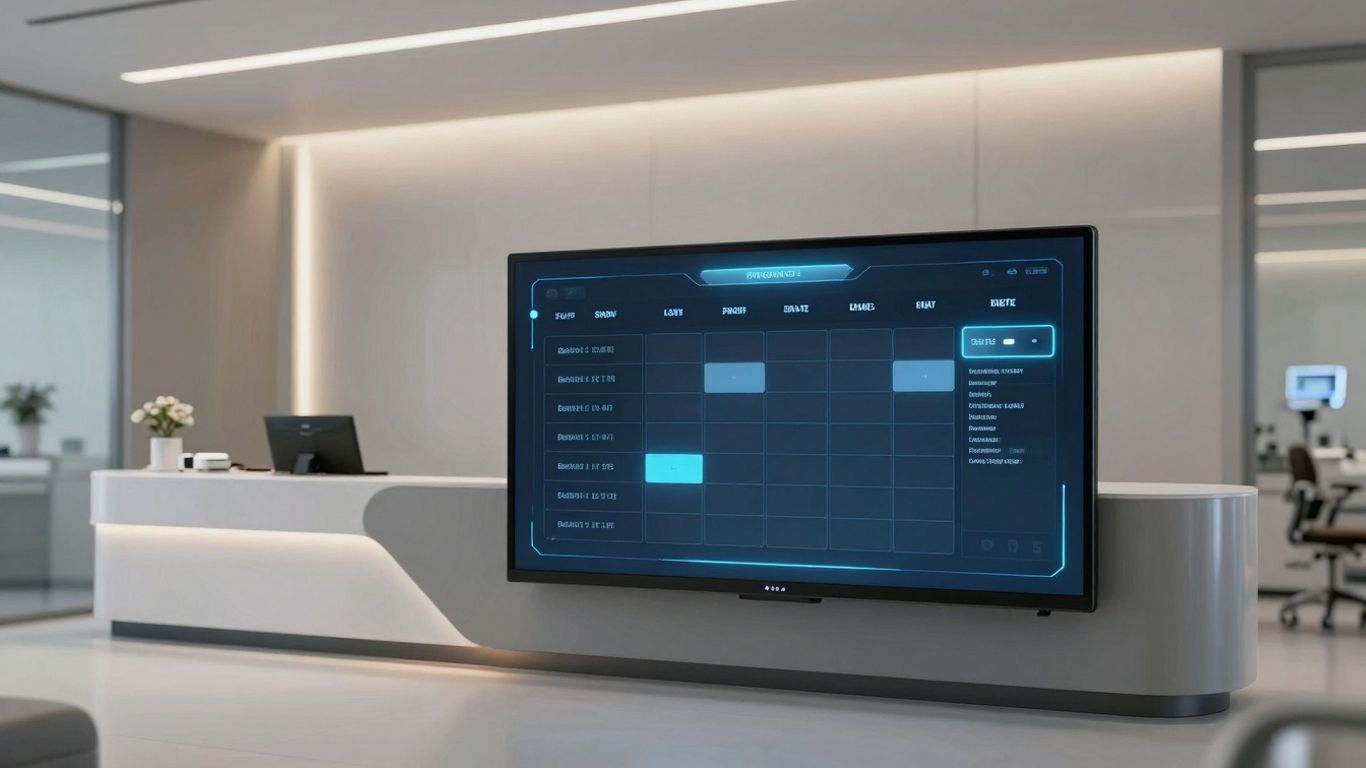
Time is, let's face it, the one thing you can't get more of. Most businesses just let it drift by, but with an AI receptionist, you can actually get a handle on it. You tell the AI when your practice is open, and it sticks to those hours. No more 'Sorry, we're closed' messages popping up when you're actually available, or worse, when you're not. It's about making sure the AI is working when it makes sense for your patients and your practice.
This isn't just about basic business hours, either. Think about holidays, or maybe a slow season where you want to scale back. The AI can adapt. It understands that a call on Christmas Day is different from a call on a random Tuesday in March. It means the AI responds appropriately, not just with a generic message.
It knows when to work, and when to be quiet. This context is key. It stops those awkward moments and ensures patients get the right information at the right time, building trust and making them feel like you've got things together, even when you're not physically there.
Setting active times for your AI receptionist isn't just about saving a few bucks on off-hours calls. It's about respecting your patients' time and your own. It ensures the AI acts as a helpful extension of your practice, not an annoyance. It's about making sure the right message gets delivered at the right moment, every single time.
Think about how fast you can actually talk. Now think about how fast a computer can process information. The gap is shrinking, fast. AI receptionists aren't just answering calls; they're responding in milliseconds. That's quicker than you can even blink, let alone type out a response or find a patient's file. This immediate reaction is what separates a good experience from a frustrating one. No more awkward pauses or the dreaded "please hold." It feels natural because it's happening almost instantly.
This isn't just about being quick, though. It's about maintaining the flow. You can interrupt an AI, ask a follow-up question, or even change the subject, and it doesn't get lost. It adapts, much like a human would. This makes the interaction feel less like talking to a machine and more like a real conversation. It's the difference between a clunky automated system and a helpful assistant.
The speed of these AI systems means they can handle multiple interactions simultaneously without any drop in performance. This isn't just about efficiency; it's about ensuring every patient feels heard, no matter how busy the practice gets.
Consider the alternative: a human receptionist. They're great, but they can only do so much. They might need a moment to look something up, or they might be on another call. An AI, however, doesn't get tired or distracted. It processes information and responds consistently, every single time. This level of rapid, reliable service is tough to match, especially during peak hours.
Here's a quick look at how response times stack up:
This speed translates directly into a better patient experience. It shows you value their time, and in today's world, that's a big deal.
Think about how you share a link to a YouTube video or a Google Doc. It’s simple, right? You get a link, you share it, and anyone with the link can see what you’re sharing. We’ve brought that same ease to call data.
Our shareable call links package everything about a conversation into one easy-to-distribute URL. This includes a summary of the call, the full recording, a text transcript, timestamps, call duration, and even the specific voice the AI used. No logins, no special software, just a link.
Why is this a big deal? Because information stuck in a silo doesn't help anyone. When you make call data easy to share, good things happen:
It’s about removing friction. When information flows freely, problems get solved faster, ideas spread, and your whole team gets smarter. It’s like the jump from slow mail to email, but for your phone calls. Some might worry about security, but the cost of occasionally sharing a link too widely is tiny compared to the cost of never sharing useful information at all.
Think of Zapier as the universal adapter for your software. It lets your AI receptionist talk to, well, pretty much anything else. We're talking over 9,000 different apps here. That's not a typo. It means when your AI takes a message, it can instantly create a task in your project management tool, add a new lead to your CRM, or even update a spreadsheet.
This isn't just about convenience; it's about making your entire tech stack work together. Information flows freely, tasks get done automatically, and your team spends less time on busywork and more time on actual patient care. It’s like having a digital assistant that’s always in the loop, making sure everything is coordinated perfectly.
Here’s a quick look at what this connection enables:
This level of integration means your AI receptionist isn't just a standalone gadget. It becomes a central part of your operational nervous system, keeping everything tidy and efficient without you lifting a finger.
Think about reselling AI receptionists. It's like getting a ready-made business, but it's yours. You slap your logo on it, set your prices, and sell it to other businesses. They get a smart receptionist that works 24/7, and you get a cut. It's a pretty straightforward way to get into the AI game without building everything from scratch.
This isn't just about slapping a sticker on someone else's product, though. The good ones let you customize quite a bit. You can often tweak the dashboard your clients see, so it looks and feels like it came straight from your company. This builds trust. People like dealing with a brand they recognize, even if the tech behind it is from somewhere else.
What kind of businesses are buying this? Well, anyone who gets a lot of calls and wants to seem more professional or just can't keep up. Think dental offices, law firms, small service businesses like plumbers or electricians. They all struggle with missed calls and after-hours inquiries. An AI receptionist solves that problem for them.
Here's a quick look at what you're really selling:
The real win here is that you're selling a solution to a common business pain point. Missed calls mean lost business. An AI receptionist stops that leak. You're not just selling software; you're selling peace of mind and more revenue for your clients.
Setting your own prices is a big deal. Some resellers charge around $250 to $500 a month per client. You buy the service from the provider at a lower rate, and the difference is your profit. It's a model that can scale pretty quickly if you find the right clients and offer good support. You're essentially building your own AI services company, powered by someone else's tech.
When you're looking at AI for your dental practice, especially for handling patient information, HIPAA compliance isn't just a nice-to-have; it's a must. You're dealing with sensitive health data, and the law is pretty clear about how that needs to be protected.
Any AI receptionist solution you consider absolutely must be built with HIPAA in mind. This means they have to have the right safeguards in place to keep patient data private and secure. Think about things like:
It's not just about avoiding fines, though that's a big part of it. It's about maintaining patient trust. If patients don't feel their information is safe, they'll go elsewhere. An AI that handles appointments, questions, or even just takes messages needs to be as secure as your own systems.
The technology itself is only part of the equation. The provider's commitment to security protocols and their willingness to enter into a BAA are critical indicators of their seriousness regarding patient privacy. Don't just take their word for it; ask for details on their security measures and their BAA process.
Look for providers who are transparent about their compliance efforts. They should be able to clearly explain how they meet HIPAA requirements. If they're vague or hesitant, that's a red flag. Your practice's reputation and your patients' privacy depend on making the right choice here.
When you're looking at AI receptionists, the voice is a big deal. It's the first thing a patient notices, and frankly, it can make or break their impression of your practice. Nobody wants to talk to a robot that sounds like it's reading from a script in a monotone.
The best AI receptionists today sound remarkably human. They've moved past that tinny, robotic sound. Think more along the lines of a friendly, clear voice that you might actually hear on a professional podcast or a well-produced audiobook. This isn't just about sounding nice; it's about building trust and making the patient feel heard and understood, even if it's an AI on the other end.
Here's what to listen for:
It’s easy to get caught up in features, but don't underestimate the power of a good voice. It’s the digital handshake of your practice. If it’s off, the rest of the interaction might feel off too. You want a voice that reflects the care and professionalism you offer in person, not one that makes patients wonder if they accidentally dialed a telemarketer.
When you're looking at AI receptionist services, the price tag can sometimes feel like a guessing game. Some companies make it hard to figure out exactly what you're paying for, or worse, what you'll end up paying once the "extras" pile up. It's important to find a solution where the pricing is clear from the start. No one likes surprises on their bill, especially when it comes to essential business tools.
Look for providers who lay it all out: what's included in the base package, what costs extra, and how they charge for usage. Is it per minute, per call, or a flat monthly fee? Understanding this helps you budget properly and compare different options fairly. A good AI receptionist should simplify your operations, not add financial confusion.
Here's what to watch out for:
The best AI receptionist services treat you like a partner, not just a customer. That means being upfront about costs, so you can make an informed decision about what fits your practice's budget and needs. It’s about building trust, not just selling a service.
Some systems offer different plans based on features or call volume. For example, a basic plan might cover appointment reminders and simple FAQs, while a premium one includes more complex query handling and deeper integrations. Knowing these distinctions helps you pick the right level of service without overpaying for features you won't use. Clarity in pricing means you know exactly what you're getting and what it will cost you, month after month.
Running a dental group or multiple locations means juggling a lot. You've got different teams, different schedules, and a whole lot of patients to keep happy across the board. An AI receptionist can really smooth things out here.
Think about it: instead of hiring and training a new front desk person for every single office, you can deploy a single AI system that handles calls for all of them. It means consistent service, no matter which location a patient calls. Everyone gets the same professional greeting, the same efficient handling of their query, and the same accurate appointment booking.
This isn't just about saving money on staff, though that's a nice perk. It's about making sure your brand voice stays the same everywhere. Whether a patient calls your downtown clinic or your suburban branch, they're getting that same reliable, helpful experience. It makes the whole group feel like one cohesive unit, even if they're miles apart.
For Dental Service Organizations (DSOs), this means a unified front that patients can rely on, simplifying operations and strengthening the overall patient journey across every touchpoint.
Look, nobody installs new tech just for the fun of it. You want to know if it's actually doing anything for your practice. That's where measuring your return on investment, or ROI, comes in. It’s not just about fancy features; it’s about what those features do for your bottom line.
Think about it: how many calls did you miss last month? How many of those could have turned into appointments? An AI receptionist logs everything. It turns those lost opportunities into data you can actually use. You start seeing patterns – maybe lunch hours are a dead zone, or a specific marketing campaign isn't bringing in the right kind of calls. This isn't guesswork anymore; it's about plugging the leaks.
Here’s a rough idea of what you might see:
Beyond the numbers, consider the time saved. Your staff isn't bogged down answering the same questions over and over. They can focus on patients in the chair, which is where they add the most value. That’s a kind of ROI that’s harder to quantify but just as important.
The real win with AI isn't just automating tasks; it's about making smarter decisions. The data it collects points you directly to where your practice can improve, whether that's tweaking your ad spend or refining your patient education materials. It’s a continuous loop of improvement, driven by actual results, not just hunches.
And don't forget about scalability. If you're part of a DSO or managing multiple locations, seeing how the AI performs across different sites can highlight best practices or areas needing more attention. It gives you a clearer picture of your entire operation, not just one office. Ultimately, it’s about making your marketing dollars work harder and ensuring every potential patient interaction counts.
Wondering how much your business gains from our services? We'll show you how to track the value and see the real benefits. Ready to see these numbers for yourself? Visit our website to learn more about how we help businesses grow.
Look, the dental front desk is a mess. It always has been. Calls pile up, patients wait, and your staff is stuck doing busywork. AI receptionists fix that. They handle the noise so you can focus on the actual work. It’s not about fancy tech; it’s about getting more done with less hassle. If you’re still doing things the old way, you’re falling behind. Simple as that.
Think of an AI dental receptionist as a super-smart computer helper for your dental office. It can answer the phone, schedule appointments, and answer common questions, just like a human receptionist, but it works all day and night without getting tired!
Yes! These AI systems are designed to understand what people say and can even talk back in a natural way. Some can even speak different languages to help more patients feel comfortable.
Most of these AI receptionists are built to connect with the dental software you already use, like Dentrix or Eaglesoft. This means your appointment schedule and patient information can stay updated automatically, making things much easier.
The cost can vary, but many AI receptionists are more affordable than hiring a full-time human receptionist. Plus, they can help you get more appointments booked, which can actually make you more money.
If the AI runs into something it doesn't know, it can be set up to take a message, forward the call to a human team member, or offer to call the patient back. It's all about making sure the patient gets the help they need.
It helps by making sure you never miss a call, even after hours. This means more patients can book appointments, leading to a fuller schedule. It also frees up your human staff to focus on patients in the office, making everyone happier.
Start your free trial for My AI Front Desk today, it takes minutes to setup!


