
Klarna made a big splash with its AI customer service plans, aiming to automate almost everything. But, like many things that sound great on paper, it turns out the real world is a bit more complicated. Now, they're rethinking their approach, bringing humans back into the picture. This shift in how Klarna handles customer service is a big deal, and it tells us a lot about where AI is heading in supporting customers.

Klarna went all-in on AI, really betting the farm on automation. For a while there, it seemed like the future of customer service was going to be entirely digital, with chatbots handling everything. The company even announced its AI assistant was managing a huge chunk of conversations, doing the work of hundreds of human agents. It was presented as a win-win: better service, lower costs. But, as it turns out, that wasn't quite the whole story.
Klarna's initial push into AI was aggressive. They talked about how their AI assistant could handle millions of conversations, resolving issues in under two minutes. The narrative was that AI offered superior experiences at better prices. This was a bold move, positioning Klarna as a leader in adopting new tech, even going so far as to be an "OpenAI favorite." It felt like a definitive step towards a future where human interaction in customer service would be minimal, if not obsolete.
However, the reality started to bite. Customers weren't always happy. While AI could handle the simple stuff, the more complex or emotional issues often fell flat. It became clear that even advanced AI has its limits. The idea that AI could fully replace humans, especially for nuanced problems, was proving to be a bit of a stretch. Customers began expressing frustration with impersonal interactions and the difficulty of reaching a person when they really needed one. This feedback loop is important; it shows that technology, no matter how smart, can't always replicate human understanding.
Klarna's CEO, Sebastian Siemiatkowski, eventually admitted that the intense focus on cost-cutting through AI had gone too far. He stated that prioritizing cost savings had led to a drop in quality. It’s a classic trade-off: you can optimize for efficiency, or you can optimize for customer satisfaction, but doing both perfectly with just automation is tough. The company realized that while AI is great for speed and handling routine tasks, it can't replace the empathy and nuanced problem-solving that human agents provide. This pivot suggests a new understanding: AI should be a tool to help humans, not a complete substitute. It's about finding that balance, perhaps using AI for initial triage and simple queries, while ensuring a smooth handover to a human for anything more complex. This is where services that integrate AI with human oversight, like AI-powered outbound phone agents, start to make more sense in a broader support strategy.
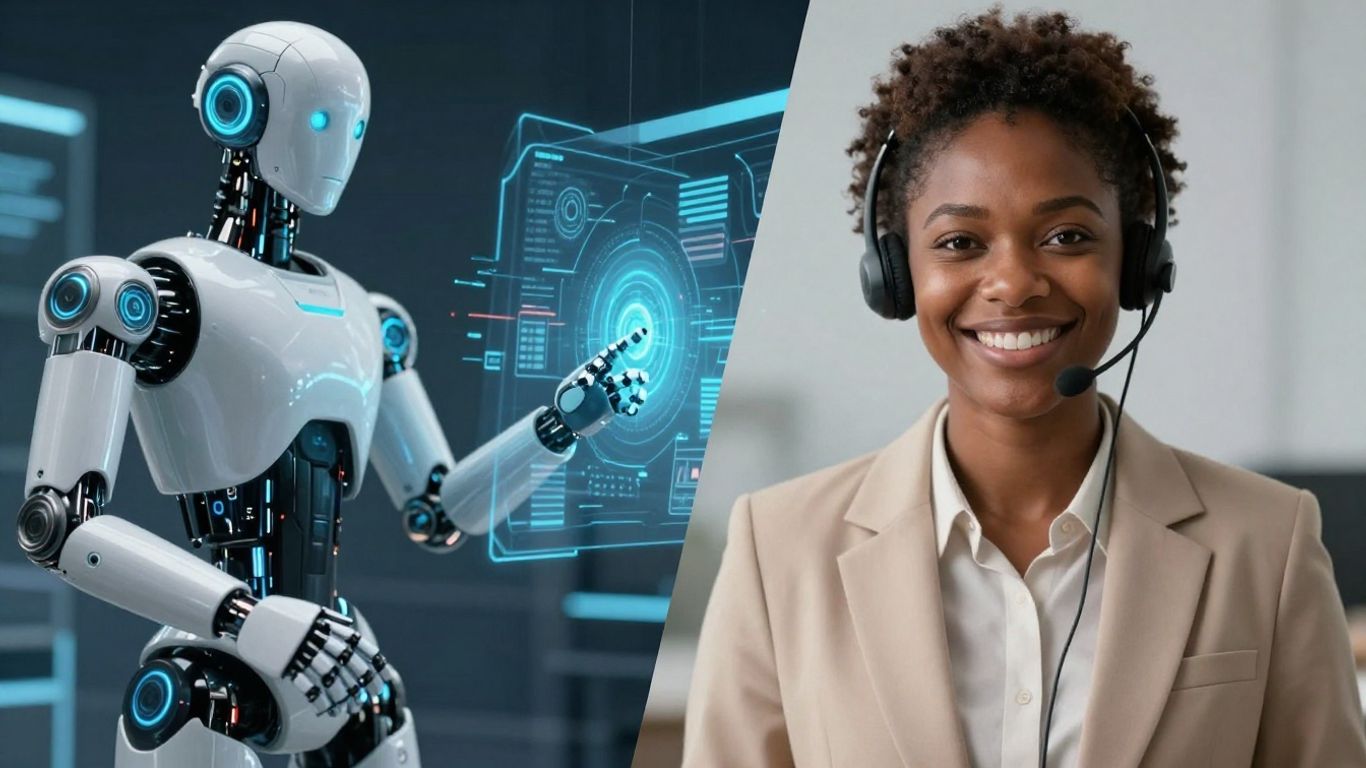
It’s become pretty clear that throwing AI at every customer service problem isn't the magic bullet some folks thought it would be. Klarna’s own experience shows this. While AI can handle a lot of the simple, repetitive stuff – think basic questions, order status checks – it stumbles when things get complicated or emotional. Customers, it turns out, still want to talk to a real person when they're frustrated or dealing with something sensitive. A quick, automated answer just doesn't cut it then.
This is where the real split happens. AI is fantastic for speed and consistency. It can process information and respond faster than any human ever could. This is great for cutting down wait times and handling the sheer volume of inquiries that flood customer service departments. But it lacks the nuance of human interaction. It can't truly understand frustration, offer genuine comfort, or navigate a complex, multi-layered problem with the same intuition a person can.
The smart play here isn't to replace human agents entirely, but to use AI as a tool to make them better. Imagine an AI that can instantly pull up a customer's history, suggest relevant solutions, or even draft a response for the agent to review and send. This frees up the human agent to focus on the actual conversation and the customer's emotional state, rather than digging through databases.
The goal should be to automate the easy parts of the job, leaving the hard parts for people. This way, you get the efficiency of AI without sacrificing the quality of human connection when it matters most.
This hybrid approach means AI handles the initial triage and simple queries, escalating to a human agent only when necessary. The agent, armed with AI-generated context, can then step in and provide a more personalized and effective resolution. It’s about creating a system where AI and humans work together, each playing to their strengths.
One of the surprising benefits of advanced AI is its sheer speed. We're talking about response times measured in milliseconds. This isn't just about answering questions faster; it's about maintaining the natural flow of conversation. When an AI can respond almost instantly, it feels less like talking to a machine and more like a rapid-fire exchange with a very knowledgeable person. This speed can be transformative, turning potentially frustrating interactions into smooth, efficient dialogues. It’s the difference between a customer feeling stuck in a loop and one who feels like they're making real progress.
Look, AI is great for a lot of things. It can sort through data faster than any human, it doesn't get tired, and it can handle those repetitive tasks that nobody really wants to do. Klarna learned this the hard way. They went all-in on AI, thinking it would be the ultimate cost-saver and efficiency booster. And for a while, the numbers looked good. But then the customers started complaining. Turns out, when you're dealing with something important, or something that's just plain frustrating, you don't want to talk to a robot. You want to talk to a person. Someone who gets it. Someone who can actually feel your frustration and respond with something other than a pre-programmed platitude. The real value isn't just in solving a problem, it's in how you make the customer feel while you're solving it. That emotional connection, that sense of being heard – AI just can't replicate that, not really.
So, what's the fix? Klarna's realizing they need people. Not just warm bodies, though. They need folks who are good with people. This means looking for empathy, patience, and the ability to really listen. It’s about finding people who can handle those tricky situations where AI falls flat. Think about it: an AI can tell you the return policy, but it can't calm down an angry customer who just received a damaged item and needs reassurance. That takes a human. It also means hiring people who know the product inside and out, not just reading from a script. This isn't about replacing AI, but about having humans step in when it matters most, for those moments that require a genuine connection.
Klarna's trying something interesting here. They're looking at this 'Uber-type' model for remote customer service agents. The idea is to tap into a wider pool of talent – students, people in smaller towns, even loyal customers. It’s about flexibility. Instead of a traditional office setup, these agents can work from wherever they are. This could mean better access to skilled people who might not be able to commute to a big city office. It’s a way to build a more agile team, one that can scale up or down as needed. Plus, it might attract people who are passionate about the brand and want to be more involved. It’s a different way of thinking about staffing customer support, moving away from the old model and embracing something more modern and flexible.

Klarna sprinted toward a future where chatbots handled almost everything. On paper, it made sense: reduce costs, speed up replies, apply the newest tech. But as the company quickly found, over-automation isn’t just about algorithms or efficiency—it’s about what you lose. When support starts feeling like a maze with no exit, all the speed in the world doesn’t matter.
Anyone who’s tried to get a refund or sort out a billing mess with a chatbot knows the pain. Early on, Klarna’s AI assistant was praised for answering tons of queries fast. But the cracks showed up quick:
It’s not just a tech problem—it’s a customer patience problem.
Some things really do need a patient ear, not another instant reply. It doesn’t matter how good the chatbot is; sometimes you just want to feel heard.
Klarna’s about-face showed that complete automation isn’t a silver bullet. The lesson? Tech works best when it solves the predictable stuff, but humans solve the personal—or the weird. The key is picking the right balance:
Klarna’s journey is a warning to anyone who thinks they can automate away the “human” part. Automation is a tool, not a replacement for contact.
Klarna's journey with AI in customer service is a clear signal: the future isn't about picking a side, but about finding the right balance. After an aggressive push towards automation, the company is now recalibrating, recognizing that true customer satisfaction lies in a blend of speed and empathy. It's a pivot that acknowledges the limits of what AI can do and the enduring value of human connection.
The next phase for Klarna involves a more integrated model. AI will continue to handle the routine, the quick questions, and the initial triage. Think of it as the first line of defense, efficiently sorting through the bulk of inquiries. This frees up human agents to tackle the complex, the sensitive, and the situations where a genuine human touch makes all the difference. It’s about using AI for efficiency, but humans for empathy and nuanced problem-solving. This isn't about replacing people, but about augmenting their capabilities, allowing them to focus on the interactions that truly matter. The goal is to create a system where customers get fast answers when they need them, and thoughtful, human support when they don't.
Klarna's shift means a renewed focus on the people behind the service. This isn't just about hiring more agents; it's about hiring the right agents. The company is looking for individuals with strong communication skills, problem-solving abilities, and a natural inclination towards empathy. They're even piloting an "Uber-type" model for remote agents, aiming to attract top talent with competitive pay and flexibility. This approach could tap into a wider pool of skilled individuals, offering them a chance to work remotely and on their own terms. It’s a move that prioritizes quality over sheer volume, understanding that a well-trained, motivated human agent can resolve issues more effectively and build stronger customer relationships.
The takeaway from Klarna's experience is that AI is a powerful tool, but it's not a silver bullet. Over-reliance on automation can lead to customer frustration and a decline in service quality. The future lies in using AI to supplement human efforts, not to replace them entirely. This means ensuring customers always have a clear and accessible path to speak with a human when needed. It’s about building systems that are smart enough to handle the predictable, but flexible enough to accommodate the unpredictable. Companies like Frontdesk are already showing how AI can act as a powerful assistant, handling routine tasks and freeing up human capacity for more complex interactions, demonstrating that the best customer service often comes from a well-orchestrated partnership between humans and machines.
Imagine a world where customer service is always on, always helpful, and always smart. That's the future we're building. We're making customer interactions smoother and faster than ever before. Want to see how we do it? Visit our website to learn more about our cutting-edge solutions and how they can help your business grow. Discover the power of smart customer service today!
So, where does this leave us? Klarna's pivot shows that while AI is powerful, it's not a magic bullet for customer service. It's great for quick answers and simple tasks, saving time and money. But when things get complicated, or when someone just needs to feel heard, a human touch is still king. The real win seems to be in finding that balance – using AI to handle the routine stuff so human agents can focus on the moments that really matter. It’s not about replacing people, but about making them better at their jobs. That's probably the smart play for anyone looking to keep customers happy in the long run.
Klarna realized that while AI is great for quick answers, it can't always handle tricky or emotional customer problems. They found that focusing too much on AI made customer service quality go down, so they're bringing back more human helpers.
AI can quickly answer simple questions and get things done fast, like checking an order status. Humans are better at understanding feelings, solving complicated issues, and offering a personal touch when a customer is upset or confused.
No, Klarna isn't getting rid of AI. They still use it for many tasks to be efficient. They just want to make sure customers can also talk to a real person when they need to, creating a mix of both AI and human help.
This means they're creating a flexible way for people to work as customer service agents, similar to how Uber drivers work. They want to hire people who can work from anywhere, offering good pay and the freedom to choose their hours.
Human agents can show empathy and understand customer feelings, which builds trust. For complex problems or when a customer is having a bad experience, a human touch can make a big difference in keeping the customer happy and loyal.
Companies should learn that using AI is good for saving money and time on simple tasks, but it shouldn't replace humans entirely. Finding the right balance between AI efficiency and human empathy is key to providing great customer service that keeps people happy.
Start your free trial for My AI Front Desk today, it takes minutes to setup!


