
Finding the best AI receptionist for your medical office in 2026 is becoming a real game-changer. You know how the front desk can get swamped with calls, appointment setting, and just general questions. It's a lot for any human to handle, especially when patients need quick answers. Well, AI is stepping in to help. Think of it as an extra pair of hands, available 24/7, that can handle a good chunk of that work. This guide is here to help you figure out what to look for, so you can get the right AI assistant for your practice without all the confusion.
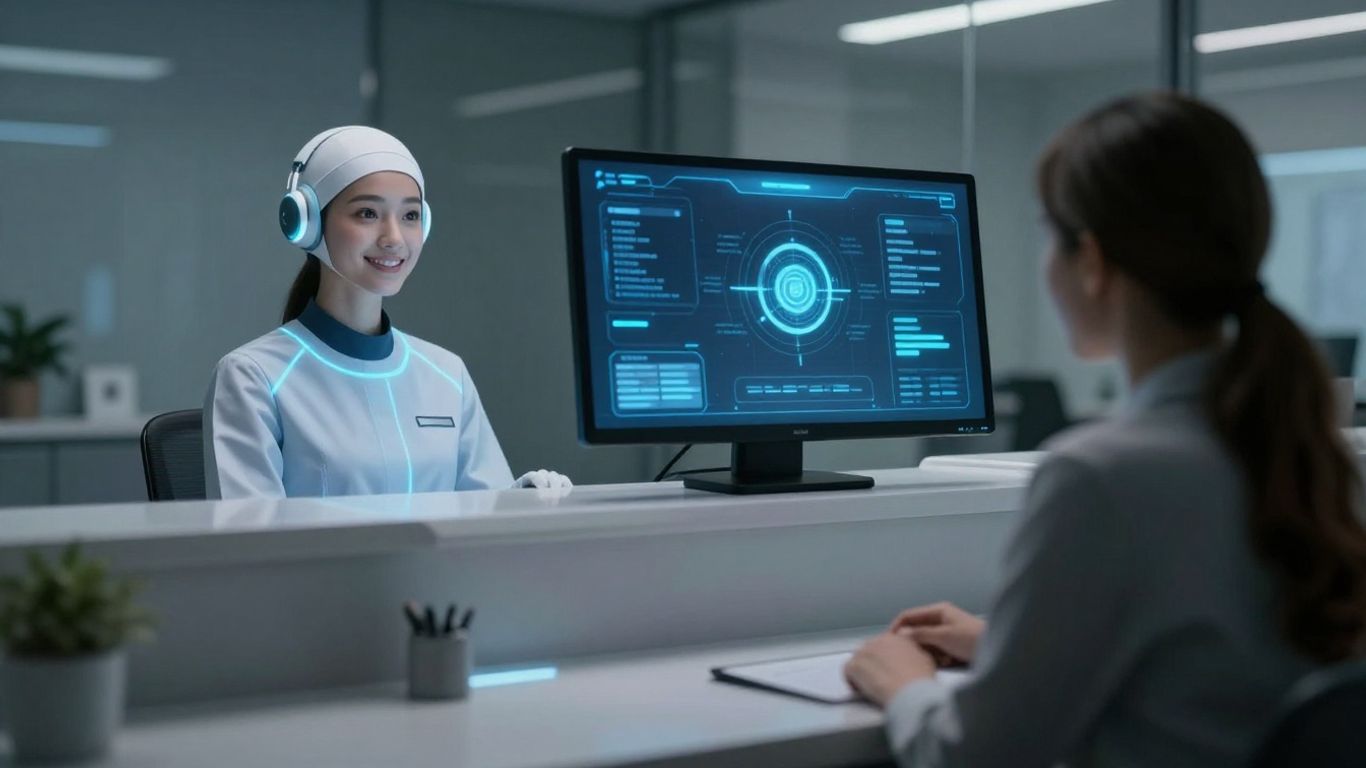
Think about the last time you called a business and got stuck in a phone tree, or worse, just got voicemail. It’s a pain. For medical offices, this isn't just an annoyance; it can mean missed appointments, frustrated patients, and lost revenue. That’s where AI receptionists come in. They’re not just fancy answering machines; they’re a fundamental shift in how practices handle patient interactions.
Your practice isn't open 24/7, but patient needs often aren't confined to business hours. An AI receptionist means calls are answered instantly, any time of day or night. Whether it's a patient trying to book an appointment, asking about office hours, or needing to confirm a procedure, the AI can handle it. This constant availability is a big deal for patient satisfaction. It means fewer missed opportunities and a more responsive practice. This service can answer questions, schedule appointments, and send custom links, acting as a tireless front desk.
Let's be honest, the front desk is often swamped. Answering phones, scheduling, taking messages – it’s a lot. This constant juggling act leads to burnout. An AI receptionist takes over many of these routine tasks. This frees up your human staff to focus on more complex patient needs, direct care, and administrative duties that actually require a human touch. It’s about making your team’s jobs more manageable and less stressful.
People want answers fast. Waiting on hold or for a callback is frustrating. An AI receptionist provides immediate responses to common questions and can even schedule appointments on the spot. This speed and efficiency make a huge difference in how patients perceive your practice. It shows you value their time and are equipped to handle their needs promptly. For routine inquiries, modern AI achieves 85-95% accuracy, making it a reliable first point of contact.
When looking at AI receptionists for a medical office, you need tools built for the job. Generic chatbots won't cut it. Here's what actually matters:
This is non-negotiable. Any AI handling patient information must follow HIPAA rules. This means secure handling of Protected Health Information (PHI). Look for systems that use end-to-end encryption and can sign a Business Associate Agreement (BAA). The AI should be able to securely take patient intake information, understand urgency, and route calls appropriately, whether to a specific doctor, department, or a secure voicemail.
Your Electronic Health Record (EHR) system is the heart of your practice. The AI receptionist needs to talk to it. This means syncing appointments, patient demographics, and even basic medical history. Integration should be smooth, ideally working with whatever EHR you use, like Epic, Athenahealth, or eClinicalWorks. This avoids double data entry and keeps all patient information current. Real-time updates prevent scheduling errors and ensure staff have the latest patient details.
Medical practices often serve communities with varied linguistic backgrounds. An AI receptionist that can communicate in multiple languages, not just basic Spanish, but with accurate dialects, is a significant advantage. This opens your practice to more patients and provides a better experience for those who aren't fluent in English. It shows you care about accessibility.
Beyond just taking messages, the AI should be able to book, reschedule, and cancel appointments. This involves syncing directly with your practice's calendar (like Google Calendar or Outlook) to see real-time availability. It should handle common scheduling requests, confirm appointments, and send reminders automatically. This frees up your human staff for more complex patient needs.
The goal is to automate the routine so your team can focus on the critical. An AI that handles scheduling and basic inquiries efficiently means fewer dropped balls and more time for patient care.
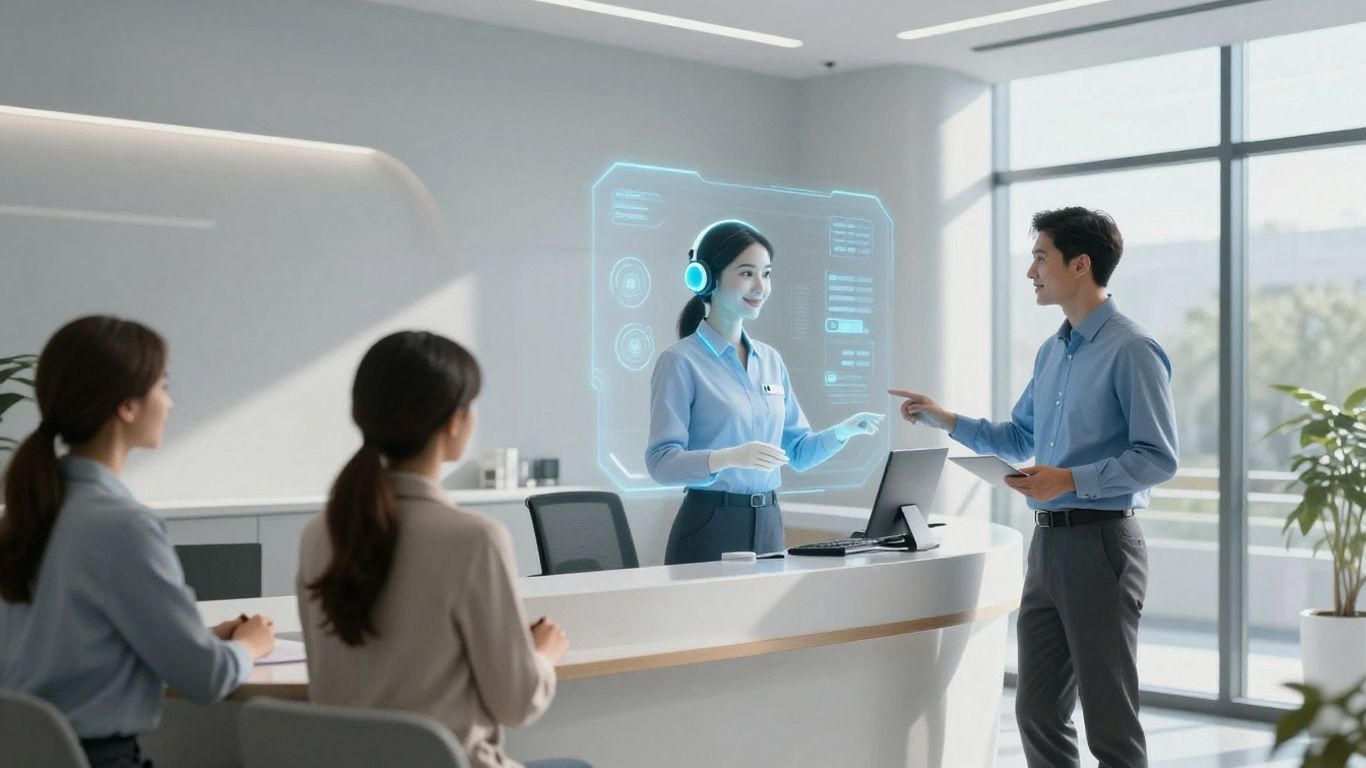
AI receptionists are only as good as how smoothly they fit into your day-to-day, and how well they keep up with the pace and unpredictability of a medical office. The right metrics quickly separate the flashy demos from the truly reliable solutions.
An AI receptionist has to understand context, pick up on nuances, and handle interruptions—just like a sharp human. In a medical practice, that means recognizing follow-up questions, switching topics as patients ramble, or catching key words like "urgent.”
You’ll know your AI is working when patients stop asking, “Are you a robot?” and just get the information they need, fast.
Speed is everything. Latency—the gap between a patient’s question and the AI’s answer—has to be tiny. If it stumbles or lags, people get frustrated, especially when they’re anxious or not feeling well.
You want a system where conversations roll, not something clunky that makes you long for voicemail.
Metrics without insight won't save your front desk. An analytics dashboard should let you:
Strong analytics help you find weak spots and tweak your process—are you losing hot leads after hours? Is the AI fielding a ton of insurance questions it can't handle? Data should push you to act.
Not every call can or should be handled by a bot—especially medical emergencies. Smart AI will listen for urgent language like "chest pain" or "bleeding" and instantly reroute to a live person or trigger an alert.
Key features to look for:
AI that spots emergencies isn’t just nice—it’s non-negotiable in healthcare.
When you judge an AI receptionist, don’t get distracted by shiny features. Drill into these metrics, set your expectations high, and remember—every second a caller waits or gets fumbled is a second your office looks less professional and less trustworthy. The numbers make or break the experience.
Let's talk about the money. Because frankly, that's often the sticking point. You see these AI receptionists, and you think, 'Okay, but what's the real cost?' It’s not just the monthly fee. You've got to look at what you're gaining and what you're avoiding.
Think about a human receptionist. You're looking at salary, benefits, taxes, maybe some office space. It adds up fast. We're talking easily $4,000 to $4,600 a month, and that’s just for someone who’s there 9 to 5, Monday to Friday. They get sick, they take vacations. It’s a lot to manage.
Now, compare that to an AI receptionist. Most solid options run around $199 to $299 a month. That's it. 24/7 coverage, no sick days, no vacation requests. The math here isn't complicated. You're saving a massive chunk, often 85-95% less than a full-time employee. It’s a no-brainer if you look at it purely from a cost perspective.
This is where AI really shines. How many calls do you miss right now? Each one is a potential patient, a potential revenue stream just walking out the door. Let's say you miss 30 calls a month, and only 20% of those would have become patients. If each patient is worth, say, $3,500, you're looking at losing $21,000 a month. That's $252,000 a year.
An AI receptionist can capture 90% of those missed calls. So, instead of losing $21,000, you're gaining maybe $19,600. You pay $199 for the AI, and you've just made back thousands. The return on investment is astronomical. It’s not about spending money; it’s about making money you were previously leaving on the table. You can see how this AI-powered front desk service can directly impact your bottom line.
One of the nice things about AI is predictability. You know what you're paying each month, usually a flat fee. Some services even let you set limits on minutes or calls. This means no surprise bills. You can cap your spending, maybe set higher limits during busy hours and lower ones when things are quiet. It gives you control. You can test the waters with a free trial, see how it works for your practice, and then scale up without worrying about unexpected costs piling up. It’s about managing your budget effectively while still getting that 24/7 coverage.
Your AI receptionist isn't just a voice on the phone. It's a node in your business network. Think of it as the switchboard operator who can also file reports, update databases, and send out memos, all without you lifting a finger.
This is where things get interesting. Zapier connects thousands of apps. Your AI receptionist can talk to your CRM, your calendar, your project management tools – basically, anything that plays nice with Zapier. When a call ends, the AI can automatically update a contact in your CRM, create a follow-up task, or even send a notification to your team. It’s about making your tools work together, so you don't have to.
Beyond just taking messages, the AI can handle follow-ups via text or email. If a patient asks for information about services, the AI can be programmed to send an automated email with details. Or, if a callback is requested, it can send a text confirming the request and providing an estimated response time. This keeps patients informed and reduces the feeling of being left in the dark.
This automation means fewer routine messages get lost in the shuffle. It’s about consistent communication, even when your staff is busy with other tasks.
Some AI receptionists come with their own built-in CRM or integrate deeply with existing ones. This isn't just about storing names and numbers. It's about organizing patient data based on actual conversations. The AI can automatically tag interactions, categorize inquiries, and even flag patients who might need follow-up based on their conversation history. This turns call logs into actionable insights, making your patient management far more efficient.

Finding an AI receptionist for your medical office in 2026 isn’t just about ticking off features—it’s about fitting your practice like a glove. The wrong choice could slow things down, frustrate staff, or leave patients annoyed. Get it right, and suddenly your phones work smarter, not harder. Here’s what to keep in mind as you pick a partner.
Medical offices aren’t like dry cleaners or pizza places. They have unique vocabulary—think HIPAA, prior auth, referrals, clinical urgency. Choose a platform with AI trained specifically for healthcare. If the demo sounds like it’s guessing at the difference between a cardiology consult and a flu shot, keep looking. Ask about:
Healthcare-specific AI means your practice spends less time fixing misunderstandings and more time helping patients.
If a solution can’t pass the HIPAA sniff test, it’s a hard no. Medical offices deal with sensitive data, and the law is not gentle if you slip up. Check the platform’s:
Don’t skimp here—even a great AI is useless if it puts your patient records (and license) at risk.
Every office is a little different. Some want elaborate call trees, others need speedy setup. Pay attention to:
You want a platform that adapts as your workflow changes—not something that feels stuck in concrete.
Sometimes the decision isn’t about flashy features or low price. It’s about how the solution feels once it’s part of your team.
Pick a partner who invests in your success. Your practice—and your patients—will notice.
Picking the best AI receptionist service is a big choice. You want a partner that understands your business needs and helps you grow. Think about what features are most important for your company. Does it need to book appointments, answer common questions, or just take messages? Finding the right fit can make a huge difference in how smoothly your business runs. Ready to see how a smart AI receptionist can help you? Visit our website today to learn more and get started!
Look, AI receptionists aren't some far-off concept anymore. They're here, and they're already changing how medical offices operate. We've talked about how they handle calls 24/7, schedule appointments without a hitch, and even integrate with your existing systems. The real win? They free up your staff to focus on patients, not paperwork. Choosing the right one means looking past the hype and focusing on what actually helps your practice run smoother. Don't get left behind; the technology is ready, and it's more affordable than you might think.
Think of an AI receptionist as a super-smart computer program that can answer your business phone calls. It's designed to act like a human receptionist by greeting callers, answering common questions, and even scheduling appointments. It's available all the time, so you don't miss any calls.
Getting started is usually very fast! Many services let you set up your AI receptionist in just a few minutes. You just need to give them some basic info about your business, and they'll handle the rest.
Yes, most advanced AI receptionists can learn a lot about your business. You can give them information about your services, prices, and how things work. They use this information to answer tricky questions, almost like a knowledgeable employee.
Nope! One of the biggest advantages of AI receptionists is that they work 24/7. This means they can answer calls and help customers even late at night, on weekends, or during holidays when your human staff might not be available.
Absolutely. Many AI receptionist services can connect with your calendar to book, reschedule, or confirm appointments. This saves you a lot of back-and-forth emails and ensures your schedule stays organized.
Some services offer a 'hybrid' approach where a real human can step in if the AI gets stuck or if the caller needs a more personal touch. This ensures that every customer gets the help they need, whether it's from AI or a human.
Start your free trial for My AI Front Desk today, it takes minutes to setup!


