
So, you've probably heard a lot about AI lately. It's everywhere, right? Well, it's starting to pop up in places you might not expect, like doctor's offices and hospitals. We're talking about AI voice agents – the kind that can actually talk to you. This article is going to explore what that really means for healthcare. Is it just a fancy answering machine, or is it something more? Let's take a look at how these AI helpers are showing up and what they could mean for patients and doctors alike.
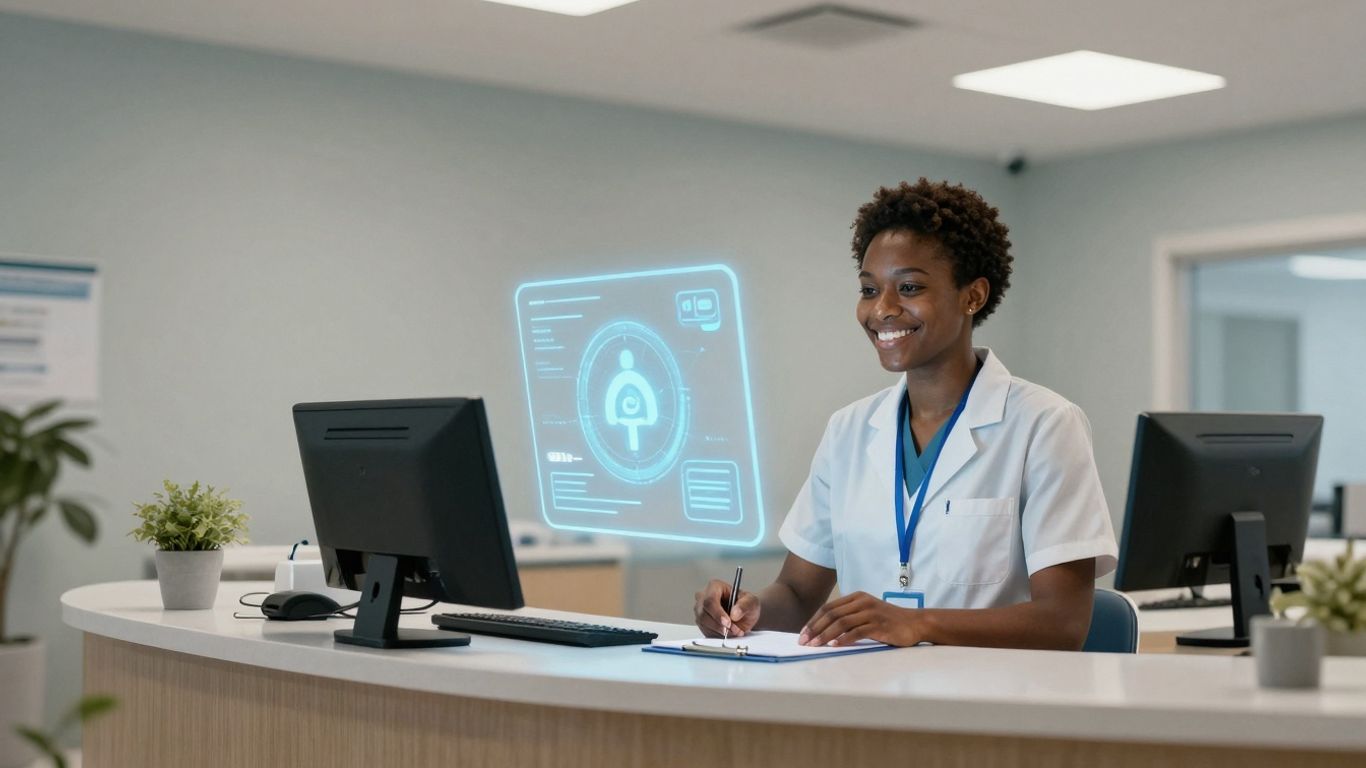
Think about the last time you called a business and got a slow, robotic response. Frustrating, right? That's what we've eliminated. Our AI receptionist is fast. Really fast. We measure its response time in milliseconds. That's quick enough to keep up with natural conversation. This speed isn't just a neat trick; it's transformative. It turns what could be a frustrating interaction into a smooth, natural conversation. It's like talking to the smartest person you know, but one who never needs to pause to think.
Businesses are always looking for ways to convert more leads. It's the lifeblood of growth. An AI front desk can handle inbound calls, qualify leads, and even schedule appointments automatically. This means no lead gets left behind because staff were busy or the office was closed. The system can integrate with your existing CRM, making sure all the information is captured and organized without manual data entry. It’s about making sure every potential customer gets a timely and helpful response, which is key to turning interest into a sale. This automation frees up your sales team to focus on closing deals rather than sorting through inquiries.
Beyond just answering calls, AI can also initiate contact. Imagine running outbound campaigns to follow up with past clients, announce new services, or conduct surveys. The AI can manage these calls, personalize messages, and even handle basic responses. This capability allows businesses to proactively engage their customer base, something that often gets pushed aside due to limited staff time. It’s a way to keep your business top-of-mind and gather valuable feedback without overwhelming your team. This proactive outreach can significantly boost customer engagement and retention.
Integration is where the real magic happens. An AI receptionist that can talk to your CRM is a game-changer. When a call ends, or an appointment is made, the AI can update your customer records automatically. This two-way data flow means your CRM is always up-to-date, providing a single source of truth for all customer interactions. It eliminates the tedious task of manual data entry, reducing errors and saving countless hours. This level of integration turns your AI receptionist into the central nervous system of your business operations, making everything run more smoothly. It’s about creating a connected ecosystem where information flows freely and efficiently, allowing your business to operate at peak performance. You can learn more about how this works by checking out AI front desk solutions.

Think about what most answering services actually do. They take a message. Maybe they forward it. That’s about it. It’s a passive role, really. AI voice agents, though, they’re active. They don’t just take messages; they do things with them.
This is where the real shift happens. Instead of just a voice on the other end saying "leave a message," you get someone who can actually handle business. Need to book an appointment? The AI can check your calendar, find an open slot, and confirm it, all without a human lifting a finger. It’s not just about being available after hours; it’s about being functional after hours. This means patients can schedule, reschedule, or cancel appointments anytime, day or night. It’s like having a receptionist who never sleeps, never takes a break, and never gets overwhelmed by a ringing phone.
This is a neat trick. Imagine someone calls asking for pricing. Instead of just reading it out or taking a message, the AI can instantly text them a link to your rate sheet. Or if they want to book, it can send a link to your scheduling calendar right then and there. It’s about providing information when it’s needed, without interrupting the flow of the conversation. You set up simple rules, like "if they ask about X, text them Y," and the AI handles it. It makes interactions faster and gives people the info they want, right on their phones.
Latency kills conversations. You know that feeling when you ask someone a question and there’s this awkward pause before they answer? It feels like forever. AI voice agents are cutting that down. We’re talking response times in milliseconds. This isn’t just about sounding quick; it’s about keeping up with the natural rhythm of a conversation. It means the AI can handle complex questions without missing a beat, making the interaction feel less like talking to a machine and more like talking to someone who’s really on the ball. It’s the difference between a clunky exchange and a smooth, productive chat.
Think about building a business. You want something that can grow without you having to hire a whole new crew every time you get a few more customers. That's where reseller programs for AI voice agents really shine. It's like getting a ready-made product you can slap your own label on and start selling.
This is the core idea. A company builds the AI receptionist tech, and then they let you rebrand it as your own. You get the software, the backend, all of it, but it looks and feels like it came from your company. You can set your own prices, manage your own clients, and build your own brand. It's a fast track into the AI services market. Instead of spending years and a fortune building the tech yourself, you're essentially buying a finished product and adding your own marketing and customer service on top. This means you can offer advanced AI receptionists to businesses that need them, like medical practices or law firms, without needing a team of AI engineers.
So, you've got this white-label solution. Now what? You start selling it. The beauty here is that the AI handles the heavy lifting – answering calls, scheduling, taking messages. Your job is to find businesses that need this service and sign them up. The AI can handle a huge number of calls at once, way more than a human receptionist ever could. This means you can take on clients of all sizes, from a small local shop to a larger company with a lot of incoming calls, and the system won't buckle under the pressure. It's about selling a service that scales automatically with demand. You're not limited by how many people you can hire; you're limited by how many clients you can find.
Getting started doesn't require a massive investment or a deep technical background. Often, these reseller programs have simple sign-up processes and require you to commit to just a few accounts to begin. You get training, support, and the tools you need to market and manage your clients. It's designed so that someone with a good sales sense and a desire to build a business can jump in. You can even use the service for your own business first to get a feel for it. The goal is to let you focus on growing your customer base and providing good service, rather than getting bogged down in the complexities of AI development. It's a practical way to enter a growing market.
Healthcare providers are swamped. Patient numbers keep climbing, paperwork piles up, and staff are stretched thin. They're juggling appointment requests, insurance checks, and follow-up calls. Meanwhile, patients want faster answers and easier ways to get care. This is where AI voice agents step in. They handle routine communications professionally, without the limits of human staff hours. For healthcare managers looking to run things smoother and keep patients happy, AI voice agents are a practical option.
AI voice agents can do a lot in a medical setting. Think about scheduling appointments. Patients can call anytime, day or night, and the AI can book them in. It's not just about booking, though. These agents can:
These systems automate the predictable, freeing up human staff for the complex, empathetic interactions that truly matter.
AI voice agents are changing how patients interact with healthcare systems. They offer a consistent, reliable point of contact. This means patients get information and access to care more easily, which can reduce stress and improve their overall experience. For providers, it means better efficiency and more time for direct patient care. It's about making healthcare more accessible and less of a hassle for everyone involved. The technology is here, and it's making a real difference in how care is delivered.
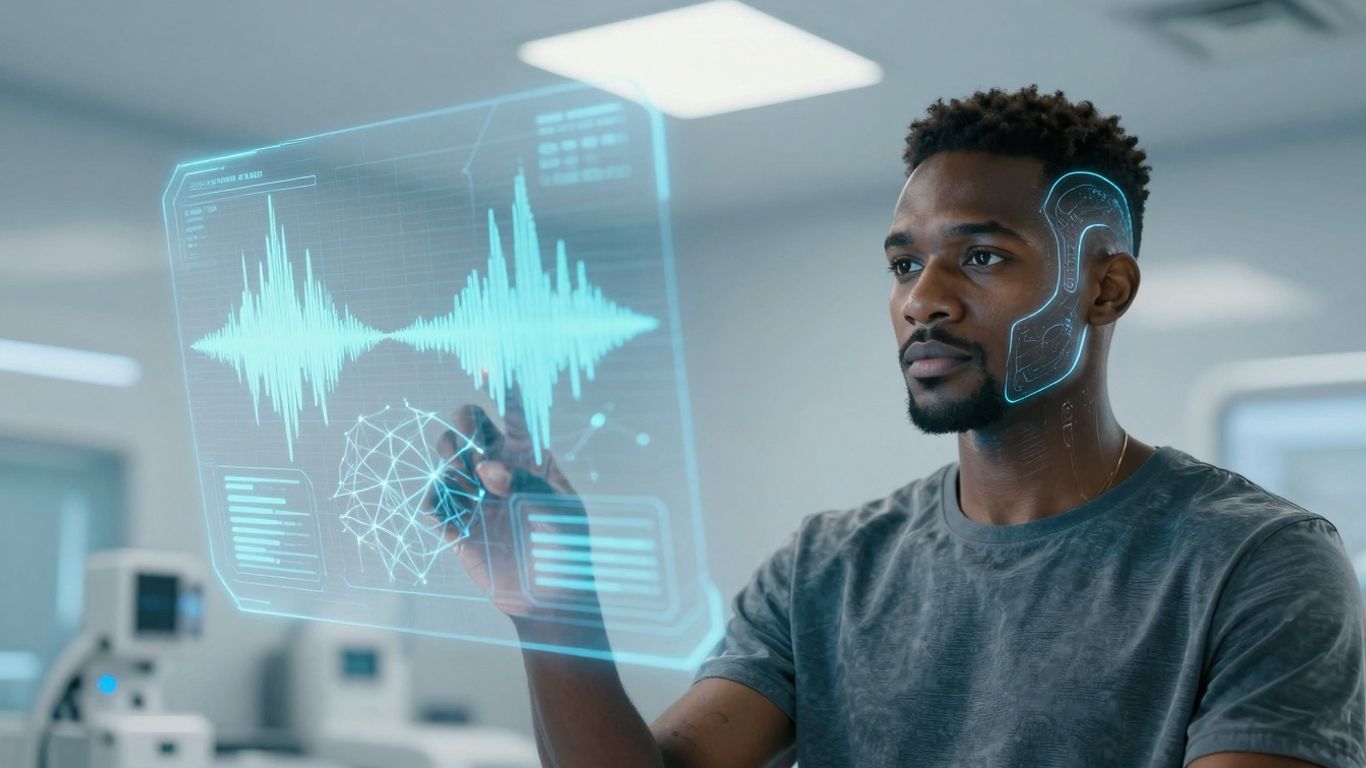
At its heart, an AI agent learns. It's not programmed for every single possibility, which would be impossible. Instead, Machine Learning (ML) lets it figure things out from data. Think of it like a doctor who learns by seeing thousands of patients. The AI sees millions of patient records, test results, and treatment outcomes. It spots patterns humans might miss. This helps it predict diseases or figure out which treatments work best for certain people. And it doesn't stop learning. The more data it gets, the smarter it becomes. It's like a lifelong student, but it learns way faster.
This is how the AI actually talks to us. Natural Language Processing (NLP) lets the AI understand and use human language. It bridges the gap between how we speak and how computers understand information. So, when you ask a question, the AI doesn't just hear sounds; it understands the meaning. This allows it to have conversations, answer questions, and even follow complex instructions. It's what makes the interaction feel natural, not like talking to a robot. This tech is key for making AI agents useful in everyday tasks, like scheduling appointments or explaining medical terms.
Computer Vision gives the AI "eyes." It lets the agent interpret visual information. In healthcare, this is huge for things like medical images. An AI trained with Computer Vision can look at an X-ray or an MRI scan and spot anomalies. It's like a second pair of eyes for a radiologist, flagging things that might need a closer look. This doesn't replace the doctor, but it helps them work faster and more accurately. It can analyze scans for early signs of disease, potentially catching problems much sooner than might otherwise be possible. This technology is a game-changer for diagnostics.
AI agents in healthcare aren't here to take over. Think of them more like a really smart assistant, one that can handle a lot of the grunt work so the actual doctors and nurses can focus on, you know, being doctors and nurses. It’s about making their jobs easier, not harder.
These AI systems are built to handle tasks that are repetitive or data-heavy. Imagine an AI that can sift through thousands of patient records to find specific information, or one that can analyze medical images for subtle anomalies. It’s not making the diagnosis itself, but it’s pointing out things a human might miss, or things that would take hours to find manually. This frees up clinicians to spend more time on complex decision-making and direct patient interaction. It’s like giving them a superpower – the ability to see more, faster.
The goal is to create a system where AI handles the predictable, allowing human expertise to shine where it's most needed: in empathy, complex judgment, and patient relationships.
This is a big one, obviously. When you’re dealing with sensitive health information, security is paramount. The AI systems being developed for healthcare are designed with privacy in mind from the ground up. They use encryption, access controls, and anonymization techniques to protect patient data. It’s not just about following regulations; it’s about building trust. Patients need to know their information is safe, and that means the technology has to be robust.
Ultimately, the most effective use of AI in healthcare is when it works with people. It's a partnership. The AI can manage the data, spot potential issues, and streamline workflows, but the human element – the doctor’s intuition, the nurse’s compassion, the therapist’s empathy – remains irreplaceable. This collaboration means better patient outcomes, reduced clinician burnout, and a more efficient healthcare system overall. It’s about using technology to amplify human skill, not replace it.
AI agents are here to help us, not take our jobs. Think of them as super-powered assistants that can handle repetitive tasks, freeing us up to focus on more creative and important work. Instead of replacing people, these smart tools can actually boost our abilities and help us achieve more together. Want to see how AI can work for you? Visit our website to learn more!
So, are AI voice agents taking over healthcare? Not exactly. They're more like incredibly efficient assistants. They handle the grunt work – scheduling, answering basic questions, managing data – freeing up actual doctors and nurses for the stuff that needs a human touch. It’s not about replacing people, it’s about making them better at their jobs. Think of it as giving your healthcare team a super-powered intern that never sleeps. The tech is here, it’s getting smarter, and it’s already making a difference. The real question isn't if AI will be in healthcare, but how quickly we can get it working for us.
Think of AI voice agents as super-smart helpers for healthcare. They can talk to patients using natural language, just like a person. They help with things like booking appointments, answering common questions, and even checking insurance details, all without needing a human to be there all the time.
Yes, they can! These AI agents are trained to understand medical terms and the kinds of questions patients might ask. They've gotten much better at knowing what people mean, even when they're feeling worried or aren't sure how to explain things.
No, that's not the idea at all. AI agents are meant to work alongside doctors and nurses. They handle the routine tasks, like paperwork and scheduling, so that healthcare professionals can spend more quality time with patients, focusing on the important, human parts of care.
Keeping patient information safe is super important. AI systems used in healthcare have to follow strict rules, like HIPAA, to protect privacy. Security is built into these systems from the start, just like it is in a hospital or clinic.
They're used in many ways! For example, they can help schedule appointments any time of day or night, remind patients about their visits, or answer questions about how to get to the clinic. In areas like radiology, AI can even help spot potential issues on scans for doctors to review.
Many AI voice agent systems are designed to be easy to use. They often connect with the tools healthcare providers already use, and setting them up usually doesn't require a lot of technical know-how. The goal is to make things simpler, not more complicated.
Start your free trial for My AI Front Desk today, it takes minutes to setup!


