
Custom email APIs make managing emails easier for small businesses by connecting your apps to providers like Gmail and Outlook without needing complex setups. These tools handle tasks like sending emails, tracking engagement, and organizing messages, saving time and resources.
Here’s what you need to know:
Popular options include Mailjet, Elastic Email, Brevo, MailerSend, SendGrid, and Amazon SES. Each offers unique features like real-time tracking, integration with tools like Zapier, and scalable pricing plans. The choice depends on your budget, email volume, and technical needs.
Quick Comparison:
| API | Starting Price | Free Tier | Key Features | Best For |
|---|---|---|---|---|
| Mailjet | Free tier | Yes | REST API, real-time tracking | Startups, scalability |
| Elastic Email | $19/month | Yes | Bulk email tools, Zapier integration | Budget-friendly needs |
| Brevo | $9/month | Yes | AI tools, personalization | Small teams, AI features |
| MailerSend | $24/month | Yes | SMS support, inbound routing | Transactional emails |
| SendGrid | $19.95/month | Yes | Dedicated IPs, analytics | High-volume senders |
| Amazon SES | Pay-as-you-go | Yes | AWS integration, low cost | Developers, tight budgets |
These APIs simplify email management, improve delivery rates, and scale with your business, helping you focus on serving customers instead of troubleshooting email servers.

Email API Comparison for Small Businesses: Pricing and Features
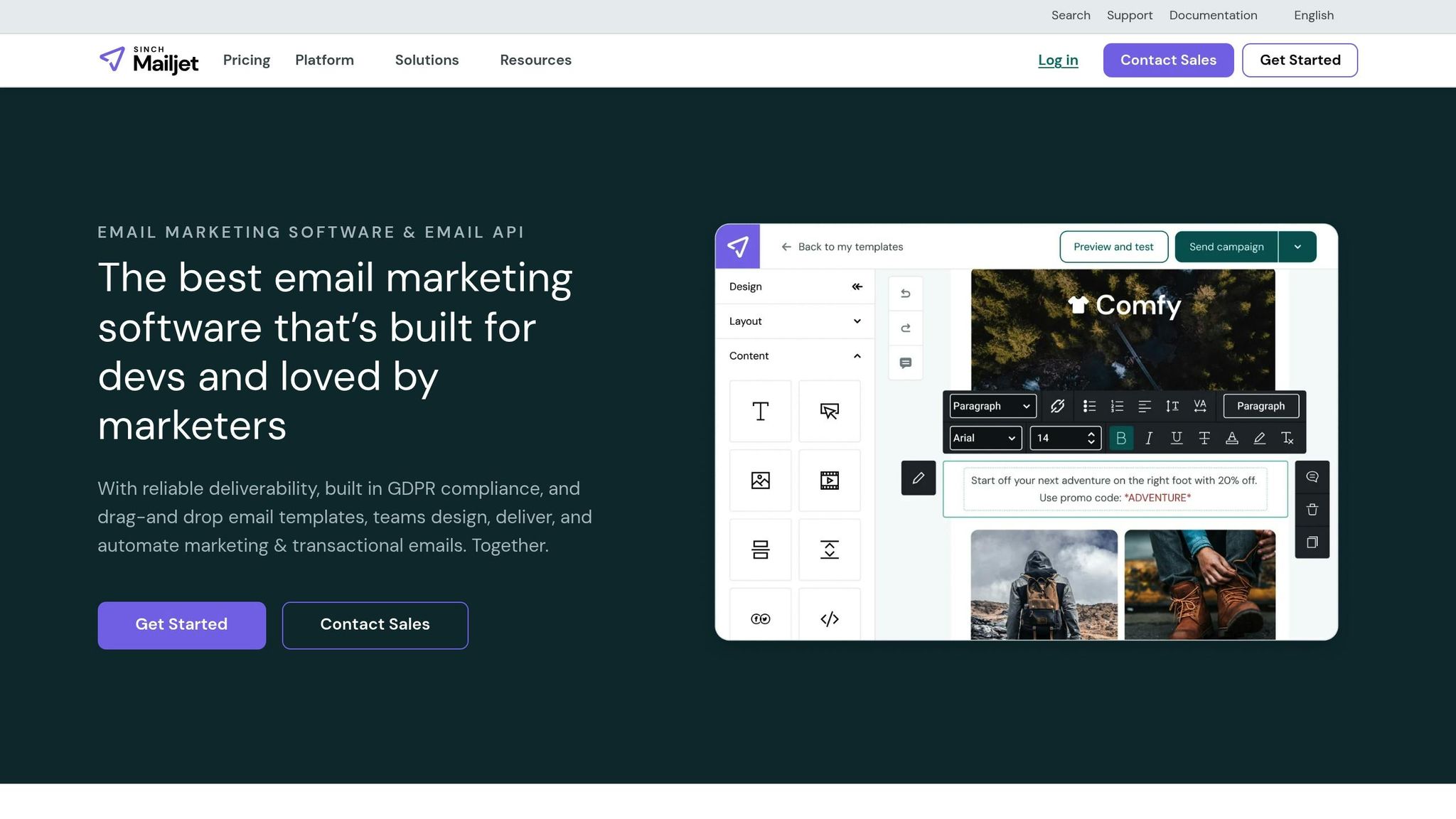
Mailjet offers flexible pricing plans designed to grow with your business. They provide a free tier, perfect for startups to test their email workflows without any upfront investment. As your business scales, you can switch to a pay-as-you-grow model, where costs align with your actual email volume. This eliminates the need for rigid monthly subscriptions, giving you more control over your budget.
Integrating Mailjet into your systems is straightforward. The platform uses a single REST API compatible with major providers like Gmail and Outlook. Developers can also take advantage of SDKs for popular programming languages, including Node.js, Ruby, Python, Java, and Kotlin.
Mailjet’s infrastructure is built to scale effortlessly with your needs. Whether you're sending a few notifications or millions of emails daily, the platform handles the load without requiring server reconfigurations or additional infrastructure. This scalability ensures you won’t face disruptions or need to migrate to another solution as your email volume grows. By abstracting SMTP complexities, Mailjet allows your team to concentrate on building core features.
For transactional emails like order confirmations or password resets, reliable delivery is non-negotiable. Mailjet provides tools to track bounces, opens, and clicks in real time. These insights help you fine-tune your messaging and quickly address any delivery issues, ensuring a smooth customer experience.
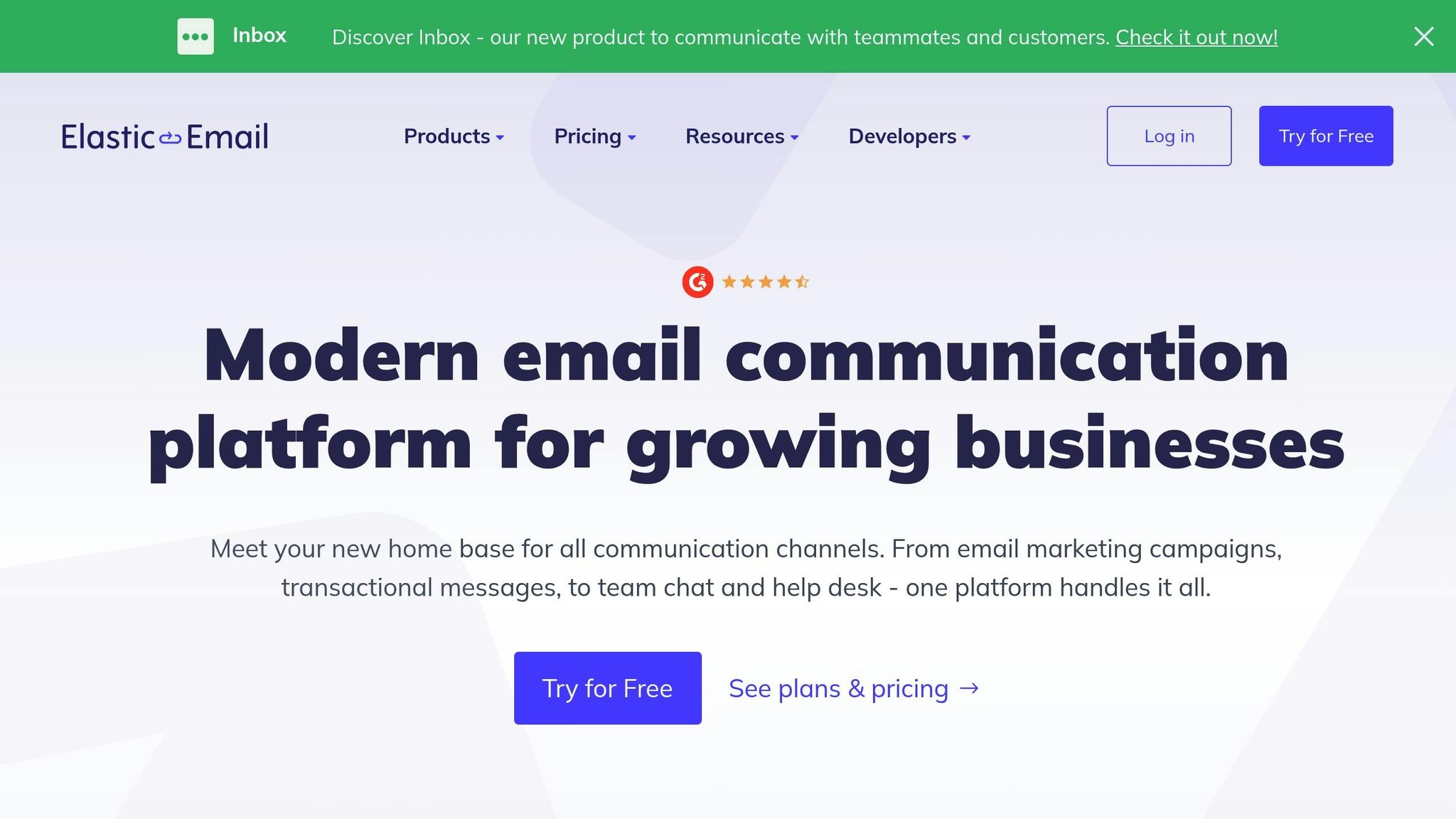
Elastic Email is a cost-effective choice for small businesses looking for a dependable email API. The paid plan begins at $19 per month for sending up to 50,000 emails, and there's also a free version available to test its API features. The platform uses volume-based pricing, meaning the more emails you send, the lower your cost per email. This structure ensures consistent and manageable pricing as your business grows.
Elastic Email supports integration through RESTful API or SMTP Relay and provides libraries/SDKs for 12 programming languages, including Python, PHP, Java, C#, Ruby, and Go. Additionally, it connects with over 10,000 applications via Zapier. The platform also features an intuitive interface for managing contacts, creating templates, and analyzing performance metrics [10, 11].
With Elastic Email, you can manage both transactional and marketing emails on a single platform. Whether you're sending simple order confirmations or running large-scale marketing campaigns, the platform allows you to scale seamlessly without the need to switch providers.
To help maintain clean email lists and safeguard your sender reputation, Elastic Email includes both single and bulk email verification tools. It also provides real-time logs to monitor opens, bounces, and clicks. Additional features like suppression management and inbound routing ensure smooth email operations. Plus, all pricing tiers come with 24/7 email and live chat support.
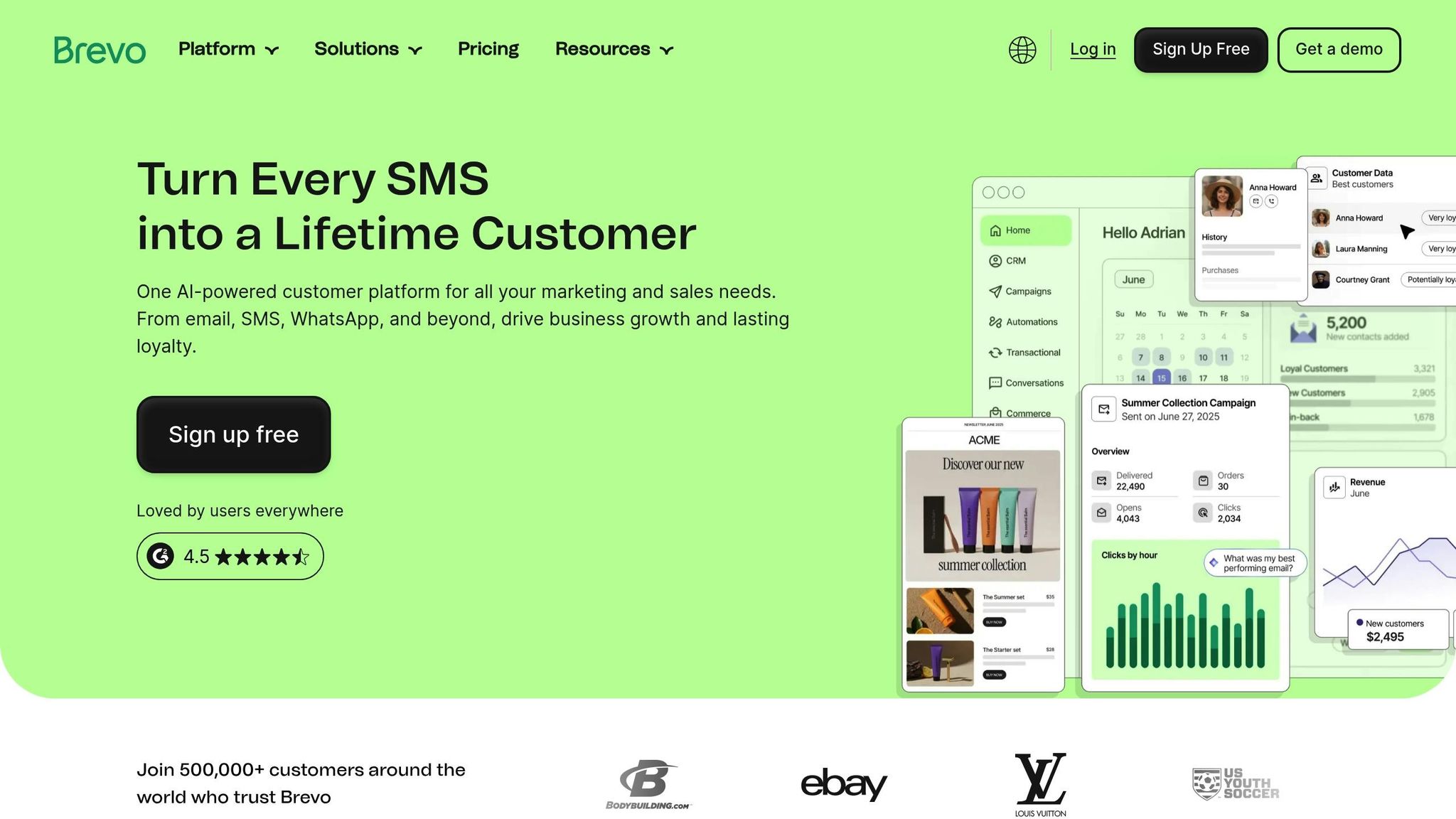
Brevo offers a free plan designed for small businesses, which includes an AI assistant for crafting email content. For those looking for additional features, the Starter Plan is available at $9 per month, or $8.08 per month with annual billing. This pricing is ideal for teams with limited resources who want access to AI-driven tools without overspending.
Brevo's AI Email Assistant is seamlessly integrated into its drag-and-drop editor, enabling users to generate email body content and subject lines simply by providing keywords or topics. You can also personalize emails using contact attributes like recipient names, which can help improve engagement. Additionally, Brevo connects with Zapier, giving you access to over 8,500 apps. With Zapier integration, contacts are automatically synced, eliminating the need for manual data entry. This integration setup ensures your workflow stays efficient as your email campaigns grow.
Brevo is built to handle everything from transactional emails to large-scale marketing campaigns, all within a single platform. Thanks to its cloud-based infrastructure and support for both SMTP Relay and RESTful API, the platform can effortlessly scale from sending hundreds to millions of emails.
To improve open rates, Brevo's Subject Line Generator creates multiple 120-character variations for you to choose from. Personalization tools let you tailor content to individual contact attributes, helping to better connect with your audience. These features also help maintain clean email lists and protect your sender reputation.
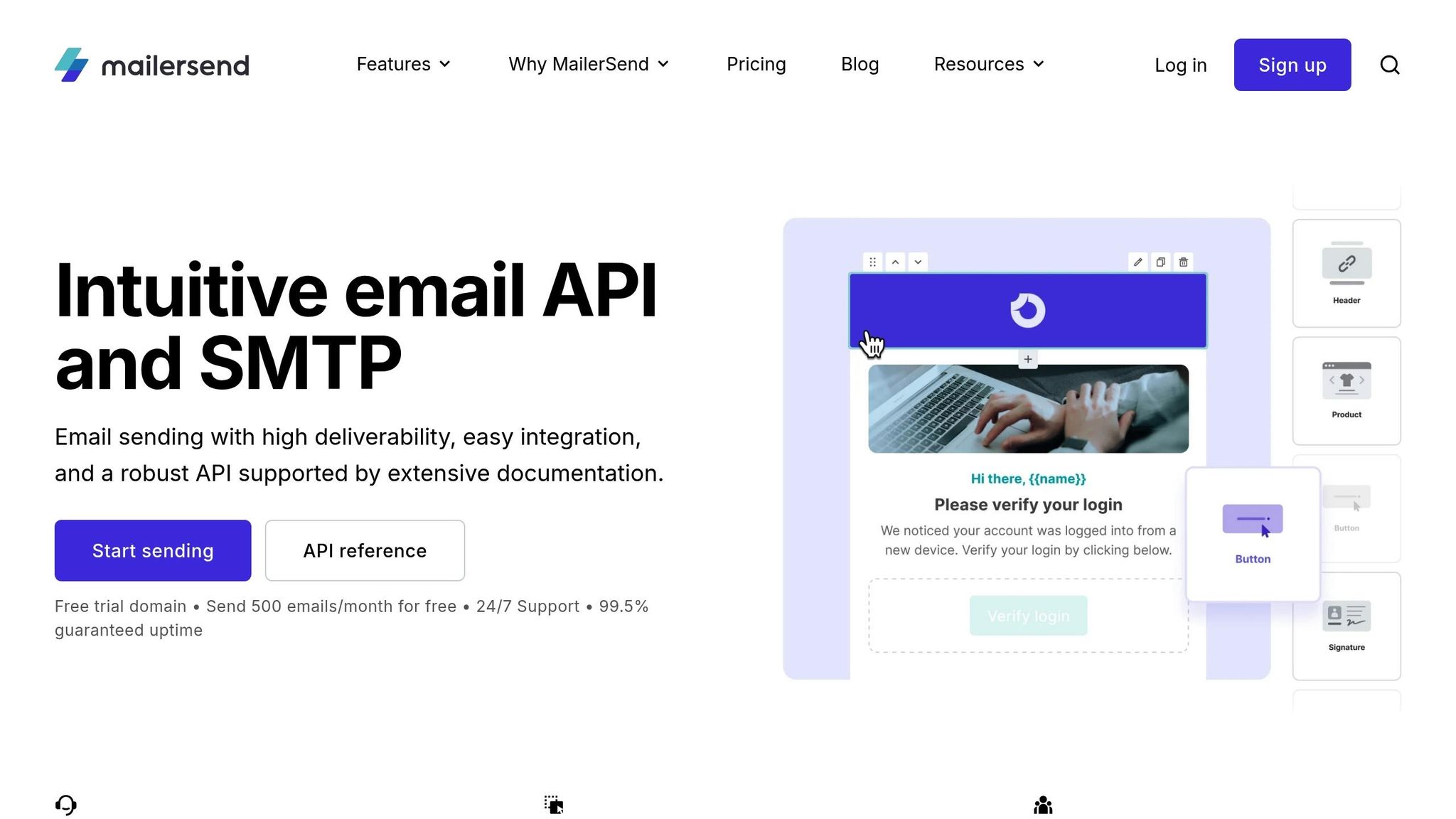
MailerSend provides a range of affordable options designed for businesses looking to go beyond basic email tools. By using a dedicated email API, you can cut costs compared to managing in-house servers since the infrastructure expenses are distributed across thousands of users. Their pricing plans include basic, premium, and custom options, giving you the flexibility to choose what works best for your needs. Plus, most subscription plans come with dedicated customer support - a particularly helpful feature as your email operations grow.
MailerSend shines when it comes to integration. It offers a powerful REST API that supports tasks like sending emails, managing bulk requests, tracking activity, and even handling SMS. The platform connects with over 1,000 apps through tools like n8n and Zapier, making it easy to integrate with apps such as Google Sheets, Slack, or your CRM. A standout feature is its inbound routing, which lets you programmatically process incoming emails - perfect for managing customer replies. Additionally, its API-driven template management allows you to create, save, and update reusable email designs, giving technical teams greater control over email layouts.
MailerSend is built to handle growth. It offers specialized endpoints for asynchronous bulk sending, enabling you to send large volumes of emails without disrupting your main operations. The Bulk Email Status feature helps you track high-volume sends using unique identifiers. Webhooks further enhance scalability by delivering real-time notifications for events like opens, clicks, and bounces, making it easier to monitor and manage performance.
Deliverability is a top priority for MailerSend. The platform automatically handles suppression lists for hard bounces, spam complaints, and unsubscribes, helping you maintain a strong sender reputation. It also includes domain and identity verification endpoints to ensure your emails are recognized as legitimate by receiving servers. Real-time analytics and logs provide detailed insights into delivery, opens, and clicks, allowing for quick troubleshooting when needed. Features like pattern-based blocklisting and on-hold lists help maintain clean contact databases as your audience grows. With its range of API solutions, MailerSend proves to be a valuable tool for small businesses aiming to optimize their email operations.
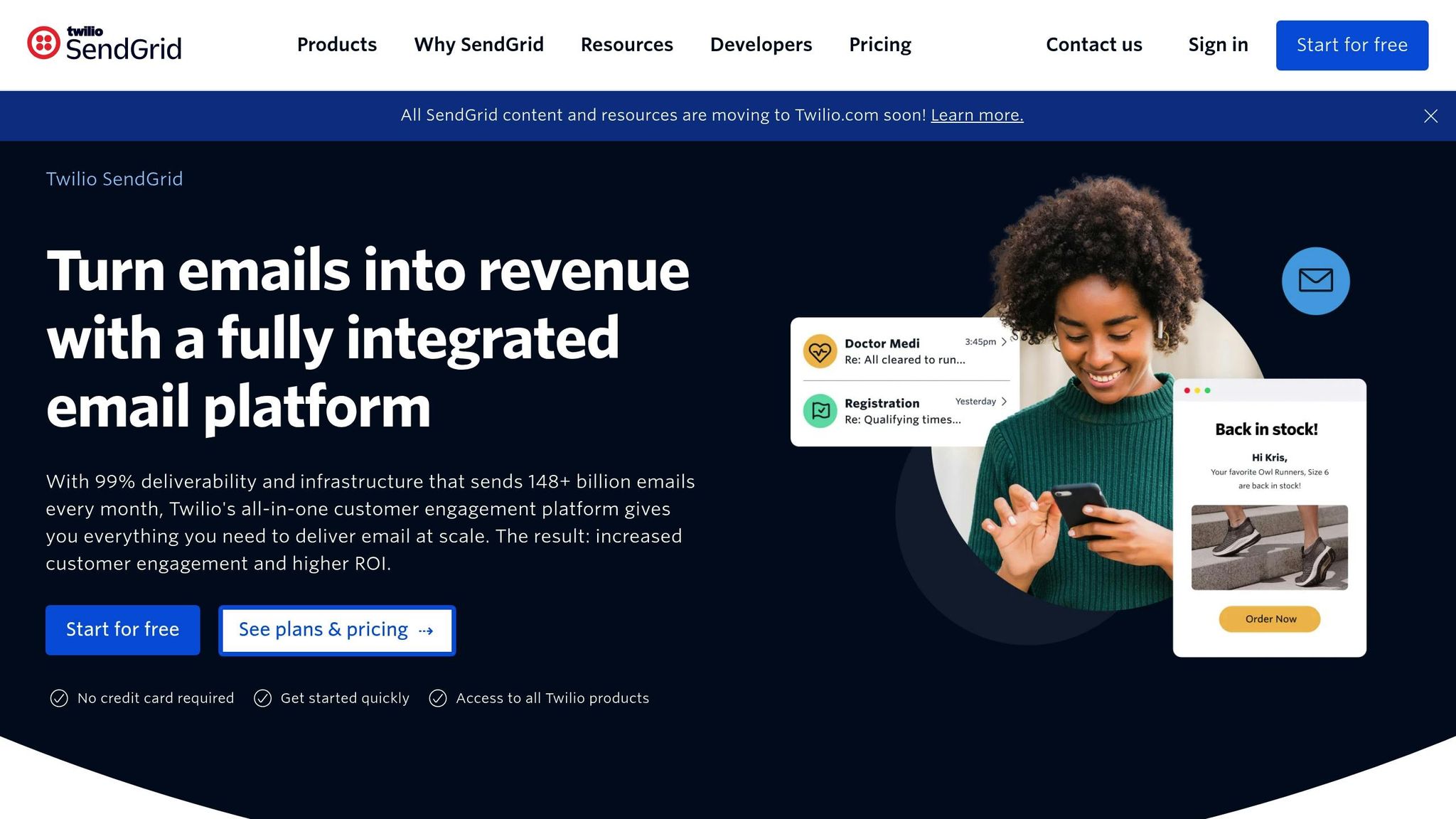
SendGrid’s pricing is designed to accommodate businesses at different stages of growth. The Free plan allows up to 100 emails per day at no cost, with basic API and SMTP access - perfect for testing or minimal usage. The Essentials plan, starting at $19.95 per month, supports up to 50,000 emails and includes features like analytics and deliverability insights. For businesses requiring more advanced tools, the Pro plan starts at $89.95 per month for 100,000 emails and adds perks like dedicated IPs, a Validation API, and subuser accounts. For larger-scale operations, the Premier plan offers custom pricing with priority support. This tiered structure lets small businesses start with a lower-cost option and expand as their email needs grow. However, features like dedicated IPs are only available with the Pro plan or higher. On top of competitive pricing, SendGrid’s integration process is straightforward, making it an attractive choice for businesses.
SendGrid is compatible with a variety of programming languages, including C#, Go, Java, Node.js, PHP, Python, and Ruby, providing flexibility for development teams with diverse expertise. The platform includes onboarding guides and pre-built code snippets to streamline setup for developers. Subuser accounts are another standout feature, allowing businesses to separate sending activities with unique credentials, statistics, and reputations - ideal for managing multiple brands. On the security front, IP Access Management restricts account access to specified IP addresses, adding a layer of protection for sensitive communications. These integration features not only make SendGrid easy to adopt but also ensure it scales well with growing business needs.
SendGrid is built to handle the demands of growing businesses, offering a 99.99% uptime SLA to ensure reliability even during high email traffic. The API supports up to 10,000 requests per second and allows for up to 1,000 recipients per email, making it capable of managing significant growth. Real-time notifications via webhooks provide instant updates on performance metrics, eliminating the need for constant manual monitoring. This scalability ensures that SendGrid can keep up with your business as it expands.
SendGrid includes a suite of deliverability tools to help ensure your emails reach their intended recipients. Deliverability Insights provide real-time performance updates through APIs and webhooks, enabling you to address issues quickly. Features like adaptive throttling and reputation monitoring work to maintain high inbox placement rates. For those on the Pro plan or higher, dedicated IPs offer greater control over sender reputation, although maintaining consistent email volumes is crucial for their effectiveness. These tools are essential for ensuring transactional emails and marketing campaigns perform well, directly affecting customer engagement and revenue. With these features, SendGrid delivers the reliability businesses need to succeed in their email communications.
Amazon SES stands out among custom email APIs thanks to its seamless integration with AWS and its budget-friendly pricing structure.
Amazon SES operates on a straightforward pay-as-you-go pricing system. There are no upfront costs or monthly fees - perfect for small businesses keeping a close eye on expenses. Costs are determined by the number of emails sent and received, along with any data transfer charges. Plus, the AWS Free Tier sweetens the deal by offering a generous volume of free emails each month for the first 12 months. This setup is particularly helpful for startups testing email campaigns without committing to hefty expenses.
Amazon SES is designed to work effortlessly within the AWS ecosystem. Its API supports widely-used protocols like SMTP, ensuring compatibility with most programming languages and email infrastructures. This flexibility means that tech-savvy teams can easily incorporate SES into existing systems, freeing up developers to focus on creating new features rather than wrestling with complex email server setups.
Whether you’re sending a handful of transactional emails or millions of messages daily, Amazon SES scales effortlessly to meet your needs. It handles essential tasks like authentication, deliverability, and server maintenance, saving businesses the cost of additional hardware or specialized staff. This scalability ensures your email operations can grow alongside your customer base without any headaches.
Amazon SES includes essential tools to help maintain a strong sender reputation. For instance, it uses a suppression list to automatically block problematic email addresses that have bounced or triggered complaints in the past. Businesses can also tap into AWS CloudWatch to track delivery metrics and make timely adjustments to improve inbox placement. While these tools are effective for maintaining reliable email delivery, some companies may choose to add more advanced analytics for deeper insights.
Choosing the right email API can be a balancing act for small businesses, as each platform offers distinct trade-offs in cost, functionality, and ease of use.
Amazon SES stands out as the most budget-friendly option, charging just $0.10 per 1,000 emails. However, navigating its AWS ecosystem demands a steep learning curve and significant technical expertise. SendGrid, which processes over 90 billion emails monthly with an impressive 99% inbox rate, is a reliable all-in-one option. That said, its costs can escalate quickly as email volumes grow. Brevo offers a middle ground with a generous free tier of 300 emails per day and the ability to send up to 120,000 emails per minute at a 99.8% success rate, though its advanced features are locked behind higher-tier plans.
For businesses on a budget, Elastic Email provides great value at $19 per month for 50,000 emails. MailerSend simplifies transactional email needs, offering 3,000 free emails monthly and a straightforward pricing model starting at $24 per month when billed annually. Meanwhile, SendGrid's Essentials plan starts at $19.95 per month for 50,000 emails, but premium features like dedicated IPs are only available with more expensive plans. These pricing differences often influence how well these platforms meet varying business needs in terms of usability and scalability.
Each platform has its pros and cons. Amazon SES is ideal for slashing costs but requires developer expertise and lacks built-in tools like a template editor. SendGrid provides a robust set of features but can feel overwhelming for beginners and becomes pricey at scale. Brevo integrates CRM capabilities, but accessing its advanced tools requires upgrading to premium plans.
User reviews further highlight these distinctions. Amazon SES earns a strong 4.7/5 on Capterra and 4.3/5 on G2. SendGrid is rated at 4.2/5 on Capterra and 4.0/5 on G2, with users appreciating its reliable infrastructure but noting challenges with scaling costs and its somewhat complicated interface.
My AI Front Desk takes email management to the next level by integrating email response capabilities directly into its Lead Conversion product. This gives small businesses the ability to handle emails, calls, texts, and chats all within a single AI-powered platform. This streamlined approach boosts efficiency and aligns with the benefits explored in our email API analysis.
The system handles support emails through forwarding, SMTP, or API endpoints. It automatically crafts replies while maintaining the original message format, managing attachments, and escalating more complex issues to human agents when needed - all without missing a beat.
With API workflows and Zapier integration, My AI Front Desk connects to over 9,000 apps, enabling automated, contextual responses. It ensures an impressive 99.6% deliverability rate by sending emails through authenticated business accounts .
The platform also syncs seamlessly with major CRMs like HubSpot, Salesforce, Zendesk, and Intercom. Its bi-directional sync updates lead records in real time and even extracts email signatures, saving small businesses up to three hours of work every day .
The overview of custom email APIs sheds light on the critical factors small businesses should weigh when picking the right solution.
The choice often hinges on budget, growth plans, and technical needs. For those working with tight budgets, some options start as low as $3 per month - perfect for freelancers or solo entrepreneurs just starting out. On the other hand, businesses scaling up with multiple mailboxes may find flat annual pricing models more economical as they grow .
For companies focused on speed, rapid development platforms can integrate systems up to 12× faster compared to custom builds. Additionally, APIs designed to handle both transactional and marketing emails can meet the demands of businesses managing high email volumes.
Deciding between self-hosted and managed solutions is another pivotal choice. Self-hosted options provide full control over data and predictable costs, while managed services simplify upkeep but may become more expensive as the number of mailboxes increases .
Finally, integration capabilities that connect seamlessly with thousands of business tools can save time and streamline operations, making setup far more efficient . These points emphasize the value of selecting an email API that aligns with your technical requirements and supports your business’s growth trajectory.
Custom email APIs help small businesses improve email deliverability by simplifying the handling of key authentication protocols like DKIM, SPF, and DMARC. These protocols play a critical role in confirming that your emails are legitimate, which lowers the risk of them being marked as spam.
On top of that, these APIs offer a reliable and scalable system to reduce bounce rates, ensuring your emails land in your recipients' inboxes more consistently. This kind of optimization not only strengthens trust with your audience but also boosts the overall efficiency of your communication efforts.
When selecting an email API provider, small businesses need to zero in on a few essential factors that match their unique requirements. First and foremost, deliverability is key. Make sure the provider has a proven history of successfully getting emails into inboxes - because even the best email campaigns are useless if they don’t reach their audience.
Next, think about ease of integration. For businesses with limited technical expertise, it’s important to choose an API that’s straightforward to set up, offers clear and detailed documentation, and works effortlessly with your existing systems.
As your business grows, you’ll also want a provider that can handle the increased workload. That’s where scalability and reliability come into play - your email system should grow with you. Equally important are security features like strong authentication protocols and adherence to data protection regulations, which are vital for keeping sensitive information secure.
Finally, look for tools that go beyond the basics. Features like in-depth analytics, responsive customer support, and pricing plans that can adapt to your budget will help you run effective email campaigns without breaking the bank.
Email APIs are built to manage both transactional and marketing emails seamlessly. Whether you’re sending one-off messages, large-scale campaigns, or setting up automated workflows, these tools offer the flexibility to meet diverse business needs. With features like delivery tracking, webhook notifications, and account management, they’re a dependable choice for small businesses aiming to simplify their email communication processes.
Start your free trial for My AI Front Desk today, it takes minutes to setup!


