
Thinking about making a change at your dental front desk? It's a big decision, and honestly, a lot of offices are feeling the pressure to keep up. Things move fast these days, and what worked even a few years ago might not be cutting it now. We're talking about patient expectations, the constant juggle of tasks, and yeah, the cost of finding and training good people. So, let's look at how bringing in an AI to replace the dental receptionist could actually be a smart move for your practice.
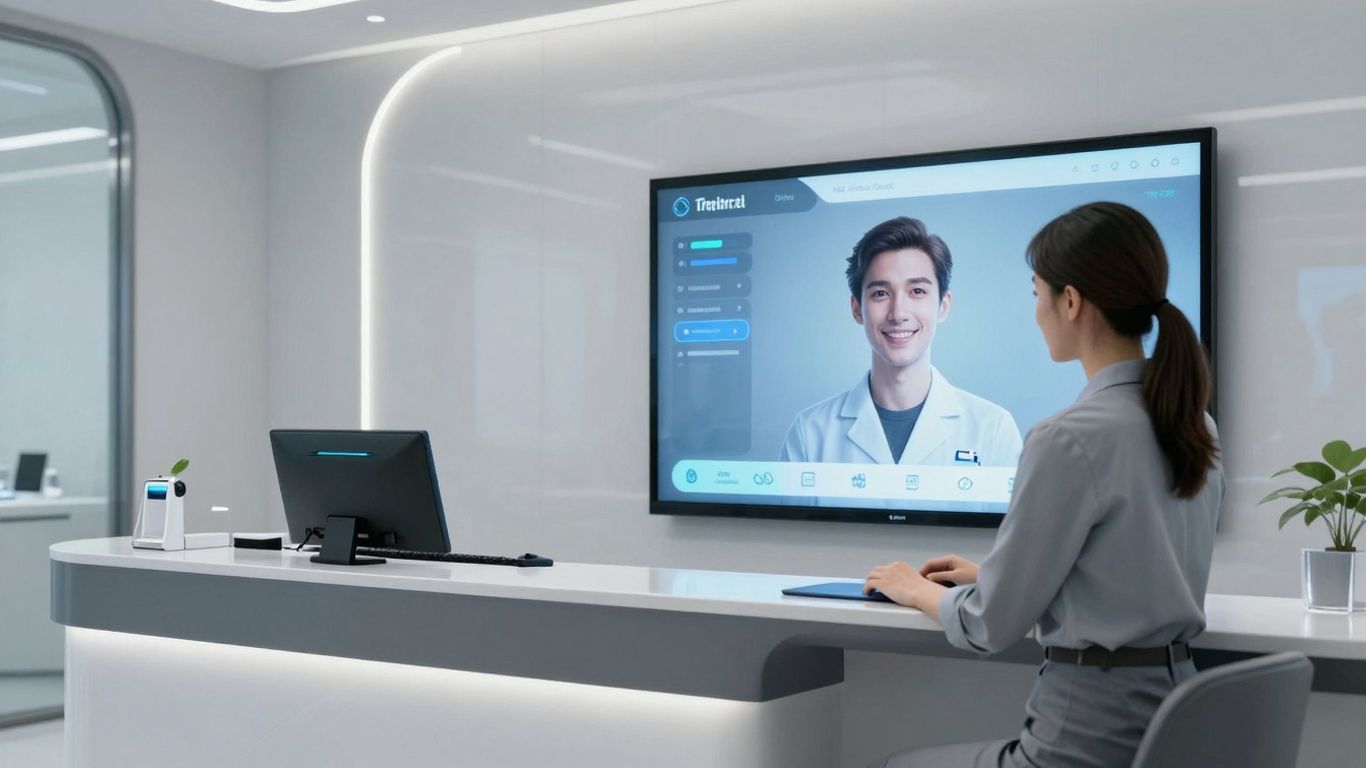
Let's be honest, the front desk in a dental practice is often a bottleneck. It's where patient experience begins and ends, and frankly, it's usually overloaded. Think about it: one person trying to answer phones, greet patients, manage schedules, handle insurance questions, and keep the waiting room calm. It's a lot. This juggling act often leads to dropped balls, and in a dental office, a dropped ball can mean a missed appointment, a frustrated patient, or worse, a lost client.
The typical front desk setup is showing its age. Calls pile up, messages get lost, and staff are constantly pulled away from direct patient interaction. This isn't just annoying; it's costly. Studies suggest practices can lose a significant chunk of new patient leads simply due to unanswered calls. Imagine a potential patient calling after hours or during a busy lunch rush – if no one picks up, they're likely to call the next practice on their list. This is a problem that AI can solve by providing 24/7 coverage.
People expect things to be easy and immediate now. They want to book appointments online, get quick answers to questions, and feel like their time is respected. A front desk that's constantly busy, making patients wait to check in or ask a simple question, doesn't meet these expectations. They want a smooth, almost invisible process. AI can offer that immediate response and efficient handling that modern patients have come to expect.
Dental receptionists are valuable, but finding and keeping good ones is tough. High turnover means constant recruitment, onboarding, and training. Each new hire needs time to learn the practice's specific systems, insurance details, and patient quirks. This cycle is expensive and disruptive. Replacing a human receptionist with an AI system drastically cuts down on these costs. You don't have to worry about sick days, vacations, or training new staff for repetitive tasks. The AI is always on, always ready, and always consistent. This allows your existing staff to focus on more complex patient needs and clinical excellence, rather than administrative burdens. It's about reallocating human talent where it matters most.
Think about the front desk. It's the first impression, the constant hub of activity. Traditionally, it's been a bottleneck. Calls missed, appointments double-booked, patients waiting too long for simple answers. AI steps in here not to replace the human touch, but to make the whole system run smoother.
This is where AI really shines early on. Instead of a person juggling phone calls, emails, and walk-ins, an AI can handle it. It can book, reschedule, and confirm appointments 24/7. This means fewer no-shows because the AI can send reminders automatically. It also frees up your human staff from the tedious task of managing calendars, letting them focus on patients who are actually in the office.
Patients have questions. Lots of them. About insurance, about procedures, about billing. An AI can answer many of these common questions instantly. It can handle initial inquiries via chat or even phone, providing consistent information every time. This isn't about making patients feel like they're talking to a robot; it's about giving them fast, accurate answers so they don't have to wait. When a question is too complex, the AI can flag it for a human team member, ensuring nothing falls through the cracks.
The goal is to handle the predictable, repetitive communication so your team can focus on the unpredictable, complex interactions that truly require human empathy and clinical judgment.
Dental practices handle a lot of sensitive patient data. Keeping this data organized and secure is paramount, and it's also a major compliance challenge. AI systems designed for healthcare are built with HIPAA compliance in mind. They can securely collect, store, and manage patient information. This reduces the risk of human error in data entry and helps maintain a clear audit trail. Automating these processes not only makes your practice more efficient but also significantly strengthens your data security posture.
Getting an AI receptionist up and running in your dental office isn't the ordeal you might imagine. It’s more about picking the right tool and making sure it plays nice with what you already have. Think of it like adding a new, super-efficient team member who needs a quick rundown of the office layout and who’s who.
This is where you don't want to rush. Look for providers who make setup simple. They should have a clear process for understanding your current software and how your office runs. A good provider will offer a step-by-step onboarding, not just hand you a login and wish you luck. They should also be upfront about compatibility. If their AI can't talk to your existing practice management system, you're creating more work, not less.
Your team is key here. The AI isn't there to replace them, but to help them. Training should focus on how the AI handles the grunt work – missed calls, appointment booking, basic questions – freeing up your staff for more complex patient interactions. Make it clear that this is an upgrade for their roles, not a threat. They need to know how to work with the AI, perhaps to check its work or handle escalations. A few hours of focused training, showing them how it makes their jobs easier, usually does the trick.
This is non-negotiable. Your AI receptionist needs to sync with your practice management software (PMS). If it can't, you'll end up with duplicate data, missed appointments, or worse, incorrect patient information. A system that integrates smoothly means patient data flows automatically, appointments are updated in real-time across both systems, and your team doesn't have to manually enter information twice. Zapier integration, for example, can connect your AI to thousands of other apps, making it the central hub for your office's digital communication.
The goal is to have the AI act as an extension of your existing systems, not a separate island. If it requires a complete overhaul of your current setup, it's probably not the right fit.
Here’s a quick look at what good integration looks like:
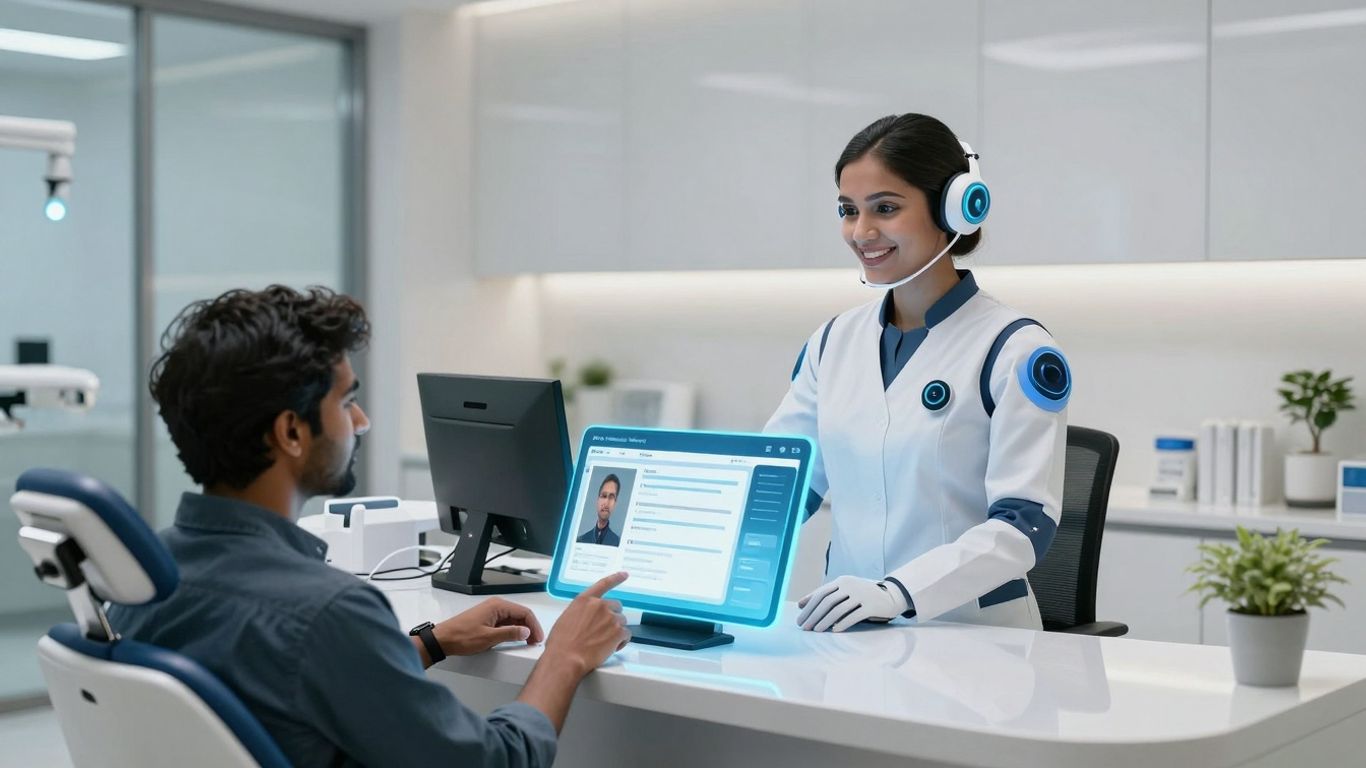
Look, automating appointment booking and answering basic questions is just the start. The real power of AI in your dental practice comes when it starts doing more, connecting dots, and actually helping you grow. It’s not just about taking tasks off your plate; it’s about using those freed-up resources to make more money and give patients better care.
Think about the calls you miss, the inquiries that go unanswered after hours. That’s lost revenue. AI can change that. It can act as a tireless salesperson, engaging with potential patients who reach out via website chat, email, or even social media. It can answer their questions about services, pricing, and insurance, and crucially, guide them toward booking that first appointment. This isn't just about efficiency; it's about actively converting interest into paying patients. Imagine an AI that can follow up on treatment plans, reminding patients about upcoming appointments or necessary check-ups, reducing no-shows and keeping your schedule full.
This is where things get interesting. When your AI receptionist isn't just a standalone tool but part of a connected ecosystem, its value explodes. Think about integrations. When the AI books an appointment, does it automatically update your practice management software? Does it add the patient to your CRM? Does it trigger a confirmation email or text? When systems talk to each other, you eliminate manual data entry, reduce errors, and create a smooth flow of information. This means your team spends less time on administrative busywork and more time on patient care. It’s about creating a digital nervous system for your practice.
AI can collect a ton of data. But raw data isn't useful. What you need are insights. Advanced AI systems can provide real-time analytics on everything from call volume and peak inquiry times to patient conversion rates and common questions. This data helps you understand your practice's performance at a glance. Are you getting a lot of questions about a specific procedure? Maybe that's an area to promote. Are appointment requests dropping off at a certain point in the booking process? You can investigate and fix it. This kind of data-driven decision-making allows you to constantly refine your operations and marketing strategies, making your practice more efficient and profitable.
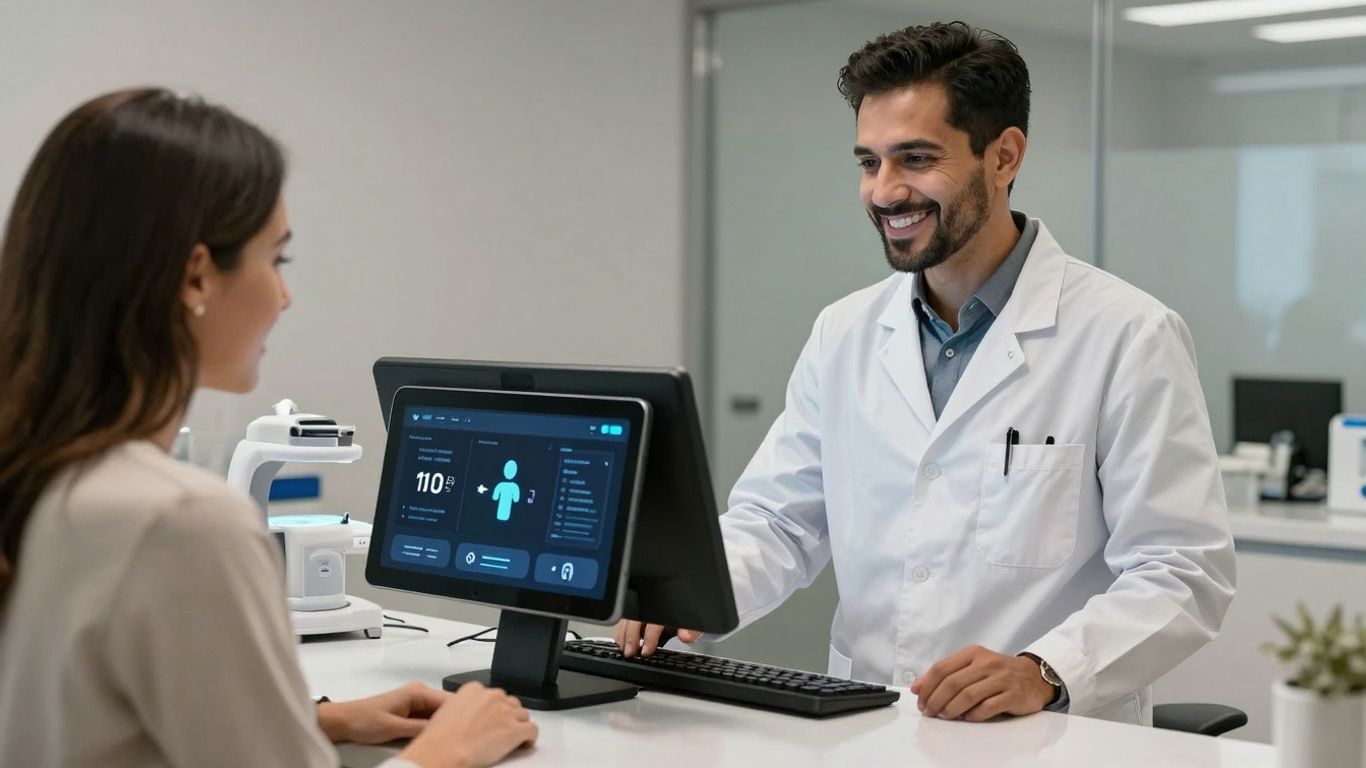
Look, AI isn't here to take jobs. It's here to make jobs better. Think of it like this: your team is already good at what they do. They know dentistry, they know patients. AI just handles the grunt work. It takes the repetitive tasks – the appointment confirmations, the basic insurance questions, the endless data entry – and does them fast. This frees up your staff. They can stop being glorified button-pushers and start focusing on what humans do best. That means more time for actual patient care, for complex problem-solving, and for building those relationships that keep people coming back. It’s about giving your team the space to use their brains, not just their hands.
AI can schedule a root canal, but it can't comfort a patient who’s terrified of the drill. It can’t read the subtle cues – the tight grip on the chair, the shallow breathing – that signal real anxiety. That’s where your people shine. When AI handles the routine, your staff can dedicate their energy to these more sensitive situations. They can explain procedures with genuine understanding, address fears with empathy, and make patients feel truly heard. This isn't just about better service; it's about building trust. Patients remember how you made them feel, especially when they're vulnerable.
This is the core of it. AI is a tool, a very smart one, but it’s still a tool. It doesn't have life experience. It doesn't understand nuance the way a human does. A patient might say they're fine, but their body language tells a different story. An AI might miss that. Your team won't. The goal isn't to replace human judgment with algorithms. It's to use AI to eliminate the busywork so your team can apply their judgment and empathy where it matters most. It’s about creating a practice that’s efficient and deeply human. The practices that get this right will be the ones that truly stand out.
The real advantage of AI in a dental practice isn't about replacing people, but about augmenting them. It's about taking the tedious, time-consuming tasks off their plates so they can focus on the high-value, human-centric aspects of care that AI simply can't replicate. This shift allows your team to operate at a higher level, providing a more personalized and compassionate experience for every patient.
So, you've made the switch. The AI receptionist is handling calls, booking appointments, and generally keeping the front desk humming. But how do you know if it's actually working? It's not enough to just install the tech; you need to see if it's paying off. This means looking at the numbers and, just as importantly, what your patients are saying.
Think of these as the dashboard lights for your new AI front desk. They tell you if things are running smoothly or if something needs a tweak. You're looking for concrete improvements.
Numbers tell part of the story, but patient experience is the whole book. Even the most efficient AI is useless if patients hate interacting with it. You need to actively seek out their opinions.
The goal isn't just to automate tasks, but to free up human staff for more complex patient needs and to make the overall patient journey smoother and more pleasant. If patients feel like they're talking to a brick wall, you've missed the point.
This is where you tie it all together. Does the money saved and revenue gained outweigh the cost of the AI system? It's a straightforward calculation, but it requires looking at all the angles.
Wondering if switching to an AI receptionist really pays off? We've looked at how to tell if your dental practice is seeing better results after making the change. It's not just about saving money; it's about seeing real improvements. Curious about how to measure this? Visit our website to find out more about how AI can help your practice thrive.
Look, AI can handle the calls, schedule the appointments, and even sort through voicemails. It's good at that stuff. But it's not going to replace the empathy a human receptionist offers when a patient is clearly distressed, or the quick thinking needed for a truly complex scheduling puzzle. The goal here isn't to get rid of people, it's to free them up. Let the AI take the grunt work so your team can focus on the parts of the job that actually require a human brain and a human heart. That's how you build a better practice, not just a more automated one.
An AI receptionist can handle many tasks like scheduling appointments, answering common questions, and managing calls 24/7. It's great for making sure no one misses a call and for freeing up your human staff to focus on patients. However, it can't replace the human touch for really complex or sensitive patient needs.
While there's an initial setup, using an AI receptionist can actually save you money in the long run. It helps reduce costs from things like staff training and missed appointments. Many AI services offer different plans, so you can find one that fits your budget.
Most AI receptionist services are designed to be easy to set up. They often come with step-by-step guides and support to help you get started. Many can connect with the software you're already using, making the switch smoother.
If the AI runs into a question it can't answer, it can be set up to transfer the call to a human team member or take a message. This way, the patient still gets the help they need without the AI getting stuck.
Many patients appreciate the quick responses and 24/7 availability that an AI receptionist offers. While some might prefer talking to a person, AI can provide fast answers to common questions and schedule appointments efficiently, which can improve their overall experience.
Yes, good AI receptionist systems are built to be secure and follow rules like HIPAA. This means they protect sensitive patient information, just like your current systems should. They use special methods to keep data private and only allow authorized people to access it.
Start your free trial for My AI Front Desk today, it takes minutes to setup!


