
It feels like everywhere you look these days, there's talk about AI. And for good reason! Things are changing fast, and that includes how businesses handle their front doors, so to speak. We're talking about the receptionist role. For a long time, that was a job for a person, but now, artificial intelligence is stepping in. This article is all about the latest ai receptionist news, looking at what's new, what's coming, and how it's changing things.
Remember the days of a physical front desk, a person greeting you, and maybe a slightly-too-loud phone ringing in the background? That picture is rapidly becoming a relic. The way businesses handle their initial customer interactions is changing, and AI receptionists are leading the charge. These aren't just glorified answering machines anymore; they're sophisticated digital assistants that are transforming how companies connect with their customers.
The first impression a customer gets is often through the front desk, whether that's a physical location or a digital touchpoint. AI receptionists are stepping into this role, acting as the initial point of contact for countless people every day. They handle everything from answering basic questions to scheduling appointments, and they do it with a speed and consistency that's hard for human staff to match consistently. This shift means businesses can offer a more polished and immediate experience right from the start.
Let's face it, the world doesn't stop at 5 PM. Customers have questions and needs at all hours, and expecting them to wait until the next business day is a recipe for lost opportunities. AI receptionists are the perfect solution for this. They can be available around the clock, every single day of the year, without needing breaks or overtime pay. This constant availability is becoming less of a perk and more of a standard expectation for many consumers. It's a big reason why businesses are looking into solutions like My AI Front Desk.
What sets modern AI receptionists apart is their intelligence. They go far beyond simply taking a message. Using advanced technologies like Natural Language Processing (NLP), they can understand what a caller is saying, interpret their intent, and respond appropriately. This means they can:
This level of interaction makes the customer experience feel much more natural and less like talking to a robot. It's a significant upgrade from the days of simple voicemail systems.

So, how does an AI receptionist actually work? It's not magic, though it can feel like it sometimes. It's built on some pretty smart tech that lets it understand and respond to us humans. Think of it like the brain and ears of the operation. Without these core pieces, it'd just be a fancy answering machine, and we're way past that now.
This is the part that lets the AI "get" what you're saying. It's not just about hearing words; it's about understanding the meaning behind them. NLP helps the AI figure out your intent, even if you don't say things perfectly. It can handle slang, different ways of phrasing the same request, and even pick up on frustration or urgency in your voice or text.
NLP is what separates a simple script-follower from an AI that can actually have a conversation. It's the difference between "Press 1 for sales" and an AI that asks, "How can I help you with your sales inquiry today?"
Machine learning is how the AI gets smarter over time. Instead of being programmed with every single possible answer, it learns from data. It looks at thousands, even millions, of past conversations to see what worked and what didn't. This means it can adapt to new questions and situations without needing a human to constantly update its programming.
For AI receptionists that handle phone calls, speech recognition is absolutely key. This technology takes your spoken words and turns them into text that the AI can then process using NLP. Modern speech recognition is incredibly advanced, able to filter out background noise, understand various accents, and even distinguish between similar-sounding words.
These three technologies work together. Speech recognition hears you, NLP understands you, and Machine Learning helps the AI improve its understanding and responses over time. It's a powerful combination that makes AI receptionists so effective.
AI receptionists are getting pretty advanced these days, moving way beyond just answering phones. They're starting to do things that feel a lot more human, which is pretty wild when you think about it. It's not just about understanding words anymore; it's about picking up on the vibe of the conversation.
One of the coolest new features is emotion recognition. The AI can actually listen to how someone is speaking or even look at their typing speed to get a sense of their mood. Is the customer happy? Frustrated? Confused? The AI can pick up on these cues. This allows the system to adjust its tone and response to be more understanding, or even know when to pass the call to a human if things get too heated. Imagine calling a doctor's office and the AI senses you're really stressed about an appointment – it could respond with extra care. It's a big deal for places like hospitals or insurance companies where people are often dealing with stressful situations.
AI is also getting smarter about what might happen next. Instead of just waiting for a customer to call with a problem, these systems can start to predict needs. For example, if your system knows a patient is due for a check-up, the AI could proactively send a reminder or suggest booking an appointment. It can also look at patterns in calls or appointments to flag potential issues before they become big problems. It's like having a front-desk assistant who's always one step ahead.
This one's a bit futuristic, but it's happening. AI can now clone voices. This means a business could have their AI receptionist sound like a specific person from their team, or even create a unique brand voice. It helps make the interaction feel more familiar and trustworthy. Instead of a generic robot voice, you might hear a warm, familiar tone that matches the company's personality. It's all about making that first contact feel more personal and less like talking to a machine.
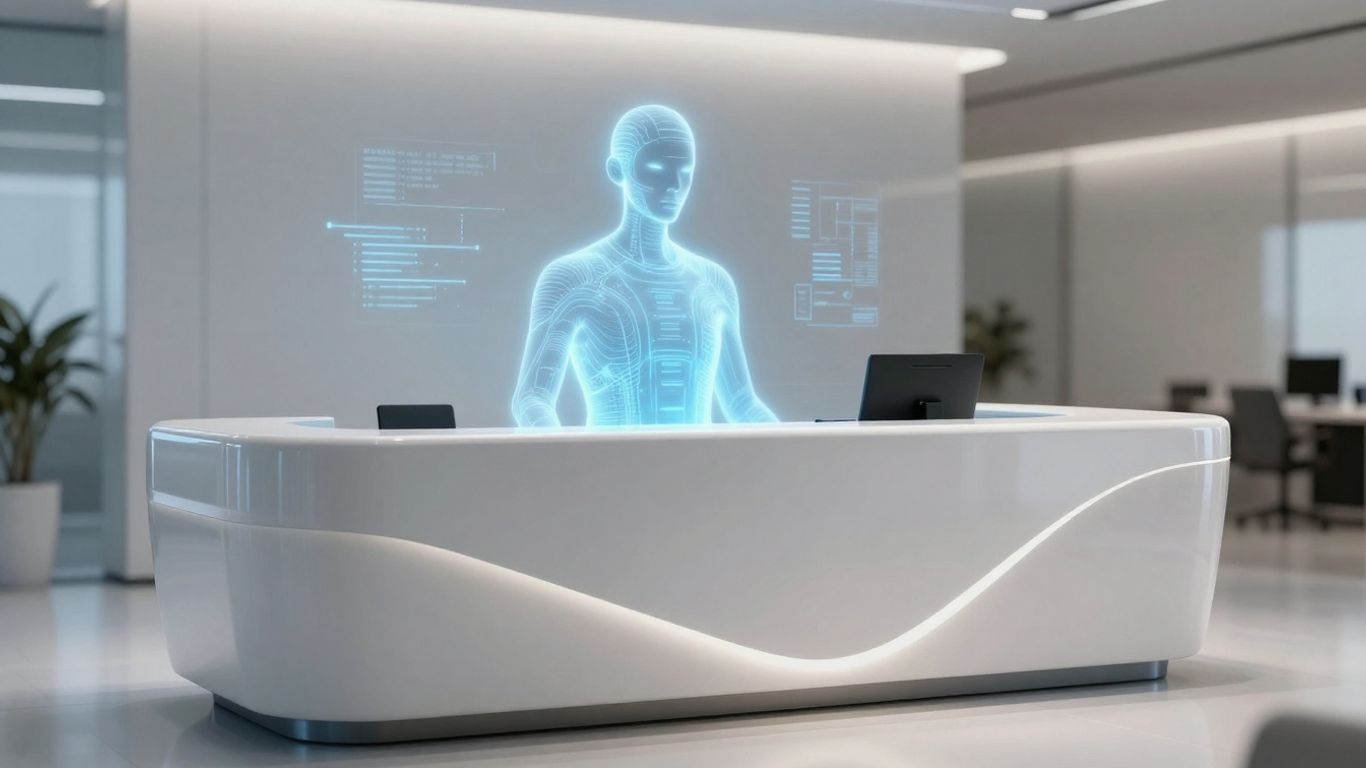
It's not enough for an AI receptionist to just answer the phone. For it to really make a difference, it needs to play nice with all the other tools your business already uses. Think of it like building a team – you want everyone to work together smoothly, right? That's where integration and automation come in.
This is a big one. Your AI receptionist should be able to talk directly to your calendar. When someone calls to book an appointment, the AI can check your availability in real-time and slot them in without you lifting a finger. No more back-and-forth emails or missed calls leading to double bookings. It just happens. The AI can also update your calendar after a call, or even trigger a follow-up reminder to be sent to the client. It’s about making sure the front desk work flows directly into your schedule, keeping things organized and efficient.
Zapier is like the glue that holds a lot of different apps together. If your AI receptionist can connect through Zapier, it opens up a world of possibilities. Imagine this: a new lead calls, the AI captures their information, and bam – that info is automatically added to your CRM. Or, a customer leaves a voicemail, and the AI transcribes it and creates a task in your project management tool. It turns your AI receptionist from just a call handler into a central hub that can kick off actions across your entire digital workspace. This means less manual data entry and fewer things falling through the cracks.
Here's a quick look at what this kind of integration can do:
Once the initial interaction is done, the job isn't over. An AI receptionist can be programmed to send automated follow-up messages. This could be a simple text message confirming an appointment, a reminder email a day before, or even a check-in message a week after a service. This keeps your business top-of-mind for customers and reduces the chances of no-shows or missed opportunities. It’s about maintaining that connection without requiring constant human effort. The AI can also be set up to handle basic post-call tasks, like sending a summary of the conversation or a link to a relevant resource.
The real power of an integrated AI receptionist lies in its ability to act as a proactive assistant. It doesn't just react to incoming calls; it anticipates needs and orchestrates actions across different platforms, creating a more cohesive and efficient operational flow for your business. This level of automation reduces manual work and frees up your human team to focus on more complex or relationship-building tasks.
Forget those agonizing waits on hold. AI receptionists are built for speed, responding in milliseconds. This isn't just about being quick; it's about making every interaction feel natural and productive. Think about it: when you call a business, you want answers, not a waiting game. AI receptionists deliver that instant gratification, keeping conversations flowing smoothly.
This is where AI really shines. We're talking about response times measured in the blink of an eye, or even faster. The technology behind this is pretty wild, using advanced processing units that can handle language incredibly quickly. It means the AI can keep up with you, no matter how fast you talk, without those awkward pauses that make you feel like you're talking to a robot. It's like having a conversation with someone who's always paying attention and ready with an answer, almost before you've finished asking.
It's not just about speed; it's about smarts too. These AI systems can process complex questions and provide accurate answers without missing a beat. They're trained on vast amounts of information, so they can pull up details, explain policies, or even guide users through multi-step processes in real-time. This means fewer dropped calls due to frustration and more resolved issues on the first try.
Latency, that little delay between speaking and hearing a response, can really throw off a conversation. AI receptionists are designed to minimize this to almost zero. They process your speech and formulate a reply so fast that it feels like you're talking to a very sharp, very attentive human. This lack of delay makes the whole experience feel more genuine and less like you're interacting with a machine. It's the difference between a clunky exchange and a smooth, natural chat.
Remember when businesses used to worry about phone lines like they were made of gold? "Oh no, all our lines are busy!" they'd cry, as if Alexander Graham Bell himself had personally limited them to five calls at once. Well, we fixed that. Our AI receptionist doesn't just handle multiple calls. It handles ALL the calls. At once. Forever. It's like we gave it an infinite supply of ears and an attention span that would make a zen master jealous.
What makes it cool? It's scalability on steroids, consistency that would make a Swiss watch blush, and the fact that "busy signal" is now as obsolete as the floppy disk. Our AI doesn't just handle calls, it tidies them up and thanks them for sparking joy. Peak periods? More like "meh" periods. Black Friday, Super Bowl commercial just aired, zombie apocalypse? Bring it on.
Why should you care? Because it means happy customers, your business stays alive even when that influencer accidentally puts your phone number in their Instagram story, and you can scale without the growing pains. Your brand consistency remains intact whether it's the first call of the day or the ten thousandth. Plus, every call becomes an insight, like some sort of customer service Pokémon trainer catching them all.
Imagine your product goes viral and thousands of calls pour in. Your AI doesn't break a sweat. It's like the phone equivalent of that "This is fine" meme dog, except everything actually is fine. Or when tax season hits and accountants everywhere brace for impact, your AI just yawns and asks, "Is that all you've got?"
If your service goes down and angry customers flood the lines, your AI handles it so well, they hang up wondering if they should apologize to you. When you go global, your AI juggles time zones like a cosmic deity. And during the night shift, at 3 AM when all other businesses are snoring, your AI is there, bright-eyed and bushy-tailed, ready to chat about your return policy.
Think about it: hiring enough human receptionists to cover every minute of every day, including holidays and weekends, is a massive undertaking. You're looking at salaries, benefits, training, and the inevitable scheduling headaches. An AI receptionist, on the other hand, works around the clock without needing breaks, sick days, or overtime pay. This 24/7 operational capacity comes at a significantly lower price point than maintaining a human staff for the same coverage. It's not just about saving money on wages; it's about eliminating the costs associated with employee turnover, management overhead, and the potential for human error during off-hours.
Beyond just the direct cost of staffing, AI receptionists trim down other operational expenses. Consider the reduction in missed calls, which directly translates to fewer lost leads and potential revenue. Automated appointment scheduling and confirmation mean less administrative time spent by your existing staff, freeing them up for more complex tasks. Furthermore, by handling routine inquiries and directing calls efficiently, AI receptionists can decrease the need for extensive call center infrastructure or the constant hiring and training of new agents. It's a streamlined approach that makes your entire front-desk operation leaner and more efficient.
The shift to AI receptionists isn't just about adopting new technology; it's a strategic move to reallocate resources. Instead of spending heavily on round-the-clock human coverage for basic tasks, businesses can invest in AI for consistent, high-volume handling, and then use the saved capital to focus human talent on specialized customer service, sales, or complex problem-solving where human interaction truly shines.
Beyond just answering calls, AI receptionists now offer some pretty neat tools to really fine-tune how your front desk runs. It's not just about automation anymore; it's about giving you more control and insight.
This feature is a game-changer for managing your budget and making sure the AI is used effectively. You can set a cap on how many minutes your AI receptionist can be active over a day, week, or month. Think of it like setting a monthly allowance for your virtual front desk staff. This helps prevent unexpected costs and lets you plan your expenses more predictably. It's also handy for testing the waters; you can start with a lower minute limit to see how it works for your business before committing to more.
Here's a quick look at what this control offers:
This level of control means you can align AI usage precisely with your operational needs and budget, avoiding overspending while still getting the benefits of 24/7 availability.
Businesses don't operate 24/7, and neither should your AI receptionist all the time. This feature lets you define exactly when your AI receptionist should be active. You can set specific hours, days, or even account for holidays and different time zones. It’s like giving your AI a work schedule. This means customers calling during your off-hours might get a different, more appropriate message, or the AI might simply not be active, preventing it from answering questions it shouldn't or being available when you don't want it to be.
This might sound small, but it can make a big difference in how you understand your customer interactions. Shareable call links allow you to easily distribute call recordings or transcripts. This is super useful for training purposes, quality assurance, or even just sharing interesting customer feedback with your team. Instead of digging through complex systems, you get a simple link that opens up the relevant conversation. It makes analyzing call data much more straightforward and collaborative.
The healthcare industry is a prime candidate for AI receptionists, and for good reason. Think about it: patient calls, appointment scheduling, insurance questions – it's a constant stream. Human receptionists are amazing, truly, but they can only do so much, especially when things get hectic. AI receptionists step in to handle a lot of that day-to-day grind.
AI receptionists can manage a huge chunk of patient communication. They can answer frequently asked questions about clinic hours, services, or even basic pre-appointment instructions. More importantly, they can handle appointment scheduling and rescheduling. This means fewer dropped calls and less time spent by staff on repetitive tasks. This frees up human staff to focus on more complex patient needs and direct care.
When dealing with health information, security is non-negotiable. Any AI receptionist used in healthcare must be HIPAA-compliant. This means all patient data is handled with the utmost care, encrypted, and stored securely. Reputable AI solutions are built with these regulations in mind, ensuring that patient privacy is protected at every step.
One of the biggest wins for AI receptionists in healthcare is improved patient access. Patients can get answers and manage appointments 24/7, without waiting on hold. This kind of instant availability can significantly boost patient satisfaction. It also helps practices reduce no-show rates through automated reminders and easy rescheduling options. It's about making healthcare more accessible and less of a hassle for everyone involved.
Here's a quick look at how AI receptionists stack up against traditional methods:
The goal isn't to replace the human touch in healthcare, but to augment it. AI receptionists handle the predictable, allowing healthcare professionals to dedicate more time to the unpredictable, human-centric aspects of patient care.
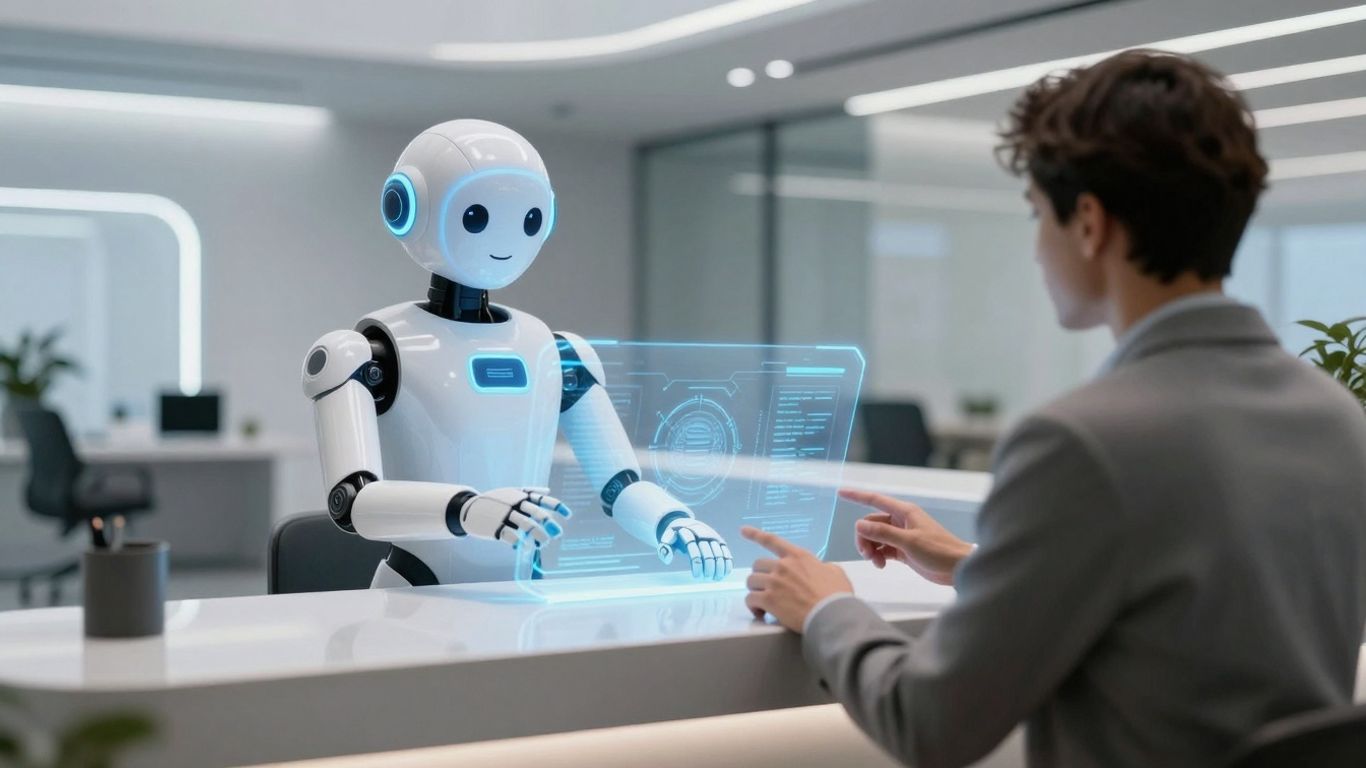
The way businesses handle their front-end communications is changing fast. We're seeing AI receptionists get smarter, not just answering calls but actually understanding what people need. Think about AI that can pick up on frustration in someone's voice and respond with more patience, or systems that can predict what a customer might ask for next based on past interactions. It's moving beyond just being a digital answering machine to becoming a proactive assistant.
These systems are getting better at sounding human, too. Voice cloning is becoming more common, allowing businesses to use a consistent, branded voice for all their automated interactions. This makes the experience feel more personal, even when it's an AI on the other end of the line. It’s like having a whole team of super-efficient, always-on receptionists who know your business inside and out.
Customers don't just use one way to contact businesses anymore. They might text, email, use a web chat, or call. The future of front desk automation means AI receptionists need to handle all of these channels smoothly. Imagine starting a conversation on a website chat and then getting a text reminder later, all managed by the same AI system. This makes it easier for customers to interact with a business on their preferred platform, without having to repeat themselves.
The goal is to make contacting a business as easy and natural as talking to a friend, no matter the method.
Looking even further ahead, AI receptionists could take over more complex tasks. Instead of just answering calls, they might manage entire front-desk operations. This could include handling appointment scheduling, processing payments, and even routing complex issues to the right human staff member automatically. The AI would learn the business's workflow and adapt, becoming a truly autonomous part of the operation. This frees up human employees to focus on more important, people-focused tasks that AI can't replicate.
So, you've seen all the cool stuff AI receptionists can do, right? It's pretty wild. But now comes the big question: how do you actually pick one that fits your business? It's not just about grabbing the first shiny option you see. You've got to think about what you actually need.
First off, what's your business like? Are you a small clinic with just a few doctors, or a big operation with tons of patients calling every day? Think about the kinds of calls you get. Are they mostly appointment setting, or do people call with complicated health questions? You need an AI that can handle your specific workload. For example, if you're in healthcare, you'll need something that's HIPAA-compliant, which is a big deal. Some systems are built just for medical offices, handling things like insurance verification and patient intake forms. Others are more general. Knowing your daily grind is the first step to finding the right digital helper.
Next up, does this AI play nice with your other tools? If you're already using a scheduling system or a CRM, you don't want to have to manually move data around. Look for AI receptionists that can connect with the software you already use. Zapier integration is a big one here. It's like a universal translator for your apps, letting them talk to each other. This means when the AI books an appointment, it automatically shows up in your calendar, or when a new lead calls, their info pops into your CRM. It saves a ton of time and stops those annoying little errors that creep in when you're doing things by hand.
Finally, how does it actually feel to use? For your customers, the AI should sound natural and helpful, not like a robot reading a script. Quick response times are key; nobody likes waiting. And for you, the business owner, it needs to be reliable. You don't want an AI that crashes or misunderstands calls constantly. Check out reviews, see if there's a free trial, and maybe even ask for a demo. You want something that makes your life easier, not adds another headache. It's about finding that sweet spot where the technology is smart, dependable, and makes your customers feel well taken care of.
Here's a quick checklist to help you decide:
Picking the right AI receptionist isn't just about getting a new gadget. It's about finding a partner that can genuinely help your business run smoother, save you time, and keep your customers happy. Think of it as hiring a new team member, but one that works 24/7 and never needs a coffee break.
Picking the best AI receptionist service can feel tricky. You want something that works well for your business and is easy to use. Think about what you need most: does it need to answer calls all day, help find new customers, or set up meetings? Finding the right fit will make a big difference. Ready to see how an AI receptionist can help you? Visit our website to learn more and get started!
So, what does all this mean for the front desk? It's pretty clear that AI receptionists aren't just a passing trend. They're becoming a standard tool for businesses looking to stay competitive and keep customers happy. From handling basic questions to scheduling appointments around the clock, these systems are getting smarter and more capable every day. While the idea of a fully automated front desk might seem a bit futuristic, the technology is here, and it's only going to get better. Businesses that embrace these changes now will likely find themselves ahead of the curve, offering smoother experiences for their customers and freeing up their human teams for more important tasks.
Think of an AI receptionist as a super-smart computer program that can do the job of a human receptionist. It can answer phones, schedule appointments, and answer questions for a business, all by itself, 24/7. It's like having a helpful assistant who never sleeps or takes a break.
These AI systems use something called Natural Language Processing (NLP). It's like teaching a computer to understand human language, just like you understand your friends. It can figure out what you're asking, even if you say it in different ways, and then find the right answer or take the right action.
Yes, many AI receptionists are designed to handle more than just simple questions. They can be trained with a lot of information about a business. So, if you ask about specific services, prices, or even how to get somewhere, the AI can often find the correct answer from the information it has learned.
Many AI receptionist services are made to be super easy to set up. You often just need to tell the AI about your business, what you do, and how you want it to help customers. Some can be ready to go in just a few minutes, so you can start using it right away without needing to be a tech expert.
Generally, using an AI receptionist is much cheaper than hiring a human receptionist. You don't have to pay salaries, benefits, or worry about breaks. Many services offer different plans, so you can choose one that fits your budget, and they often work out to be a great deal for the amount of work they do.
Absolutely! A big advantage of AI receptionists is their ability to connect with other software you use, like calendars for scheduling or customer databases. This connection, often through tools like Zapier, means information can flow automatically between your systems, saving you time and preventing mistakes.
Good AI receptionist systems are smart enough to know when they need help. If a question is too tricky or personal, they can be set up to smoothly transfer the call or chat to a human team member. This way, the customer always gets the help they need without getting stuck.
That's one of the biggest benefits! AI receptionists work around the clock, 365 days a year. They don't need holidays or sick days. This means your business can always be reached by customers, no matter the time or day, ensuring you never miss an important call or opportunity.
Start your free trial for My AI Front Desk today, it takes minutes to setup!


