
Thinking about an AI receptionist for your dental practice in 2026? It's a smart move, but the ai receptionist cost dental practices face can be a bit confusing. We're talking about more than just a monthly bill; it's about how this tech can change how you run your office, talk to patients, and even make more money. Let's break down what you need to know to make a good choice.

Thinking about an AI receptionist for your dental practice? It’s not just about the sticker price. You need to look at the whole picture. What are you really paying for when you hire a human, and how does that stack up against what an AI can do?
Let's be blunt: human receptionists are expensive. Beyond the salary, which can easily run $40,000-$58,000 annually when you factor in benefits, there's training time, sick days, vacations, and the inevitable turnover. If your receptionist earns $25 an hour and spends just two hours a day on the phone, that's over $12,000 a year just for answering calls. Add in hiring costs, which can be $3,000-$5,000 per hire, and the cost balloons. You're looking at a significant chunk of change that doesn't directly contribute to patient care.
AI receptionists usually come in tiered plans. The basic ones, around $25-$100 a month, handle a lot – think 24/7 coverage, custom knowledge bases, and basic integrations. For more features like calendar syncing and higher call volumes, you're looking at $100-$600 a month. Enterprise solutions can go much higher, but that's likely overkill for most dental practices. The key is finding a plan that matches your call volume and feature needs without paying for extras you won't use.
This is where it gets interesting. How much revenue are you losing from missed calls? If your average patient value is $200 and you miss just five calls a month, that's $1,000 in lost opportunity. An AI receptionist captures those. Then, consider the staff time saved. If your team spends less time on scheduling and answering basic questions, they can focus on patient care or more complex tasks. A simple formula can help: (Missed calls captured × Average patient value) + (Staff hours saved × Hourly rate) - Monthly AI service cost. For many practices, the ROI is clear within months, often paying for itself by capturing just one or two extra appointments.
The real cost isn't the monthly fee; it's the revenue you don't make and the time you waste with outdated methods. AI addresses both.
Running a dental practice means juggling a lot. Patients expect instant answers and easy scheduling, but your front desk staff can only do so much. This is where AI receptionists step in, automating tasks so your team can focus on patient care.
No patient should feel ignored. An AI receptionist means your practice is always available, day or night, weekday or weekend. It can answer frequently asked questions, provide office hours, and even guide patients to the right resources. This constant availability means fewer missed calls and more opportunities to connect with patients when they need you most.
Scheduling can be a headache. AI takes over the heavy lifting, allowing patients to book, reschedule, or cancel appointments through simple interactions. It syncs directly with your practice management software, preventing double bookings and keeping your schedule accurate. Plus, automated reminders significantly cut down on no-shows, saving the practice money and keeping the schedule full.
The goal here isn't to replace human interaction entirely, but to handle the predictable, repetitive tasks so that when a patient does speak with a human, it's for something that truly requires a personal touch. This frees up your staff for more complex patient needs and builds stronger relationships.
An AI receptionist isn't a standalone gadget; it's designed to work with your existing systems. Integration with popular dental software like Dentrix or Eaglesoft means the AI has real-time access to your schedule and patient data. This connection makes the AI's actions, like booking an appointment, instantly reflected in your main system, eliminating manual data entry and potential errors.
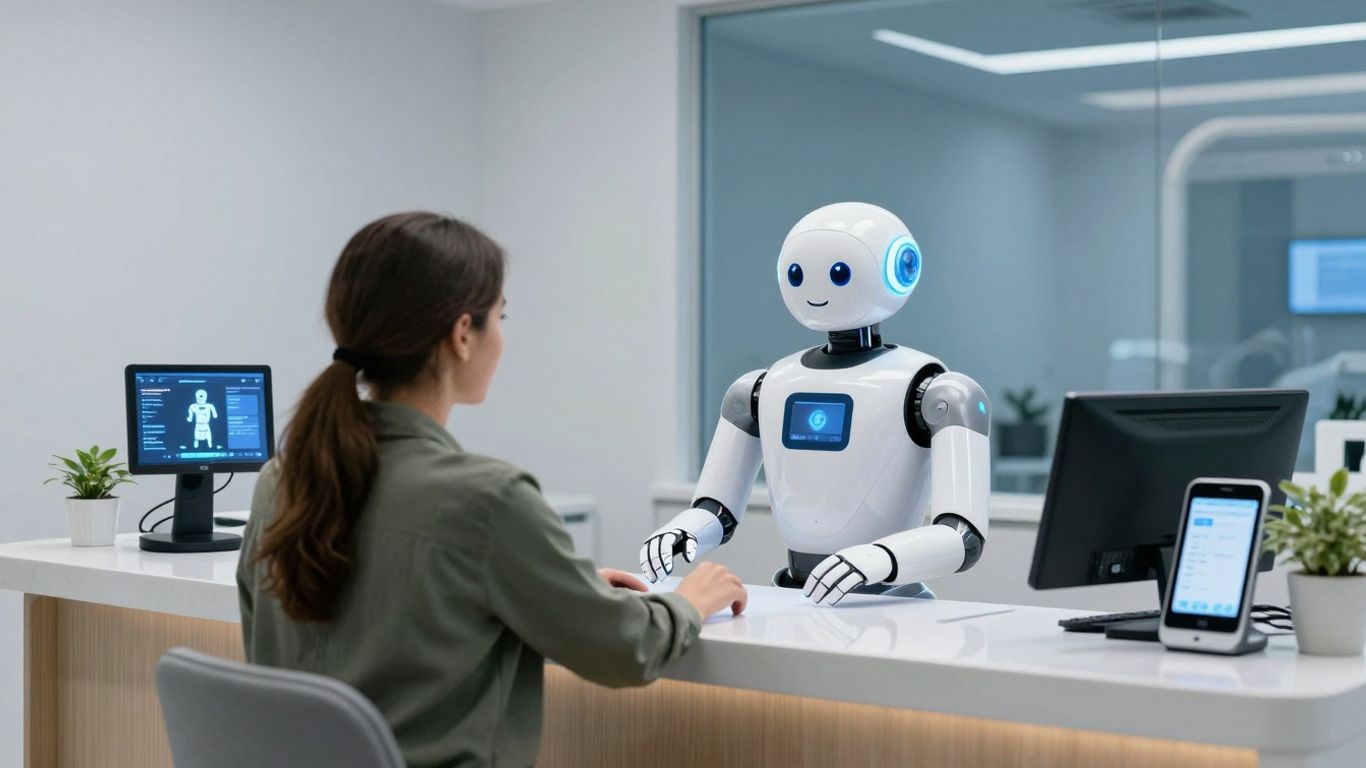
The price tag on an AI receptionist isn't a single number. It shifts based on what you actually need it to do and how much you expect it to handle. Think of it like buying a car – a basic sedan costs less than a fully loaded SUV.
This is a big one. If your practice gets a flood of calls every day, you'll naturally need a more robust plan than a quiet office. Some services charge based on minutes used, while others offer packages. Be wary of plans that look cheap but hit you with high per-minute fees when you go over. Predictable costs are usually better for budgeting.
What do you want the AI to do? Just answer the phone and take a message? Or schedule appointments, answer complex FAQs, and integrate with your existing dental software? The more bells and whistles you add, the higher the price. Customization, like specific scripts for your practice or unique workflows, also adds to the cost. A simple AI that handles basic queries is one thing; an AI that acts as a full-fledged scheduler and patient liaison is another.
For dental practices, HIPAA compliance isn't optional. This means the AI receptionist provider must have strong security measures in place to protect patient data. This level of security and compliance often comes with a higher price tag compared to general business AI receptionists. You're paying for the peace of mind that comes with knowing patient information is handled correctly and legally. Some providers might charge extra for HIPAA-compliant features or have specific plans tailored for healthcare.

Picking the right AI receptionist isn't like picking a brand of toothpaste. It's a business decision. You're not just buying software; you're buying a partner for your practice. So, how do you sort through the noise and find one that actually works?
Think about where your practice is headed. Will you add another dentist next year? See more patients? Your AI receptionist needs to keep up. A good provider won't just handle your current call volume; they'll grow with you. Look for systems that can easily scale up without a massive price jump or a complicated setup process. What happens when you have a sudden influx of calls? Does the system buckle, or does it handle it like it's just another Tuesday? Also, consider their support. If something goes wrong at 7 PM on a Friday, can you get help? Or are you stuck waiting until Monday morning? Check their support hours and how they handle issues. Some offer 24/7 support, which can be a lifesaver.
Nobody wants to spend weeks learning a new system. The best AI receptionists are intuitive. You should be able to set them up without a computer science degree. Think about your staff, too. Will they be able to use it easily? A system that's hard to implement or operate will just create more work, not less. Ask about the onboarding process. Is it a simple walkthrough, or a multi-day training seminar? Look for providers that offer clear documentation and maybe even video tutorials. If it feels like a headache to get started, it's probably going to be a headache to use.
This is non-negotiable, especially in healthcare. Your patient data is sensitive. Any AI receptionist you consider must be HIPAA compliant. This means they have robust security measures in place to protect patient information. Don't just take their word for it. Ask them specifically about their security protocols, data encryption, and how they handle data storage and access. A data breach could be catastrophic for your practice, both financially and reputationally. It's worth spending a bit more for a provider that takes security seriously. You want to know your patient data is locked down tighter than a drum.
Think about the last time you called a business and got voicemail. Or worse, a busy signal. How long did you wait before calling someone else? For most people, not long. Studies show that contacting a new lead within five minutes makes them 100 times more likely to choose you. AI receptionists answer instantly. No waiting, no hold music. They're always on, ready to capture that inquiry before it goes to a competitor. For a dental practice, this means fewer potential patients hanging up and more appointments booked. It’s a direct line from a caller’s need to your schedule, cutting out the friction that loses business.
People want answers, and they want them now. An AI receptionist provides immediate responses to common questions, schedules appointments without the back-and-forth, and sends confirmations. This speed and efficiency make patients feel heard and valued. It’s not about replacing human warmth, but about handling the transactional parts of patient interaction so your staff can focus on the empathetic, complex care that truly matters. Imagine a patient getting their appointment confirmation instantly via text, or having their basic insurance questions answered at 10 PM. That’s a good experience.
Your front desk staff are the face of your practice. But how much of their day is spent on repetitive tasks like answering the phone, confirming appointments, or taking basic messages? An AI receptionist can take on a huge chunk of that. This frees up your human team to handle more complex patient needs, manage insurance queries, assist with treatment plans, or simply provide a more personal touch during in-person visits. It’s about reallocating human talent to where it has the most impact, improving both staff satisfaction and patient care. This isn't about cutting staff; it's about making the staff you have more effective. The AI-powered front desk solution can handle these routine tasks, allowing your team to focus on what they do best.
Getting an AI receptionist up and running isn't just about flipping a switch. It's about making it work for your practice, not the other way around. Think of it like adding a new piece of equipment; you don't just plug it in and expect miracles. You need a plan.
Don't try to do everything at once. Start small. Maybe the AI handles just appointment confirmations for a week. See how that goes. Are the messages clear? Are patients responding well? Then, maybe add basic FAQ answering. This way, you catch any weird glitches or misunderstandings before they become big problems. It's better to have a few hiccups early on than a full-blown system failure when the office is packed.
The goal here is to build confidence, both for your staff and your patients. A gradual introduction makes the technology feel less like an alien invasion and more like a helpful assistant.
Once it's running, you need to watch it. What metrics matter? Missed calls are an obvious one. Are they going down? What about appointment no-shows? That's direct revenue. Also, listen to patient feedback. Are they confused? Annoyed? Or do they find it helpful? Most AI systems come with some kind of dashboard. Use it. Look at call volume, resolution rates, and how long it takes the AI to handle a query. If it's struggling with certain questions, you might need to tweak its knowledge base or train it more.
This is where the real magic happens. The AI isn't there to replace your front desk staff; it's there to help them. Let the AI handle the repetitive stuff: confirming appointments, answering common questions, taking messages. This frees up your human receptionist to deal with more complex issues, build rapport with patients, and handle those sensitive conversations that AI just can't manage. It's about using the strengths of both. The AI is tireless and always available. Your human staff offers empathy and nuanced understanding. Together, they create a front office that's both efficient and genuinely caring.
Making your dental practice run smoothly is key. Our tools help you manage appointments and talk to patients without missing a beat. Imagine less paperwork and more happy smiles! Ready to see how we can help your practice shine? Visit our website today to learn more and get started.
Look, nobody likes spending money, especially on new tech. But when you stack up the costs – the salary, the benefits, the constant interruptions for a human receptionist – against what an AI can do, it starts to make sense. For a dental practice, missing calls means missed appointments, which is lost revenue, plain and simple. An AI receptionist costs a fraction of a person, works all the time, and integrates with your existing systems. It's not about replacing your staff; it's about giving them tools to do their jobs better and making sure you don't leave money on the table. If you're still on the fence, think about the sheer number of calls you miss now. That alone might be enough to make the switch.
The price can change a lot depending on what you need. For basic help, it might be around $25 to $100 each month. If you want more features, like helping schedule appointments or talking in different languages, it could cost $50 to $100 more. Some fancy ones that use both AI and real people might cost $350 or even more each month. But remember, even the pricier ones are usually way cheaper than hiring a full-time human receptionist, who can cost $40,000 or more each year with benefits!
Yes, definitely! Think about it: a human receptionist costs a lot in salary, benefits, and breaks. An AI receptionist works 24/7 without needing breaks and costs much less per month. Plus, it helps you catch more calls. Studies show that many people hang up if they get voicemail, and they'll call a competitor instead. By answering every call, the AI helps you get more patients and make more money, often paying for itself many times over.
An AI receptionist can do a lot! It can answer the phone anytime, day or night, and greet patients. It can help schedule appointments, send reminders so patients don't forget, and even answer common questions about your practice. It can also take messages and send them to you or your staff. Some advanced ones can even help with things like checking insurance or sending follow-up messages after a visit.
Most modern AI receptionists are built to connect with popular dental software, like Dentrix or Open Dental. This connection is super important because it lets the AI see your real appointment schedule. This helps it avoid booking appointments when you're already busy or double-booking someone. Always check with the AI provider to make sure it works with the specific software your practice uses.
Setting up an AI receptionist is usually pretty simple. Many companies offer quick setup, sometimes in just a week! They often have easy-to-use dashboards where you can manage settings and see how things are going. While there might be a little learning curve, most systems are designed to be user-friendly for dental staff. Plus, many providers offer training and support to help you get started.
Patient privacy is a big deal, especially in healthcare. Good AI receptionist services for dental practices are designed to be HIPAA compliant. This means they have strong security measures in place to protect patient information, just like your office does. They understand the rules about keeping health information private and secure.
Start your free trial for My AI Front Desk today, it takes minutes to setup!


