
In business, the first few seconds of a phone call can define a customer's entire perception of your brand. A polished, professional phone greeting isn't just a formality; it's a strategic tool that builds immediate trust, clarifies your value, and sets the stage for a successful interaction. An effective opening can be the difference between a new loyal customer and a frustrated caller who hangs up and dials a competitor.
This initial touchpoint is a critical component of your overall brand experience. While the words you choose are vital, they must also align with your company's personality and values. Beyond the initial spoken words, understanding how to create a brand identity that connects with customers is crucial for consistent messaging across all touchpoints, including phone calls. A strong identity ensures your greeting feels authentic and reinforces who you are as a business.
Struggling with inconsistency, missed calls after hours, or greetings that sound robotic and uninspired can damage this perception. This guide moves beyond generic templates to provide a comprehensive collection of professional phone greetings examples, each designed for a specific business scenario. We will break down the strategy behind each script, offering actionable takeaways you can implement immediately.
You will learn how to:
Each example is crafted to transform your phone from a simple communication device into a powerful conversion and customer retention engine. Let's dive into the scripts that will help you master this critical first impression.
This professional phone greeting is a direct and efficient way to open a call. It immediately identifies your business and communicates its core purpose, which builds instant credibility and reassures the caller they have reached the correct number. This approach combines brand identification with a concise value statement, setting a competent and helpful tone from the very first second.
It’s particularly effective for businesses that want to quickly differentiate themselves or highlight a key service. By stating your value upfront, you frame the entire conversation around a solution, moving beyond a simple transactional exchange. This is one of the most powerful professional phone greetings examples for making a strong first impression.
The strength of this greeting lies in its two-part structure: Identification + Reassurance. The company name confirms the destination, while the value proposition explains why the caller should be glad they connected with you. This preemptively answers the caller's unspoken questions: "Did I dial the right number?" and "Can this company solve my problem?"
Key Insight: This greeting transforms a standard opening into a mini-elevator pitch. It frames your business as a problem-solver before the caller even states their reason for calling.
To implement this greeting effectively, focus on clarity and brevity. Your value proposition should be a single, impactful sentence.
This approach is highly versatile, but it’s especially powerful for first-time callers who may not be familiar with your brand. By mastering the fundamentals of how to answer the phone professionally, you can ensure every call starts on the right foot.
This professional phone greeting is a highly efficient, two-part approach that combines a warm welcome with an immediate qualifying question. It acknowledges the caller and then proactively directs them, streamlining the conversation from the very start. This method is excellent for businesses that handle various types of inquiries, as it helps categorize and route calls to the right person or department without delay.
By asking a simple clarifying question upfront, you demonstrate respect for the caller's time and position your business as organized and customer-centric. Instead of leaving the caller to explain their needs from scratch, you guide them toward a solution. This is one of the most effective professional phone greetings examples for improving call resolution times and enhancing the customer experience.
The power of this greeting comes from its Welcome + Triage structure. The welcoming phrase creates a positive connection, while the qualifying question acts as a triage mechanism. It immediately sorts the caller's intent, which is crucial for routing, data collection, and providing a tailored response. This approach addresses the caller's need for both a friendly reception and a fast, accurate solution.
Key Insight: This greeting turns your phone system into an intelligent routing tool. It empowers the caller to self-segment, which reduces handling time and connects them with the exact resource they need faster.
To make this greeting work, your qualifying options must be simple and distinct. The goal is to make the choice effortless for the caller.
This greeting is designed for efficiency and clarity, acting as a virtual switchboard to connect callers with the right specialist immediately. It presents callers with a simple menu of options, typically corresponding to different departments like Sales, Support, or Billing. This method streamlines operations, reduces hold times, and ensures that customers' needs are addressed by the most qualified person from the start.
By pre-qualifying the purpose of the call, this approach improves both the customer experience and internal workflows. It is essential for any business with distinct service lines or teams, preventing calls from being misdirected and saving valuable time for both staff and clients. These types of professional phone greetings examples are the foundation of effective call management for growing businesses.
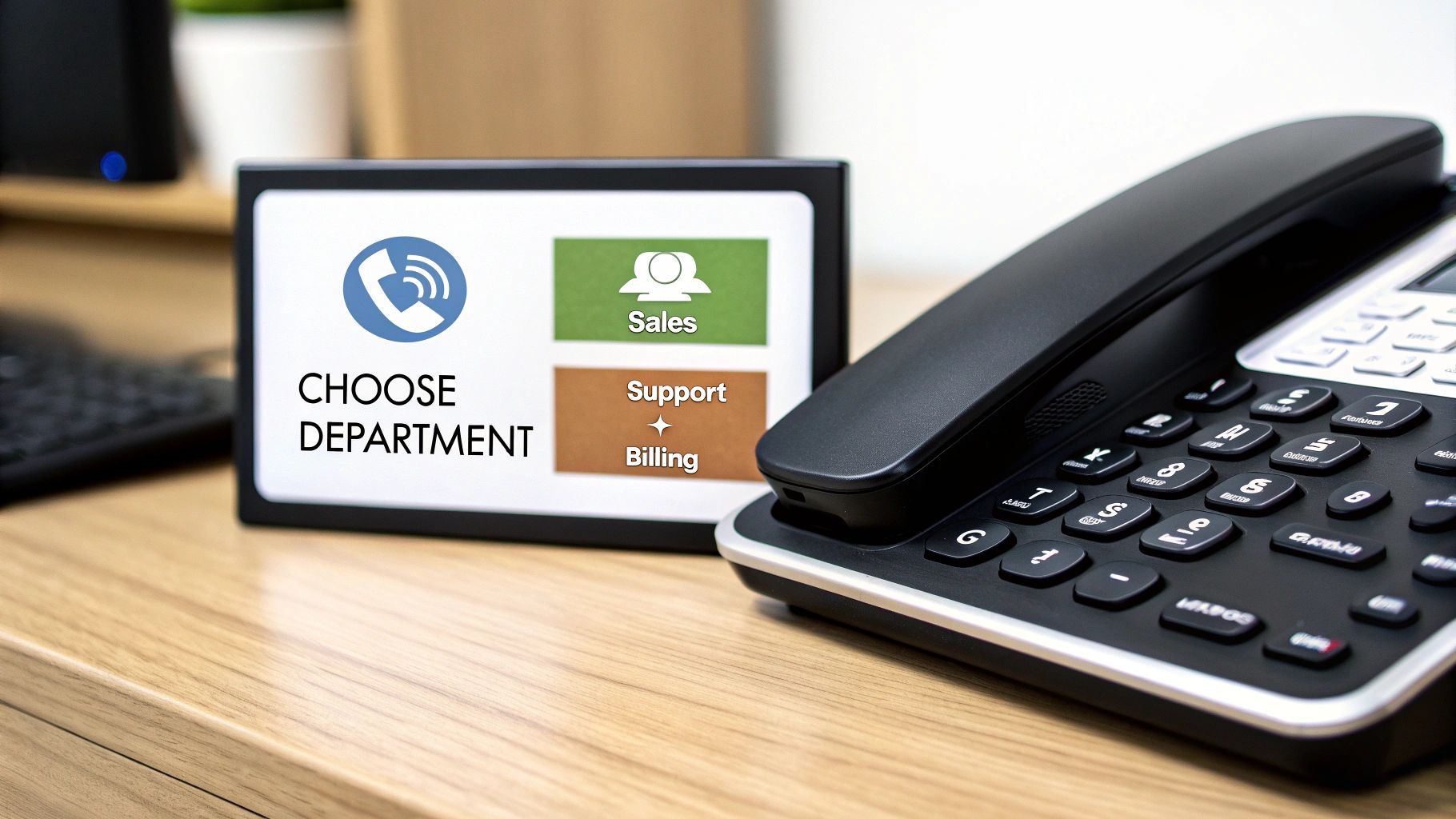
The power of this greeting is in its structure: Invitation + Guided Selection. The initial greeting welcomes the caller, and the menu guides them to self-select the appropriate destination. This empowers the caller, giving them control over their journey and immediately demonstrating that your business is organized and capable of handling diverse inquiries. It answers the question, "Who do I need to talk to about my specific issue?" before they even have to ask.
Key Insight: This greeting transforms your phone system into an interactive tool. It reduces the burden on a single receptionist and funnels inquiries to specialized teams, increasing first-call resolution rates.
To make this greeting work, your menu must be logical and concise. Overwhelming callers with too many choices can lead to frustration and abandoned calls.
This greeting represents a significant leap forward in automated communication, moving beyond static scripts to deliver dynamic, personalized interactions. Using advanced technology like an AI receptionist, this approach leverages caller data, such as their history with your company or the time of day, to create a welcoming experience that feels remarkably human and context-aware.
It’s an ideal solution for businesses aiming to provide a high-touch, premium experience without scaling their human staff. By instantly recognizing and acknowledging a returning customer or a high-value lead, this greeting builds immediate rapport and streamlines the conversation. This method stands out among professional phone greetings examples by combining the efficiency of automation with the warmth of personalization.
The power of this greeting lies in its core structure: Recognition + Contextualization. The AI first identifies the caller (or their status as a new or returning contact) and then tailors the opening based on that specific context. This immediately makes the caller feel valued and understood, answering their unspoken questions: "Do they know who I am?" and "Will I have to repeat my entire history with this company?"
Key Insight: This greeting transforms the call opening from a generic announcement into a personalized, one-to-one conversation. It uses data to demonstrate that you know and value the caller, creating a powerful foundation of trust and efficiency.
To deploy this greeting, your system needs access to caller data and the intelligence to use it effectively.
This advanced approach is particularly effective for high-conversion sales organizations and luxury brands where a superior customer experience is a key differentiator. It masters how to answer the phone professionally by making every caller feel like a VIP.
This strategic greeting transforms the opening of a call from a simple welcome into an efficient data-collection opportunity. Instead of just identifying your business, it immediately begins gathering essential caller information, streamlining the entire interaction. This approach uses automation to qualify leads, route calls more effectively, and prepare your team with context before they even speak to the caller.
It’s an incredibly powerful method for high-volume businesses or service providers that need to capture specific details upfront. By integrating information gathering into the greeting, you reduce handling time, improve lead quality, and create a seamless, modern customer experience. This is one of the most effective professional phone greetings examples for businesses focused on operational efficiency and data-driven service.
The power of this greeting comes from its two-part process: Engagement + Qualification. The initial welcome engages the caller, while the subsequent conversational questions qualify their needs. This approach instantly adds structure to the call and ensures no critical information is missed, turning a passive welcome into an active intake process.
Key Insight: This greeting acts as a conversational form, collecting key data points without the friction of a traditional interrogation. It respects the caller's time by getting straight to what matters.
To implement this greeting, the key is to be conversational and focused. Only ask for the most critical information to avoid overwhelming the caller.
This intelligent greeting adapts based on the time of day, day of the week, or other real-time business circumstances. It leverages technology like AI receptionists to deliver appropriate, context-specific messages, whether it's after hours, during a special promotion, or on a holiday. This approach demonstrates a high level of organization and customer awareness, making the caller feel acknowledged and valued.
Instead of a one-size-fits-all opening, this greeting is dynamic. It reassures callers that even if they are calling outside of standard hours, their inquiry is important. By providing relevant information upfront, such as business hours or current offers, it manages expectations effectively and streamlines the entire interaction, positioning your business as modern and efficient.
The power of this greeting lies in its core components: Relevance + Management. It provides relevant information based on the specific context of the call and proactively manages the caller's expectations. This immediately answers the caller's internal questions: "Is anyone there?" and "What should I do next?"
Key Insight: This greeting turns a potential dead end (like an after-hours call) into a productive interaction. It captures leads and provides clear next steps, ensuring no opportunity is lost, regardless of when the customer calls.
To use this greeting, leverage automation to switch scripts based on a schedule or specific triggers. The goal is to make every call feel perfectly timed.
This professional phone greeting immediately builds rapport by acknowledging a common customer pain point and positioning your business as the direct solution. It demonstrates an understanding of the caller’s challenges before they even speak, creating an instant connection built on empathy. This approach shifts the dynamic from a transactional call to a collaborative problem-solving session.
It’s exceptionally effective for industries where customers are often stressed, frustrated, or confused. By leading with empathy, you validate their feelings and build trust, showing that your company doesn't just offer a service, but a genuine solution to their struggles. This is one of the most powerful professional phone greetings examples for differentiating your brand through emotional intelligence.
The power of this greeting is in its Validation + Resolution framework. The opening line validates the caller's potential frustration, making them feel heard and understood. The second part immediately pivots to the resolution, framing your business as the expert who can alleviate that specific pain. This disarms the caller and transitions them into a more positive and receptive state.
Key Insight: This greeting doesn't wait for the customer to explain their problem. It proactively identifies the emotional context of their call, demonstrating that you are already on their side.
To use this greeting, you must have a deep understanding of your customers' primary challenges. Authenticity is crucial; the empathy must feel genuine, not scripted.
This modern and sophisticated greeting empowers callers by giving them a choice in how they communicate. It acknowledges that phone calls aren't always the most convenient option and immediately introduces other channels like texting, email, or WhatsApp. This approach positions your business as flexible, customer-centric, and technologically adept, meeting customers on their preferred platforms.
It’s especially powerful for businesses serving diverse demographics or handling various types of inquiries, from quick questions to detailed support requests. By offering multiple contact methods upfront, you reduce friction and improve the customer experience, making it one of the most forward-thinking professional phone greetings examples for today’s connected world.
The core strategy here is Choice + Convenience. Instead of forcing the caller into a single, linear communication path (the phone call), you offer a menu of options. This simple act of giving control to the customer builds immediate rapport and demonstrates that you value their time and preferences. It answers the unspoken question: "What's the easiest and fastest way for me to get help?"
Key Insight: This greeting transforms the call from a monologue into a dialogue about communication itself. It shows you’re adaptable and ready to engage in the way that best suits the customer, not just the business.
To use this greeting effectively, ensure your backend systems can handle multi-channel communications seamlessly.
The journey from a simple "hello" to a strategic, revenue-driving interaction begins with the very first words a caller hears. Throughout this guide, we've dismantled the traditional phone greeting and rebuilt it as a powerful business tool. We've moved beyond mere politeness to explore how a few carefully chosen seconds can qualify leads, personalize experiences, and set the stage for meaningful engagement.
The examples we have analyzed, from the direct Company Name + Value Proposition Greeting to the more sophisticated Multi-Channel Engagement Greeting, all share a common thread: intentionality. A great phone greeting is no accident. It is the result of understanding your caller's needs, defining your business goals for that interaction, and designing a script that efficiently bridges the two.
The most crucial takeaway is that your phone greeting is not a static script to be recited by rote. It is a dynamic, strategic asset that should be as flexible and intelligent as the rest of your business operations. A truly professional phone greeting is an active participant in your customer journey.
Think of it as the first step in a strategic funnel. It can:
The power of modern technology, particularly AI, is that it makes this level of sophistication accessible to everyone. You no longer need a massive call center to implement intelligent routing or personalized responses. The advanced strategies once reserved for enterprise-level corporations are now within your reach.
Reading about professional phone greetings examples is one thing; implementing them is where real growth happens. It's time to transform these concepts into tangible business results. Here’s a simple, actionable plan to get you started:
Ultimately, mastering your phone greeting is about taking control of the first impression. It's about demonstrating from the very first second that you are organized, efficient, and genuinely value your caller's time. This single touchpoint, when optimized, creates a ripple effect, improving customer satisfaction, boosting team productivity, and directly contributing to your bottom line.
Ready to automate and perfect your first impression? My AI Front Desk empowers your business to deploy these advanced, professional phone greetings 24/7, ensuring you never miss a lead. Start transforming your calls into conversions by visiting us at My AI Front Desk to learn more and begin your free trial.
Start your free trial for My AI Front Desk today, it takes minutes to setup!


